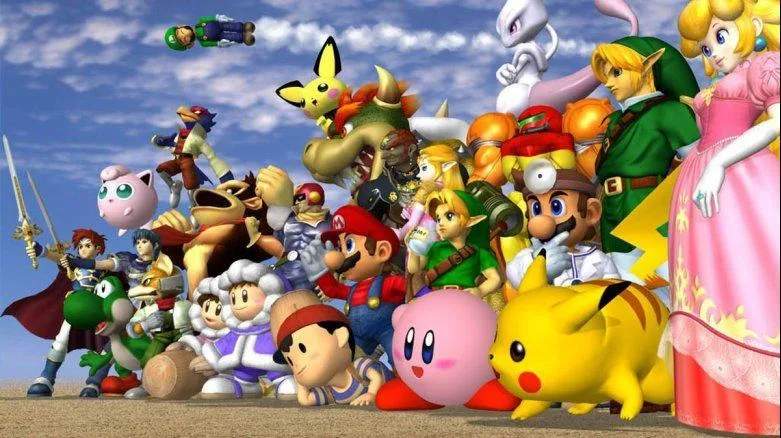
Stage 1: Congo Jungle
Welcome, aspiring Smashers, to the vibrant and perilous Stage 1: Congo Jungle! This iconic battleground, ripped straight from the Donkey Kong Country universe, is a dynamic arena that demands both keen platforming skills and strategic adaptability. Prepare to navigate moving platforms, master the unpredictable barrel cannon, and outmaneuver your opponents in this fan-favorite stage, a staple of the original Super Smash Bros. on Nintendo 64.
Stage Layout and Core Mechanics
Congo Jungle is characterized by its three primary platforms and the notorious barrel cannon. Understanding their interplay is crucial for dominating this stage and securing those coveted KOs.
- The Central Platform: This is the largest, stationary landmass forming the stage's foundation. Most intense brawls and initial engagements occur here. Its solid ground provides a reliable base for charging smash attacks, executing ground-based combos, and setting up edge guards. This platform is immune to environmental hazards, making it a safe haven amidst the chaos.
- The Moving Platforms: Suspended above the central platform are two smaller, horizontal platforms. These platforms traverse the stage in a predictable, rhythmic pattern, moving from one side to the other and back again. Each platform moves independently, creating a dynamic and ever-changing battlefield.
- Movement Pattern: Each platform takes approximately 4 seconds to travel from one end of its path to the other. They pause briefly at the ends before reversing direction. This consistent timing allows for precise planning.
- Strategic High Ground: They offer elevated positions for aerial attacks, projectile spamming (e.g., Link's Boomerang, Samus's Missiles), or escaping ground pressure. Controlling these platforms can dictate the pace of the match.
- Recovery Aid: Can be used to intercept a falling opponent or provide a temporary landing spot after being launched. A well-timed jump onto a moving platform can save a stock.
- Environmental Hazard: Getting caught between a moving platform and the stage's blast zone can lead to an early KO, especially at higher damage percentages. Always be aware of their position relative to your character and your opponent. They can also push characters off the stage if you're not careful.
- The Barrel Cannon: Located centrally beneath the main platform, this iconic feature is both a blessing and a curse. It's a powerful tool for recovery and offense, but also a source of potential self-destruction.
- Activation: Any fighter who touches the barrel's opening when it's active will be launched. The barrel opens and closes rhythmically, indicated by a distinct sound effect and visual cue. The barrel is active (open) for approximately 2 seconds, then closed for 1.5 seconds. This precise timing is critical to master.
- Launch Trajectory: The launch direction is fixed – upwards and slightly to the right, propelling fighters high into the air. The launch force is consistent, making it predictable for skilled players to follow up. The peak of the launch trajectory is well above the upper blast zone, meaning a direct launch from the barrel will result in a KO if the character does not perform any action to alter their trajectory.
- Offensive Use: Can be used to initiate surprise aerial attacks from above, extend combos by launching an opponent (e.g., hitting an opponent into the barrel, then following up with an aerial), or propel yourself for a powerful aerial finisher into the upper blast zone. For example, a well-timed launch followed by a Fox Up-Air can be devastating.
- Defensive Use/Recovery: An invaluable tool for recovering from a low position, allowing characters to return to the stage from seemingly impossible depths. Mastering the timing to grab the barrel is essential for characters with poor vertical recovery, or when recovering from a deep horizontal launch.
- Self-KO Risk: A mistimed or poorly aimed launch can send you directly into a blast zone or into an opponent's waiting attack, leading to an untimely self-KO. Be particularly careful when attempting to grab the barrel while under pressure, as an opponent can intercept you mid-flight.
Strategic Considerations: Mastering the Jungle's Rhythm
The dynamic elements of Congo Jungle introduce several layers of strategy that players must adapt to. Understanding these nuances can turn the tide of battle.
| Strategy Focus | Description & Application | Common Pitfalls & Counter-Strategies |
|---|---|---|
| Platform Control | Dominating the moving platforms grants significant advantages. Use them to:
|
Neglecting platform movement can lead to being trapped, falling into an opponent's attack, or even self-destructing by being pushed into the blast zone. Always be aware of the platforms' current position and direction.
Counter-Strategy: Use projectiles to force opponents off platforms. Anticipate their landing and punish. Fast characters can quickly move to challenge platform control. |
| Barrel Cannon Exploitation | The barrel is a high-risk, high-reward mechanic. Mastering its use is a hallmark of a skilled Congo Jungle player.
|
Mistiming the barrel can lead to launching yourself into a waiting opponent's smash attack, or worse, directly off-stage for a self-KO. Be precise and avoid grabbing it if an opponent is directly above the launch point, as they can easily intercept you.
Counter-Strategy: Position yourself above the barrel to intercept opponents being launched. Use projectiles to disrupt barrel attempts. Edge guard aggressively to prevent opponents from reaching the barrel. |
| Edge Guarding & Spiking | The stage's open sides and the barrel's launch trajectory make edge guarding highly effective. This stage rewards aggressive off-stage play.
|
Over-committing to an edge guard can leave you vulnerable to a reversal or a stage spike, especially if your recovery is poor. Always be mindful of your own recovery options and blast zone proximity. Don't chase too far off-stage if your character has limited horizontal recovery.
Counter-Strategy: Mix up recovery options. Utilize the barrel cannon as a surprise recovery. Air dodge through edge guards. Attack back at the edge guarder. |
| Verticality & Recovery | Embrace the stage's verticality. The high blast zones and multiple platforms encourage aerial combat and robust recovery.
|
Characters with limited vertical recovery (e.g., Donkey Kong, Link) will struggle significantly if launched high or deep. Avoid getting into these positions and prioritize staying on the main stage or platforms. Over-reliance on a single recovery option makes you predictable.
Counter-Strategy: Target characters with poor vertical recovery. Force opponents off-stage horizontally to make barrel recovery difficult. Predict recovery paths and intercept. |
Character Matchups: Who Thrives and Who Struggles?
The unique mechanics of Congo Jungle naturally favor certain character archetypes while posing challenges for others. Understanding these matchups can help you choose your fighter wisely or adapt your strategy.
Strong Picks (Characters that excel):
- Jigglypuff: With its unparalleled aerial mobility, five jumps, and floaty physics, Jigglypuff is a nightmare to KO and a master of platform control. Its Rest attack can be devastating on the central platform or after a well-timed platform drop, often leading to an instant KO. Its ability to stay airborne makes it incredibly resilient to ground-based pressure and an excellent edge guarder. Its small hitbox also makes it hard to hit.
- Kirby: Similar to Jigglypuff, Kirby's five jumps and excellent recovery (Final Cutter) make him incredibly resilient and difficult to edge guard. His Stone ability allows for quick, safe descents through platforms, and his aerial attacks are potent for controlling the space above the main stage. He can also use his Inhale to steal abilities from opponents, adapting to various situations and even using the barrel cannon for unique launches.
- Fox McCloud: Fox's incredible speed, strong aerial attacks (especially his Up-Air and Back-Air), and excellent recovery (Fox Illusion and Fire Fox) allow him to dominate the moving platforms and punish opponents effectively. His shine can also be used for quick vertical KOs, particularly when opponents are launched by the barrel. His fast fall speed makes him less susceptible to vertical KOs.
- Captain Falcon: Falcon's speed, powerful aerials (Knee of Justice!), and decent recovery (Falcon Dive and Falcon Kick) make him a formidable force. He can quickly move between platforms and secure early KOs with his meteor smash (Down-Air) when edge guarding. His raw power makes him a threat anywhere on the stage, and his fast movement allows him to capitalize on barrel launches.
- Pikachu: Small hitbox, quick movement, and a fantastic recovery (Quick Attack) make Pikachu very difficult to hit and easy to recover with. His aerials are also strong for platform combat, and his Thunder Jolt can be used to harass opponents both on and off-stage, disrupting recoveries. His agility allows him to navigate the dynamic elements with ease, making him a slippery opponent.
- Samus: While not as agile as Fox or Pikachu, Samus's Charge Shot and Missiles provide excellent stage control, especially against opponents trying to recover or land on platforms. Her Screw Attack offers a decent recovery and can be used as an anti-air option. Her powerful smash attacks can secure KOs on the main platform, and her bombs can be used for recovery or edge guarding.
Challenging Picks (Characters that may struggle):
- Donkey Kong: While it's his home stage, DK's large size makes him an easier target for combos on the smaller platforms. His recovery, though decent (Spinning Kong), can be exploited by skilled edge guarders, especially if he misses the barrel. His slower aerials make it harder for him to control the moving platforms effectively, and his large hitbox makes him vulnerable to barrel launches.
- Link: Link's slower movement and reliance on projectiles can be hampered by the dynamic nature of the platforms. While his strong attacks can secure KOs, he may find it harder to keep up with faster, more agile characters on this stage. His recovery (Spin Attack) is somewhat predictable and can be easily intercepted, and his heavy weight makes him susceptible to vertical KOs if launched by the barrel.
- Ness: Ness's recovery (PK Thunder) is unique and powerful but also leaves him vulnerable if interrupted. While he has good aerials, his slower ground speed can make it difficult to control the central platform against faster opponents. His reliance on projectiles can be less effective on a stage with so much vertical movement, and his floaty nature can make him an easy target for aerial combos.
- Luigi: Luigi's floaty jump can make him a target for aerial combos, and his recovery (Super Jump Punch) is very vertical but lacks horizontal movement, making him susceptible to horizontal edge guards. While his Cyclone can aid recovery, it's often not enough against aggressive opponents. His slower movement speed can also make it difficult to contest platforms effectively.
- Mario: While Mario is a well-rounded character, he doesn't particularly excel on Congo Jungle. His recovery (Super Jump Punch) is decent but can be predictable. His aerials are good, but he lacks the extreme mobility of Fox or Jigglypuff to truly dominate the platforms. He can perform well, but often requires more effort than other characters to secure KOs.
Walkthrough: Mastering Congo Jungle in Single Player (Classic Mode)
In Classic Mode, Congo Jungle is typically the first stage you encounter. Your objective is to defeat two opponents in a timed battle. The default settings are usually 2 minutes, with a stock count of 2. The opponents are randomly selected from the roster.
- Initial Engagement:
- Objective: Quickly gain stage control and deal initial damage.
- Strategy: As the match begins, immediately move towards the center of the main platform. Use your character's fastest attacks (e.g., jabs, tilts) to engage the first opponent. Don't over-commit to smash attacks early, as opponents are fresh and can easily escape.
- Specifics: If playing as Fox, use his rapid jab combo. As Kirby, try to get a quick Inhale to steal an ability if possible. As Mario, use his Up-Smash to catch opponents jumping onto the main platform.
- Common Pitfall: Rushing directly into the fray without considering opponent positioning. This can lead to taking early damage.
- Utilizing Platforms:
- Objective: Use the moving platforms to your advantage for offense and defense.
- Strategy: Once an opponent has taken some damage, start using the moving platforms. Jump onto them to gain high ground and unleash aerial attacks (e.g., Fox's Up-Air, Captain Falcon's Knee). If you're being pressured on the main platform, retreat to a moving platform to reset the engagement.
- Specifics: If an opponent is recovering low, position yourself on a moving platform to drop down with a powerful aerial (e.g., Captain Falcon's Down-Air). If you're playing a projectile character like Samus, use the platforms to safely fire Charge Shots or Missiles.
- Common Pitfall: Getting caught between a moving platform and the blast zone. Always be aware of the platform's direction.
- Barrel Cannon Opportunities:
- Objective: Use the barrel for KOs or recovery.
- Strategy (Offensive): If an opponent is at high damage (around 80% or more), try to knock them into the barrel cannon's activation zone. If they are launched, quickly follow up with an aerial attack to ensure a KO into the upper blast zone. Alternatively, if you need to escape a bad situation, use the barrel to launch yourself away.
- Strategy (Defensive/Recovery): If you are launched off-stage, especially below the main platform, prioritize grabbing the barrel. Practice the 2-second open, 1.5-second closed timing. This is often your best, or only, option for survival.
- Specifics: As Fox, if you launch an opponent with the barrel, immediately jump and use an Up-Air or Back-Air. As Kirby, you can use your multiple jumps to precisely position yourself for the barrel.
- Common Pitfall: Mistiming the barrel and launching yourself into a waiting opponent's smash attack or directly off-stage. Avoid grabbing the barrel if an opponent is directly above it.
- Edge Guarding and Finishing:
- Objective: Secure KOs by preventing opponents from recovering.
- Strategy: Once an opponent is at high damage, focus on knocking them off-stage. Pursue them with aerials (Forward-Air, Back-Air) or use projectiles to disrupt their recovery. Be mindful of your own recovery options when going off-stage.
- Specifics: Captain Falcon's Down-Air is excellent for meteor smashing opponents attempting to recover. Link's Boomerang can be thrown off-stage to force a reaction. Jigglypuff's multiple jumps make her an exceptional edge guarder.
- Common Pitfall: Over-committing to an edge guard and getting KO'd yourself. Always know your character's recovery limits.
- Time Management (Classic Mode Specific):
- Objective: Defeat both opponents within the time limit.
- Strategy: Keep an eye on the clock. If time is running low and you still have an opponent to KO, become more aggressive. Prioritize high-damage attacks and edge guarding. Don't play too defensively if you're behind on KOs.
- Specifics: If you're struggling to KO, try to bait opponents into the barrel cannon for a quick KO. Use powerful smash attacks when opponents are at high percentages.
- Common Pitfall: Playing too passively and running out of time, resulting in a loss.
Item Spawns and Usage
Items in Super Smash Bros. N64 spawn randomly across the stage, typically on the main platform or occasionally on the moving platforms. Understanding their utility is key to maximizing their impact.
| Item Name | Appearance | Effect & Strategy | Quantity (Classic Mode) |
|---|---|---|---|
| Beam Sword | A glowing, elongated sword. | Increases attack range and power. Swings are fast and deal significant knockback. Excellent for spacing and edge guarding. Can be thrown for a quick projectile. | 1-2 per match |
| Home-Run Bat | A large, wooden baseball bat. | Extremely powerful smash attack. Charges slowly, but a fully charged hit will almost always result in an instant KO, even at low percentages. Can be thrown as a weak projectile. | 1 per match |
| Starman (Invincibility Star) | A spinning, yellow star. | Grants temporary invincibility. You cannot take damage or be knocked back. Use this to aggressively attack opponents without fear of retaliation, or to escape a dangerous situation. | 1 per match |
| Super Mushroom | A red and white mushroom. | Temporarily increases your character's size and attack power. Larger hitbox, but also easier to hit. Use to deal more damage and knockback. | 1-2 per match |
| Poison Mushroom | A purple and white mushroom. | Temporarily shrinks your character, reducing attack power and making you lighter (easier to KO). Avoid at all costs. Can be thrown at opponents. | 1 per match |
| Motion-Sensor Bomb | A small, blinking red device. | When thrown, it sticks to a surface. Explodes when an opponent gets close. Great for setting traps on platforms or near edges. Can also be used as a simple projectile. | 2-3 per match |
| Bumper | A round, yellow object with an arrow. | When thrown, it sticks to a surface. Any character touching it will be launched away with significant force. Excellent for stage control, edge guarding, or pushing opponents into blast zones. | 1-2 per match |
| Green Shell | A green Koopa Troopa shell. | Can be kicked or thrown. Slides along surfaces, dealing damage to anyone it hits. Can be picked up again. Good for horizontal pressure. | 2-3 per match |
| Red Shell | A red Koopa Troopa shell. | Similar to Green Shell, but homes in on the nearest opponent. Excellent for harassing opponents or forcing them into a corner. | 1-2 per match |
| Poké Ball | A red and white ball. | Throws out a random Pokémon that performs an attack. Effects vary wildly from minor damage to powerful KOs (e.g., Snorlax, Electrode). Always worth picking up. | 1-2 per match |
| Cracker Launcher | A small, handheld launcher. | Fires a rapid burst of small, explosive projectiles. Good for racking up damage quickly or disrupting opponents. Limited ammo. | 1 per match |
| Fan | A small, handheld fan. | Deals rapid, low-knockback damage. Excellent for breaking shields quickly. Can be thrown. | 1-2 per match |
| Hammer | A large, cartoonish hammer. | Grants temporary invincibility and a powerful, uncontrollable smash attack. You cannot use other moves. Great for clearing space or securing KOs, but leaves you vulnerable if you miss. | 1 per match |
Common Pitfalls and How to Avoid Them
- Barrel Cannon Misuse: The most common mistake is mistiming the barrel cannon, either by launching yourself into an opponent's attack or directly off-stage.
- Avoidance: Practice the timing (2 seconds open, 1.5 seconds closed). If an opponent is waiting above the barrel, consider other recovery options or try to bait them away before using it.
- Platform Traps: Getting caught between a moving platform and the blast zone, or being juggled repeatedly on a platform.
- Avoidance: Always be aware of the moving platforms' positions and directions. If you're being juggled, try to air dodge, use an aerial attack to break free, or fast-fall through the platform.
- Over-committing to Edge Guards: Chasing an opponent too far off-stage, leading to your own KO.
- Avoidance: Know your character's recovery limits. If you're unsure, stick to stage-based edge guards or use projectiles. Prioritize your own survival over a risky KO.
- Ignoring Item Spawns: Neglecting items can put you at a disadvantage, especially powerful ones like the Home-Run Bat or Starman.
- Avoidance: Keep an eye on item spawn points. If a powerful item appears, prioritize grabbing it, even if it means taking a slight risk.
- Predictable Recovery: Always using the same recovery path makes you an easy target for edge guards.
- Avoidance: Mix up your recovery. Sometimes use the barrel, sometimes recover high, sometimes low. Use air dodges and wall jumps (if applicable) to vary your approach.
By understanding the dynamic elements of Congo Jungle, mastering its unique mechanics, and adapting your strategy to your character and your opponents, you'll be well on your way to becoming a true Super Smasher on this classic N64 stage. Good luck, and happy smashing!