The World of Super Smash Bros. N64: A Comprehensive Guide
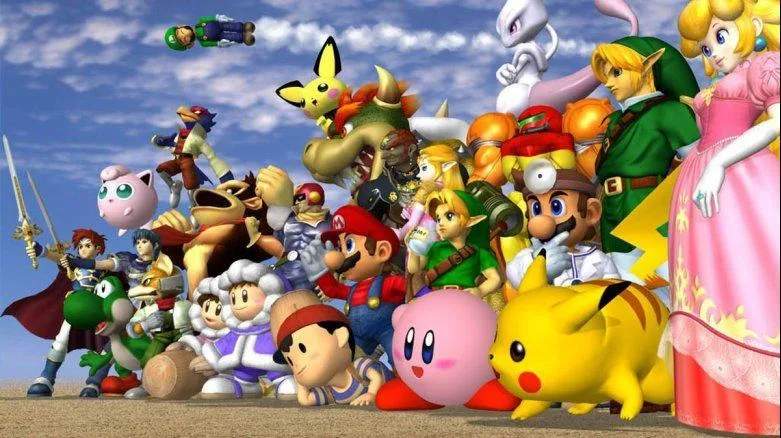
Welcome, aspiring champion, to the definitive guide for Super Smash Bros. on the Nintendo 64! This foundational fighting game, released in 1999, introduced a revolutionary take on the fighting genre, pitting beloved Nintendo characters against each other in chaotic, platform-based battles. Unlike its successors, Super Smash Bros. N64 focuses on pure, unadulterated brawling, without the complexities of Spirits, Mii Fighters, or extensive adventure modes. This guide will equip you with the knowledge and strategies to dominate every aspect of the game, from mastering individual characters to conquering the most challenging single-player modes.
Forget everything you might have heard about "Spirit Boards" or "Spirits" – those mechanics belong to a different era and a different game. In Super Smash Bros. N64, your journey to mastery is paved with skill, timing, and a deep understanding of each character's unique moveset and the game's core mechanics.
Game Modes: Conquering the N64 Arena
Super Smash Bros. N64 offers a variety of modes designed to test your skills and provide endless hours of entertainment. Understanding each mode is the first step towards becoming a true Smash master and unlocking all the game has to offer.
1. 1-P Game (Single Player)
The single-player experience is where you'll hone your fundamental skills, unlock hidden characters, and challenge yourself against increasingly difficult AI opponents. This mode consists of several distinct stages, culminating in a final showdown against the game's ultimate boss.
- Training Mode: An essential starting point for any player. Here, you can practice character moves, experiment with combos, and get a feel for the game's physics without the pressure of a time limit or opponent.
- Objective: Master your chosen character's full moveset and understand their hitboxes and recovery options.
- Key Features: Adjustable CPU difficulty (from stationary to Level 9), item spawn control (set frequency or specific items), damage percentage reset, and the ability to view hitboxes.
- Actionable Tip: Spend at least 30 minutes with each character in Training Mode to understand their strengths and weaknesses before taking them into battle. Pay close attention to their recovery moves (Up+B) and smash attacks. Practice edge-guarding techniques against a Level 1 CPU.
- 1-P Game (Classic Mode): This is the core single-player experience, a gauntlet of battles against various CPU opponents, often with unique stage layouts or team-ups. Completing this mode is crucial for unlocking characters and experiencing the game's narrative progression.
- Structure: You'll face 10 distinct stages, each with specific challenges. The opponents and stage order are semi-randomized, but the final boss is always Master Hand.
- Difficulty: Adjustable from "Very Easy" to "Very Hard." Higher difficulties yield better rewards (more points, faster unlocks) and are required for certain character unlocks or high scores.
- Lives: You start with a set number of lives (typically 3). Losing all lives results in a Game Over, forcing you to continue or restart. Continues deduct points from your final score.
- Bonus Stages: Interspersed throughout are bonus stages that test specific skills. Successfully completing these stages awards bonus points and is often a requirement for character unlocks.
- Break the Targets: Destroy all 10 targets on a unique stage designed for your character. Each character has a different target layout, requiring specific movement and attack strategies.
- Strategy: Memorize target locations and the most efficient path. Utilize character-specific moves like Fox's Blaster or Samus's Missiles for distant targets.
- Common Pitfall: Rushing and missing targets, or falling off the stage. Precision is key.
- Board the Platforms: Land on all 10 platforms on a unique stage designed for your character. Each character has a different platform layout, often requiring precise jumps and aerial control.
- Strategy: Focus on controlled jumps and utilizing your character's recovery moves (Up+B) for difficult-to-reach platforms. Some platforms are invisible until touched.
- Common Pitfall: Over-shooting platforms or falling into the abyss. Take your time and plan your trajectory.
- Break the Targets: Destroy all 10 targets on a unique stage designed for your character. Each character has a different target layout, requiring specific movement and attack strategies.
- Final Boss: The ultimate challenge of Classic Mode is Master Hand. Defeating him is essential for completing the mode and unlocking characters. (Detailed strategy below).
- Bonus Practice: Allows you to replay the "Break the Targets" and "Board the Platforms" stages for any character you've played Classic Mode with. This is excellent for perfecting your technique and shaving off precious seconds for high scores, which can be critical for certain unlock conditions.
- Actionable Tip: Use this mode extensively when trying to unlock Luigi, as it requires mastering "Break the Targets" for all 8 starter characters.
2. Vs. Mode (Multiplayer)
The heart and soul of Super Smash Bros. N64. Up to four You can battle it out in various match types and on iconic stages. This is where friendships are tested and legends are forged, providing endless replayability.
- Match Types:
- Time Battle: Players compete to get the most KOs within a set time limit. Each KO earns a point, each self-destruct or being KO'd by an opponent loses a point.
- Strategy: Focus on aggressive play and quick KOs. Don't be afraid to sacrifice yourself if it means taking an opponent down with you for a net gain.
- Stock Battle: Players start with a set number of lives (stocks). The last player standing wins. This is generally considered the most competitive match type, emphasizing survival and strategic play.
- Strategy: Prioritize survival. Avoid risky plays if you're low on stocks. Edge-guarding becomes crucial to prevent opponents from recovering.
- Time Battle: Players compete to get the most KOs within a set time limit. Each KO earns a point, each self-destruct or being KO'd by an opponent loses a point.
- Rules Customization: Before each Vs. Mode match, you can adjust several parameters to tailor the experience.
- Time Limit: From 1 minute to infinite. Adjust based on desired match length.
- Stock Count: From 1 to 5. Lower stocks lead to quicker, more intense matches.
- Item Frequency: Adjust how often items appear, from "None" to "Very High."
- Item List (Common):
- Beam Sword: Melee weapon with extended reach.
- Home-Run Bat: Powerful smash attack, can KO at low percentages.
- Starman: Grants temporary invincibility.
- Super Mushroom: Increases character size and damage output temporarily.
- Poison Mushroom: Shrinks character size, making them harder to hit but weaker.
- Motion-Sensor Bomb: Explodes when an opponent gets close.
- Bob-omb: Explodes after a short delay or when thrown.
- Green Shell: Slides across the stage, damaging opponents.
- Red Shell: Homing projectile that tracks the nearest opponent.
- Bumper: Knocks players away on contact.
- Maxim Tomato: Heals 100% damage.
- Heart Container: Heals 100% damage.
- Star Rod: Melee weapon that shoots stars.
- Fan: Deals rapid, low-damage hits and can stun.
- Ray Gun: Shoots projectiles.
- Fire Flower: Shoots a stream of fire.
- Actionable Tip: For competitive play, "None" or "Low" item frequency is often preferred to emphasize character skill. For casual fun, "High" or "Very High" can lead to chaotic and unpredictable matches.
- Item List (Common):
- Stage Selection: Choose from 9 iconic stages, each with its own unique hazards and layouts. Understanding each stage's nuances is vital for strategic play.
- Congo Jungle (Donkey Kong): Features a barrel cannon that launches players and a moving platform.
- Dream Land (Kirby): Whispy Woods blows wind, pushing players.
- Hyrule Castle (Link): Features a central castle structure and two side towers.
- Planet Zebes (Samus): Acid rises and falls, damaging players in the lower areas.
- Mushroom Kingdom (Mario): Features warp pipes and blocks that can be broken.
- Yoshi's Island (Yoshi): Features clouds that disappear and a rotating platform.
- Sector Z (Fox): A large, flat stage with Arwings flying in the background, occasionally firing lasers.
- Saffron City (Pikachu): Features a multi-tiered building and Pokémon appearing from the background (e.g., Chansey, Electrode, Porygon).
- Peach's Castle (Luigi/Unlockable): Features two towers and a central platform, with Banzai Bills flying across the screen.
- Actionable Tip: Practice on each stage to learn its unique hazards and optimal recovery routes. Some characters excel on certain stages due to their movement options or projectile trajectories.
3. Options
Customize your game experience, view records, and listen to the game's memorable soundtrack.
- Sound: Adjust volume levels for music and sound effects.
- Records: View your high scores for 1-P Game, Bonus Stages, and other statistics. This is where you can track your progress and compare with friends.
- Key Stats: Best times for "Break the Targets" and "Board the Platforms" for each character, highest scores in Classic Mode, and total KOs.
- Actionable Tip: Use the records to identify areas for improvement. If you're consistently getting low scores, try a different character or strategy.
- Data: Manage save data, including deleting scores or character unlocks. Be careful with this option!
- Exit: Return to the title screen.
Unlocking Hidden Characters
A significant part of the Super Smash Bros. N64 experience is unlocking the four secret characters. Each requires specific conditions to be met, primarily through the 1-P Game. Unlocking all characters adds significant replay value and expands your roster for Vs. Mode.
| Character | Unlock Condition | Strategy Tips |
|---|---|---|
| Jigglypuff | Complete 1-P Game once with any character on any difficulty. | Jigglypuff is the easiest character to unlock. Simply play through Classic Mode from start to finish. We recommend using a character you're comfortable with, like Mario or Link, on "Easy" difficulty to ensure a smooth first run. Focus on basic attacks and surviving each stage. |
| Captain Falcon | Complete 1-P Game within 20 minutes with any character on any difficulty. |
|
| Ness | Complete 1-P Game three times with any character on any difficulty. |
|
| Luigi | Complete "Break the Targets" with all 8 starting characters. |
|
Once a character is unlocked, they will appear on the character selection screen in Vs. Mode and can be used in 1-P Game.
Mastering the 1-P Game: Master Hand Strategy
The final boss of the 1-P Game is Master Hand, a giant, sentient glove that uses a variety of powerful attacks. Defeating him requires patience, pattern recognition, and precise execution. He has 300 HP and does not flinch from attacks, making damage accumulation the primary goal.
Master Hand's Attacks and How to Counter Them
- Finger Walk/Crawl: Master Hand walks across the stage on its fingers, dealing damage to anything in its path.
- Counter: Stay on the opposite side of the stage or jump over him. This is a good opportunity for aerial attacks if you can time them to hit his "palm" area.
- Slap: A quick, horizontal slap across the stage. Can launch you off-screen at high percentages.
- Counter: Shield or roll through it. If you're far enough, jump over it. This attack has a distinct wind-up.
- Flick: Master Hand positions itself at the top of the screen and flicks a finger downwards, creating a shockwave.
- Counter: Move out of the way. The impact area is clearly telegraphed by a shadow on the ground. Jump to avoid the shockwave if you're close.
- Laser Fingers: Master Hand hovers and shoots lasers from its fingertips, sweeping across the stage horizontally or vertically.
- Counter: Shield or jump over the lasers. If it's a horizontal sweep, stand between the lasers. If vertical, move to the side.
- Pound: Master Hand flies high and then slams down onto the stage, creating a large shockwave.
- Counter: Move out of the way of the shadow. This creates a powerful shockwave upon impact, so jump to avoid it if you're close. This is a good opening for a charged smash attack if you can time it.
- Grab/Crush: Master Hand attempts to grab you. If successful, it will hold you and then crush you for significant damage.
- Counter: Dodge or jump away. This attack is often telegraphed by the hand opening up and moving towards you slowly. Mash buttons if caught to reduce damage.
- Bullet Shot: Master Hand curls into a fist and shoots a projectile (a bullet or a beam).
- Counter: Shield or dodge. The projectile is relatively slow and easy to avoid.
- Drill: Master Hand spins its fingers like a drill and moves across the stage, dealing rapid damage.
- Counter: Jump over it or shield. This attack can rack up damage quickly if you get caught.
- Sleep Dust: Master Hand releases a cloud of dust that puts you to sleep if you touch it, leaving you vulnerable.
- Counter: Avoid the cloud. If you get hit, mash buttons to wake up quickly.
- Finger Gun: Master Hand forms a gun shape with its fingers and fires a quick projectile.
- Counter: Shield or dodge. It's a fast attack but predictable.
- Sweeping Hand: Master Hand sweeps its entire hand across the stage horizontally.
- Counter: Jump over it or shield. This is similar to the slap but covers more area.
General Strategy for Master Hand
- Stay Mobile: Master Hand's attacks cover large areas. Constant movement and dodging are crucial for survival.
- Target the Palm: The most vulnerable spot on Master Hand is its palm. Aim your strongest attacks there whenever possible.
- Exploit Openings: After certain attacks (like the Pound or Flick), Master Hand will remain stationary for a brief moment, offering a window for a charged smash attack or a quick combo.
- Edge-Guard (Carefully): If Master Hand moves off-stage, some characters can land aerial attacks. However, be extremely careful not to self-destruct.
- Utilize Projectiles: Characters with reliable projectiles (Link's arrows, Samus's missiles, Fox's blaster) can chip away at Master Hand's health from a distance, reducing risk.
- Recovery is Key: Master Hand will often try to knock you off the stage. Be proficient with your character's recovery moves (Up+B) to avoid losing stocks.
- Recommended Characters for Master Hand:
- Fox: His fast attacks and powerful Up-Smash make him excellent for dealing quick damage. His Blaster can chip away safely.
- Link: His projectiles (arrows, boomerang) allow for safe damage. His Up-Smash and Down-Smash are powerful when Master Hand is on the ground.
- Samus: Her Charge Shot and Missiles are fantastic for ranged damage. Her Up-Smash and Down-Smash are also strong.
- Pikachu: Quick attacks and his Up-Smash are effective. Thunder (Down+B) can hit Master Hand when it's directly above.
- Item Strategy: If items are enabled (which they usually are in 1-P Game), use them strategically. A Home-Run Bat can deal massive damage if you land a fully charged hit on Master Hand's palm. Starman grants invincibility, allowing you to attack relentlessly for a short period.
- Patience: Don't rush. Master Hand has a lot of health. Focus on avoiding damage and landing consistent hits. A single mistake can cost you a stock.
Advanced Techniques and Character Specifics
While Super Smash Bros. N64 is known for its accessibility, there's a surprising amount of depth for those who wish to master it. Understanding advanced techniques can significantly improve your gameplay, especially in competitive Vs. Mode.
Universal Techniques
- Dash Dancing: Rapidly changing direction while dashing to confuse opponents and create openings.
- Shield Grabbing: Immediately grabbing an opponent out of shield. Useful for punishing predictable attacks.
- Edge-Guarding: Preventing an opponent from recovering to the stage after they've been launched off. This often involves using aerial attacks or projectiles to intercept their recovery.
- Actionable Tip: Learn your character's best edge-guarding tools. Fox's aerials, Link's boomerang, and Samus's missiles are all excellent for this.
- Recovery Mix-ups: Varying your recovery options (Up+B, wall jump, air dodge if applicable) to make it harder for opponents to edge-guard you.
- L-Canceling (Advanced): A technique from later Smash games that is not present in N64. Do not attempt to L-Cancel in Super Smash Bros. N64; it will not work.
Character Archetypes and Playstyles
Each of the 12 characters in Super Smash Bros. N64 offers a unique playstyle. Understanding these archetypes will help you choose a main and adapt to opponents.
- Heavy Hitters (Donkey Kong, Samus, Ness): These characters have powerful smash attacks and can KO opponents at lower percentages. They often have slower movement and recovery.
- Strategy: Focus on spacing and punishing opponent's mistakes with charged attacks.
- All-Rounders (Mario, Link, Yoshi): Balanced characters with a good mix of speed, power, and recovery options. Excellent for beginners and versatile in many situations.
- Strategy: Adapt to the situation. Use projectiles for zoning, aerials for combos, and smash attacks for KOs.
- Fast/Rushdown (Fox, Captain Falcon, Pikachu): These characters excel at quick combos, high-speed movement, and aggressive play. They often have weaker individual hits but can rack up damage rapidly.
- Strategy: Get in your opponent's face, apply pressure, and look for openings for quick KOs.
- Unique/Technical (Kirby, Jigglypuff, Luigi): Characters with distinct mechanics or playstyles that require a deeper understanding to master.
- Kirby: Can copy abilities, has multiple jumps. Focus on aerial combat and using copied abilities effectively.
- Jigglypuff: Extremely light, but has powerful aerials and a devastating Rest (Down+B) if landed perfectly. Focus on aerial juggling and precise KOs.
- Luigi: Has a unique slippery movement and powerful smash attacks. His Up+B (Super Jump Punch) is a multi-hit attack that can be difficult to land but deals high damage.
Common Pitfalls and How to Avoid Them
- Over-committing: Don't constantly throw out powerful, laggy attacks. Opponents will punish you. Mix up your offense.
- Predictable Recovery: Always using the same recovery path makes you an easy target for edge-guards. Vary your angles and timing.
- Ignoring Stage Hazards: While items can be turned off, stage hazards are always present. Learn them and use them to your advantage, or avoid them when they're a threat.
- Button Mashing: While tempting, mindless button mashing is inefficient. Learn your character's moveset and use attacks deliberately.
- Not Shielding/Dodging: Defense is as important as offense. Use your shield and dodge rolls to avoid damage and create openings.
- Forgetting Grab: Grabs are essential for breaking shields, punishing shields, and setting up combos or throws.
By thoroughly understanding these game modes, mastering character techniques, and avoiding common mistakes, you'll be well on your way to becoming a true Super Smash Bros. N64 champion. The journey is challenging, but the rewards of mastering this classic fighting game are immense!