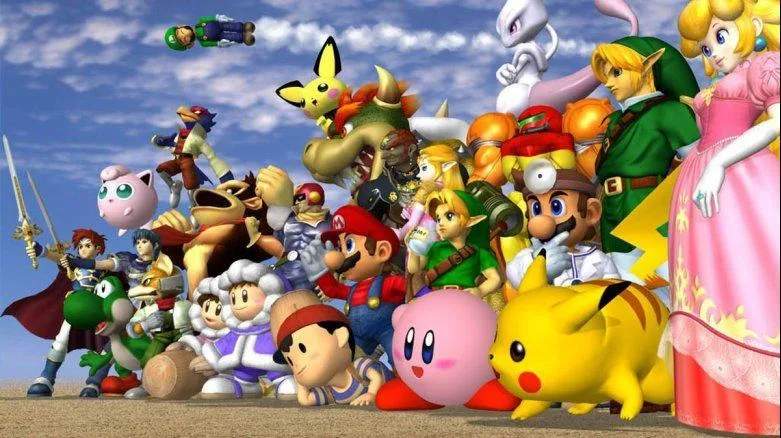
Single-Player Modes: A Comprehensive Guide to Super Smash Bros. N64
Welcome, aspiring Smasher, to the definitive guide for the single-player experience in the original Super Smash Bros. for the Nintendo 64! While the N64 classic doesn't feature an expansive adventure mode like later iterations, it offers a robust set of single-player challenges designed to hone your skills, unlock secrets, and provide countless hours of fun. This section will walk you through each mode, offering strategies, tips, and a detailed look at what to expect.
1. 1P Game (Classic Mode) Walkthrough and Strategies
The heart of the single-player experience, 1P Game, often referred to as Classic Mode, pits your chosen fighter against a series of opponents in various stages, culminating in a final boss battle. Your goal is to defeat all challengers and achieve the highest score possible, which is crucial for unlocking secret characters and stages.
1.1. Structure of 1P Game: A Stage-by-Stage Breakdown
Each playthrough consists of 12 distinct rounds, varying in opponent count, stage, and challenge type. The difficulty you select (Very Easy, Easy, Normal, Hard, Very Hard) significantly impacts opponent AI, damage output, and your final score multiplier. Mastering each stage is key to achieving high scores and unlocking all secrets.
- Round 1-7: Standard Battles
- Objective: Defeat your opponent(s) by knocking them off the stage.
- Opponents: These rounds typically involve 1-on-1 or 1-on-2 battles against other fighters. The specific opponents and stages are semi-randomized but follow a general progression, often starting with lighter characters (e.g., Kirby, Pikachu) and moving to heavier ones (e.g., Donkey Kong, Samus) as you progress.
- Stages: You will encounter several stages from the game's roster, including Peach's Castle, Congo Jungle, Hyrule Castle, Planet Zebes, Yoshi's Story, Dream Land, and Saffron City.
- Strategy: Focus on mastering your chosen character's basic combos, recovery, and smash attacks. Learn to effectively use your shield and dodge. Prioritize knocking opponents off the stage rather than just accumulating damage. use stage hazards to your advantage (e.g., the bumper on Peach's Castle, the barrel cannon in Congo Jungle).
- Common Pitfalls: Getting complacent against early opponents, allowing them to rack up damage. Falling victim to stage hazards yourself.
- Round 8: Break the Targets!
- Objective: Destroy all 10 targets scattered across a custom stage designed specifically for your chosen character. Speed is paramount for a high score.
- Stage: A unique, character-specific stage with 10 red targets.
- Strategy: Each character has an optimal path and set of moves to clear their targets quickly. Experiment and memorize the layout. For example, Mario might use his Fireball for distant targets, while Fox might use his Blaster. Plan your route to minimize movement and maximize efficiency.
- Character-Specific Tips (Examples):
- Mario: Use Fireball to hit targets from a distance, then follow up with aerials or smash attacks for closer ones.
- Donkey Kong: use his Giant Punch for targets grouped together and his Spinning Kong for vertical reach.
- Link: Boomerang and Arrows are essential for ranged targets. His Spin Attack can hit multiple targets in close proximity.
- Samus: Charge Shot for powerful hits, Missiles for precision. Screw Attack can cover vertical distance quickly.
- Common Pitfalls: Missing a target and having to backtrack, falling off the stage, or taking too long. Practice in Bonus Stages mode to perfect your run.
- Round 9: Board the Platforms!
- Objective: Land on all 10 platforms scattered across a character-specific stage. Precision and recovery are key.
- Stage: Another unique, character-specific stage with 10 green platforms.
- Strategy: Focus on precise movement and recovery. Some platforms require specific jumps or aerial maneuvers. Understand your character's jump height, air speed, and recovery options (Up-B, wall jumps if applicable). Plan a route that efficiently takes you to all platforms without falling.
- Character-Specific Tips (Examples):
- Kirby: use his multiple jumps for excellent aerial control and reaching high platforms.
- Pikachu: Quick Attack provides excellent directional recovery and can be used to reach tricky platforms.
- Yoshi: His Flutter Jump gives him sustained airtime, making platforming easier.
- Fox: His fast fall speed requires precise timing, but his Fox Illusion can cover horizontal gaps.
- Common Pitfalls: Falling off the stage is the main hazard. Practice your character's recovery options and learn the stage layout.
- Round 10: Fighting Polygon Team
- Objective: Defeat 30 Fighting Polygons (generic, wireframe versions of the main cast) in a free-for-all battle.
- Stage: Hyrule Castle.
- Strategy: use wide-reaching attacks and powerful smash attacks to clear groups of Polygons efficiently. Don't let them gang up on you, as they can quickly rack up damage. Focus on knocking them off the stage rather than just dealing damage, as they have low weight. Projectiles can be very effective for crowd control. Stay near the edges to easily launch them off.
- Reward: Completing this round quickly and with minimal damage contributes significantly to your score.
- Common Pitfalls: Getting overwhelmed by the sheer number of opponents, allowing your damage percentage to get too high, or accidentally self-destructing while trying to KO a Polygon.
- Round 11: Master Hand
- Objective: Defeat the giant, sentient glove, Master Hand.
- Stage: The Final Destination-like "Battlefield" stage.
- Strategy: Master Hand has several attacks, each with a tell and a counter. Learning these patterns is crucial.
- Finger Laser: Shoots a laser from its index finger. Dodge or shield.
- Slap: A wide, sweeping attack. Shield or roll behind it.
- Fist Slam: Slams down, creating a shockwave. Jump over the shockwave.
- Grab: Attempts to grab you. Mash buttons to escape if caught.
- Finger Walk: Walks across the stage, dealing damage. Stay airborne or on the opposite side.
- Drill: Drills into the stage. Move away from the impact zone.
- Bullet Barrage: Fires multiple projectiles. Shield or weave through them.
- Finger Flick: Attempts to flick you off the stage. Shield or dodge.
- Weakness: Master Hand's attacks often leave him vulnerable for a short period. Focus on hitting his hand directly. Projectiles can be very effective for consistent damage from a distance. After certain attacks (like the Fist Slam or Drill), he will remain stationary for a moment, offering a prime opportunity for a charged smash attack.
- Recommended Character Strategies:
- Fox/Falco: Blaster for consistent damage from a distance. Use Fox Illusion/Falco Phantasm to quickly reposition.
- Samus: Charge Shot for high burst damage. Missiles can also add consistent pressure.
- Pikachu: Quick Attack for evasion and hitting Master Hand from various angles. Thunder can deal strong hits when Master Hand is close.
- Link: Boomerang and Arrows for range, Spin Attack for close quarters when Master Hand is vulnerable.
- Kirby: Inhale can copy some projectiles (like Samus's Charge Shot if she's on the team), or use his multiple jumps for evasion and aerial attacks.
- Donkey Kong: Giant Punch can deal massive damage if fully charged when Master Hand is open.
- Common Pitfalls: Getting hit by consecutive attacks, failing to escape grabs, or getting knocked off-stage by powerful blows. Keep your damage low and prioritize dodging.
- Round 12: Metal Mario (and sometimes Giant Donkey Kong)
- Objective: Defeat Metal Mario, and potentially Giant Donkey Kong.
- Stage: Peach's Castle.
- Metal Mario Strategy: Metal Mario is extremely heavy, takes significantly less knockback, and deals more damage. He is susceptible to throws and continuous combos, as he cannot be easily launched. Edge-guarding is very effective; once you get him off the stage, prevent his recovery. Avoid direct clashes if your character is light, as he will out-trade you. Use projectiles to chip away at his health. His recovery is limited, so knocking him far off-stage is often the best approach.
- Giant Donkey Kong Strategy (Higher Difficulties/Exceptional Performance): If he appears, Giant DK is even heavier and hits harder than regular DK. His massive size makes him an easy target for projectiles and multi-hit attacks. Be wary of his powerful grabs and smash attacks, which can launch you instantly. Focus on getting him off the stage with powerful smash attacks or by exploiting his slow recovery. He has a large hitbox, making him vulnerable to aerial attacks.
- Reward: Defeating these final bosses completes the 1P Game and unlocks the character's ending cinematic.
- Common Pitfalls: Underestimating Metal Mario's weight and damage output. Getting grabbed by Giant DK. Failing to edge-guard effectively.
1.2. Scoring and Unlocks in 1P Game: Your Path to Mastery
Your final score is determined by several factors, which are crucial for unlocking content. Aim for a high score by playing efficiently and avoiding mistakes.
- Time: Faster completion times yield higher scores.
- Damage Taken: Less damage taken results in a higher score.
- KOs: The number of opponents you KO.
- Self-Destructs (SDs): Each SD significantly reduces your score. Avoid them at all costs.
- Difficulty Multiplier: Higher difficulties provide a larger score multiplier, making it easier to reach score thresholds for certain unlocks.
- Bonus Points: Awarded for specific achievements during gameplay:
- No Damage Clear: Clear a round without taking any damage.
- First Attack: Land the first hit in a battle.
- Smash KO: Defeat an opponent with a smash attack.
- Meteor Smash: Spike an opponent downwards for a KO.
- Combo Master: Land a long combo.
- Perfect Bonus: Clear a bonus stage (Break the Targets/Board the Platforms) flawlessly.
- Time Bonus: Clear a round very quickly.
Unlocking Characters: To unlock the four secret characters, you must complete the 1P Game under specific conditions. These unlocks are cumulative across all characters you play as, meaning progress carries over.
| Character to Unlock | Unlock Condition (1P Game) | Notes & Strategy |
|---|---|---|
| Jigglypuff | Complete 1P Game once with any character on any difficulty. | The easiest unlock. Simply finish a single playthrough of 1P Game. |
| Captain Falcon | Complete 1P Game within 20 minutes with any character. | Focus on speed. Choose a fast character you are proficient with (e.g., Fox, Pikachu). Prioritize quick KOs in standard battles. In bonus stages, aim for efficient clears. On lower difficulties, opponents are easier to dispatch quickly. You can skip bonus stages if they take too long, but they do contribute to score. |
| Ness | Complete 1P Game three times with any character on any difficulty. | This is a cumulative unlock. You can complete it with the same character three times, or three different characters once each. Difficulty does not matter. |
| Luigi | Complete "Break the Targets!" with all 8 starting characters. | This is often considered the most challenging unlock. Each of the 8 starting characters (Mario, Donkey Kong, Link, Samus, Yoshi, Kirby, Fox, Pikachu) has a unique target stage. You must clear all 8 of these stages in the "Bonus Stages" menu (or during 1P Game, but it's easier to track in Bonus Stages). Practice each character's specific stage until you can consistently clear it. |
Unlocking Stages: There is one secret stage to unlock, adding more variety to your battles:
- Mushroom Kingdom: Complete "1P Game" with all 8 starting characters. This means you need to finish a full 1P Game playthrough with Mario, Donkey Kong, Link, Samus, Yoshi, Kirby, Fox, and Pikachu. Difficulty doesn't matter, but completing it on higher difficulties will earn you more bragging rights!
2. Training Mode: The Ultimate Practice Arena
Training Mode is your personal dojo, allowing you to practice techniques, combos, and character matchups without the pressure of a timed battle or limited lives. It's an invaluable tool for mastering the game, understanding hitboxes, and refining your skills against specific opponents.
2.1. Training Mode Features: Customizing Your Practice
The flexibility of Training Mode allows for highly specific practice scenarios.
- Character Selection: Choose any unlocked character for yourself.
- Opponent Selection: Choose any unlocked character as your CPU opponent, or select "None" for solo practice.
- Stage Selection: Practice on any unlocked stage, allowing you to learn stage layouts and hazards.
- CPU Behavior: Customize your opponent's actions to practice specific situations:
- Stand: Opponent stands still. Ideal for practicing combos and attack ranges.
- Walk: Opponent walks back and forth. Good for practicing spacing and approaching.
- Jump: Opponent jumps periodically. Useful for practicing anti-air attacks and aerial combos.
- Attack: Opponent attacks randomly. Helps in practicing shielding, dodging, and counter-attacks.
- Guard: Opponent shields randomly. Practice shield pressure, grab setups, and shield breaks.
- CPU: Opponent acts like a standard CPU player, offering a more dynamic practice partner.
- Damage Display: See the exact percentage of damage dealt by each attack. This is crucial for understanding your character's damage output and combo potential.
- Item Spawns: Practice with specific items, learning their effects and how to integrate them into your gameplay. You can set the frequency of item spawns.
- Hitbox Interpretation (Advanced): While not an explicit menu option, experienced You can visually interpret hitboxes by observing attack animations and the damage numbers. This allows for precise understanding of attack ranges and sweet spots.
2.2. Effective Training Strategies: Maximizing Your Session
To get the most out of Training Mode, approach it with specific goals in mind.
- Learn Basic Combos: Practice your character's jab combos, tilt attacks, and aerials until they become muscle memory. Focus on linking attacks together for maximum damage. For example, Mario's down-tilt can lead into an up-air.
- Recovery Practice: Go off-stage and practice recovering using your character's Up-B move and wall jumps (if applicable). Experiment with different angles, distances, and timing to ensure you can always make it back to the stage. Try recovering from below the stage, from far out, and from different heights.
- Smash Attack Timing: Learn the charge time, knockback, and sweet spots of your character's smash attacks. Practice releasing them at the optimal moment for KOs.
- Shielding and Dodging: Set the CPU to "Attack" and practice perfect shielding (shielding just before an attack hits to reduce shield stun) and roll dodging through attacks. Learn your character's invincibility frames during rolls.
- Edge-guarding: Practice knocking the CPU off-stage and preventing their recovery. Experiment with different aerials, projectiles, and stage spikes to deny your opponent a return to the stage.
- Projectile Usage: If your character has projectiles (e.g., Link's arrows, Samus's missiles, Fox's Blaster), practice aiming and timing them, as well as using them to zone opponents or set up approaches.
- Matchup Practice: Set the CPU to a character you struggle against and experiment with different approaches, counter-strategies, and ways to exploit their weaknesses. For example, if you struggle against Kirby's aerials, practice shielding and punishing them.
- DI (Directional Influence) Practice: While not explicitly taught, understanding DI is crucial. Practice moving your control stick in different directions when hit to influence your trajectory and survive longer.
- Item Proficiency: If you play with items, practice picking them up, throwing them, and using their effects effectively. Learn the range and power of items like the Home-Run Bat, Star Rod, and Bob-omb.
3. Bonus Stages: Break the Targets! & Board the Platforms!
These stages are not just part of the 1P Game; they can also be accessed directly from the main menu under "Bonus Stages." This is crucial for unlocking Luigi and for perfecting your technique for high scores in Classic Mode.
3.1. Break the Targets!: Character-Specific Guides
Each of the 12 characters (8 starting + 4 unlockable) has a unique "Break the Targets!" stage. To unlock Luigi, you must clear all 8 starting characters' target stages. Mastering these stages requires memorization and character-specific execution.
General Strategy for All Characters:
- Memorize the Layout: The most important step. Play through each stage multiple times to learn the exact location of all 10 targets.
- Optimize Your Path: Plan the most efficient route to hit all targets with minimal movement and wasted time. Often, this involves hitting targets that are grouped together or using a single move to hit multiple.
- use Character-Specific Moves: Every character has unique abilities that make their target stage easier. Understand how your character's jumps, aerials, projectiles, and special moves interact with the stage and targets.
- Speed is Key: While simply clearing the stage is enough for Luigi, faster times contribute to higher scores in 1P Game.
Detailed Character Strategies for Break the Targets!:
- Mario:
- Stage: A series of floating platforms and walls.
- Strategy: Use Fireball (Neutral B) for distant targets. His forward aerial (Fair) and back aerial (Bair) are good for targets in the air. His Up-Smash can hit targets directly above him. Plan a route that uses his wall jump to reach higher areas.
- Donkey Kong:
- Stage: A vertical stage with platforms and some targets hidden behind walls.
- Strategy: Charge Giant Punch (Neutral B) for targets grouped together or those behind breakable walls. Spinning Kong (Up B) is excellent for vertical movement and hitting targets directly above. His Down-B (Hand Slap) can hit targets on the ground.
- Link:
- Stage: A castle-like structure with targets at various heights and distances.
- Strategy: Boomerang (Side B) and Arrows (Neutral B) are essential for ranged targets. His Spin Attack (Up B) is great for targets in close proximity or for clearing a path. Use his shield to block projectiles if any appear (though not common in target stages).
- Samus:
- Stage: A complex, multi-layered stage with many small platforms.
- Strategy: Charge Shot (Neutral B) for powerful, precise hits. Missiles (Side B) for smaller, distant targets. Screw Attack (Up B) provides excellent vertical mobility and can hit targets during its ascent. Her Bomb (Down B) can be used for precise platforming or hitting targets below her.
- Yoshi:
- Stage: A series of floating islands and clouds.
- Strategy: His Flutter Jump provides sustained airtime, making it easy to reach platforms and targets. Egg Throw (Neutral B) is excellent for hitting distant or awkwardly placed targets. His aerials (especially Fair and Bair) are quick and effective.
- Kirby:
- Stage: A very open stage with targets spread out, some high up.
- Strategy: Kirby's multiple jumps are his greatest asset for this stage, allowing him to reach almost any target. His Stone (Down B) can break targets below him. Inhale (Neutral B) can be used to reposition or hit targets if you copy an ability first (though usually not necessary).
- Fox:
- Stage: A fast-paced stage with targets often requiring quick movement.
- Strategy: Blaster (Neutral B) for quick, precise hits on targets. Fox Illusion (Side B) is great for horizontal movement and hitting targets in a line. His fast fall speed and aerials make him agile.
- Pikachu:
- Stage: A stage with many small, disconnected platforms.
- Strategy: Quick Attack (Up B) is incredibly versatile for both movement and hitting targets. Thunder Jolt (Neutral B) can hit targets horizontally or along the ground. His fast aerials are also useful.
- Luigi (Unlockable):
- Stage: A stage with many vertical shafts and targets.
- Strategy: Green Missile (Side B) is excellent for horizontal distance and hitting targets. Super Jump Punch (Up B) provides great vertical reach. His fast walk speed and slippery traction can be used to his advantage.
- Captain Falcon (Unlockable):
- Stage: A stage that requires powerful hits and precise aerials.
- Strategy: Falcon Dive (Up B) for vertical recovery and hitting targets above. Raptor Boost (Side B) for horizontal movement and powerful hits. His fast aerials and strong smash attacks are key.
- Ness (Unlockable):
- Stage: A stage with targets often requiring indirect hits or precise movement.
- Strategy: PK Fire (Side B) can hit targets from a distance and create a small pillar of fire. PK Thunder (Neutral B) is crucial for his recovery and can be used to hit targets from unique angles. His aerials are also strong.
- Jigglypuff (Unlockable):
- Stage: A stage that emphasizes Jigglypuff's multiple jumps and aerial prowess.
- Strategy: Jigglypuff's multiple jumps allow for unparalleled aerial maneuverability. Rest (Down B) can be used for a powerful, albeit risky, hit on a target directly above. Pound (Side B) is a good horizontal attack.
3.2. Board the Platforms!: Mastering Movement
Similar to Break the Targets!, each character has a unique "Board the Platforms!" stage. While not required for any specific unlock, mastering these stages improves your character control and recovery skills.
General Strategy for All Characters:
- Precise Movement: Focus on careful jumps and aerial control.
- Recovery Options: Understand your character's Up-B, wall jumps, and aerial drift.
- Plan Your Route: Identify the most efficient path to land on all 10 platforms without falling.
- Patience: Unlike Break the Targets!, speed is less critical here. Prioritize not falling.
Detailed Character Strategies for Board the Platforms!:
- Mario: His balanced jump and Up-B (Super Jump Punch) make his stage straightforward. Use his wall jump to reach higher platforms.
- Donkey Kong: His Spinning Kong (Up B) provides good vertical recovery. Be mindful of his heavy fall speed.
- Link: His Up-B (Spin Attack) offers decent vertical recovery. His aerials can help adjust position.
- Samus: Screw Attack (Up B) is excellent for reaching high platforms. Her Bomb (Down B) can be used for precise mid-air adjustments.
- Yoshi: His Flutter Jump is a massive advantage, allowing for easy and controlled platforming.
- Kirby: His multiple jumps make his stage one of the easiest, offering immense control and recovery.
- Fox: His fast fall speed requires precise timing. Fox Illusion (Side B) can cover horizontal gaps.
- Pikachu: Quick Attack (Up B) is incredibly versatile for navigating his stage, allowing for two directional bursts.
- Luigi: Super Jump Punch (Up B) gives him good vertical height. Green Missile (Side B) can be used for horizontal distance if charged.
- Captain Falcon: Falcon Dive (Up B) provides good vertical recovery. His fast movement helps in reaching platforms quickly.
- Ness: PK Thunder (Neutral B) is his primary recovery and can be tricky to control but offers great range.
- Jigglypuff: Her multiple jumps are her main asset, providing excellent aerial control and recovery.
4. Vs. Mode: Unleash the Chaos!
While primarily a multiplayer mode, Vs. Mode can also be used for single-player practice against CPU opponents. It's an excellent way to test your skills in a more realistic combat scenario than Training Mode.
4.1. Vs. Mode Features for Single-Player Practice
- CPU Opponents: Set up battles against 1-3 CPU opponents of varying difficulty levels (from Level 1 to Level 9).
- Rules Customization:
- Time Battle: Fight for a set amount of time, with You having the most KOs (or least falls) winning.
- Stock Battle: Each player has a set number of lives (stocks). The last player standing wins.
- Team Battle: Practice team strategies with CPU allies or against CPU teams.
- Stage Selection: Choose any unlocked stage to practice on.
- Item Frequency: Adjust how often items appear, from "None" to "Very High."
4.2. Effective Vs. Mode Practice Strategies
- Matchup Training: Set a Level 9 CPU to a character you struggle against and practice your competitive strategies.
- Item Management: If you play with items, practice using them effectively in a live combat scenario. Learn which items to prioritize and how to incorporate them into your attacks.
- Stage Mastery: Practice on specific stages to learn their layouts, hazards, and optimal areas for fighting.
- Endurance Training: Set up long stock battles against multiple CPUs to test your stamina and consistency.
- Team Strategy: If you plan to play team battles, practice with CPU teammates to understand positioning and assist KOs.
By diligently working through the 1P Game, mastering the Bonus Stages, and refining your techniques in Training and Vs. Modes, you will not only unlock all the secrets Super Smash Bros. N64 has to offer but also become a truly formidable Smasher!