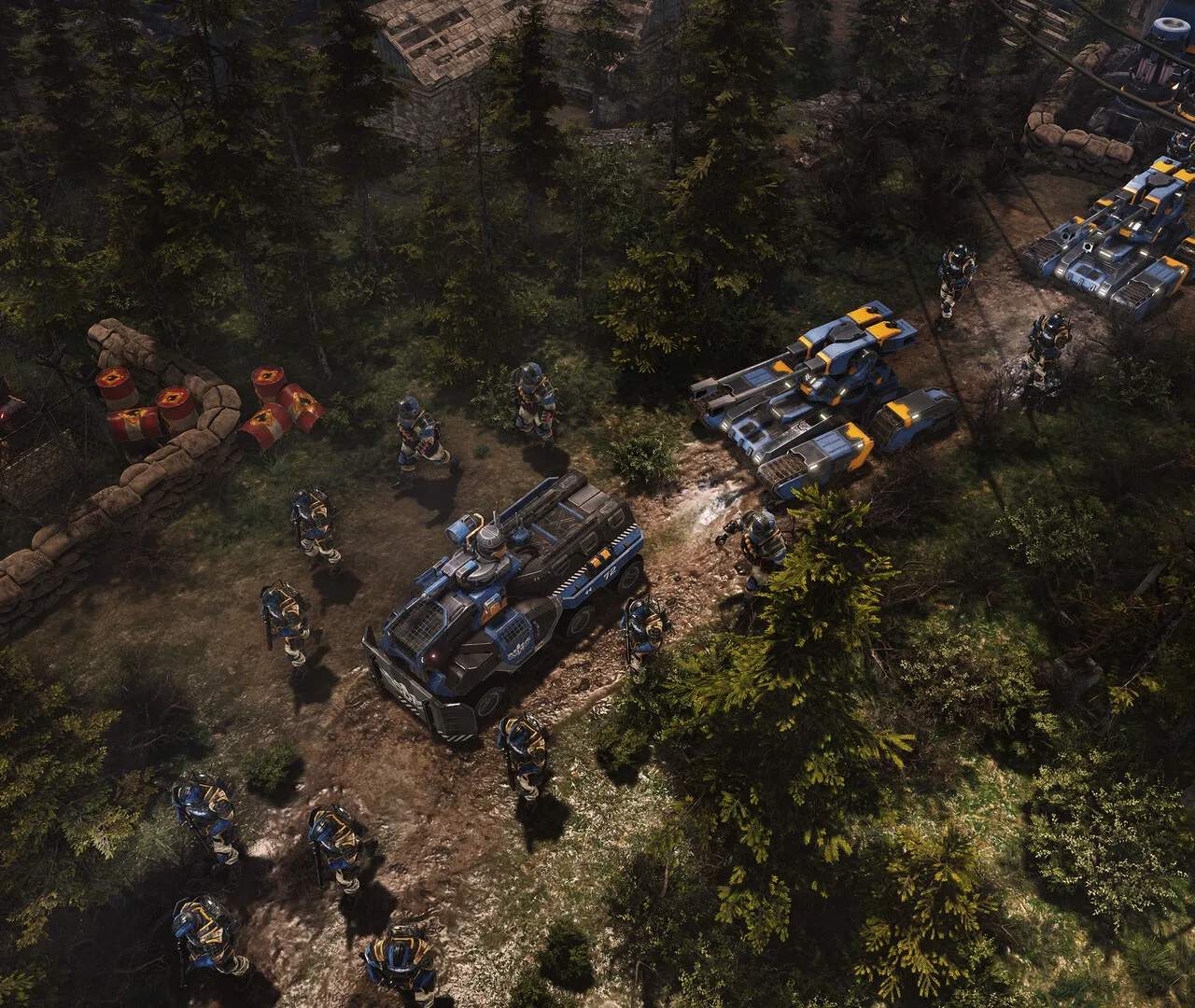
Advanced Strategies & Tactics
Welcome, Commander, to the advanced combat doctrines of Tempest Rising. This section delves beyond basic build orders and unit counters, focusing on nuanced strategies that can turn the tide of even the most desperate engagements. Mastering these tactics will elevate your gameplay, allowing you to outmaneuver and outthink your opponents.
Early Game Aggression: The "Tempest Rush"
The Tempest Rush is a high-risk, high-reward strategy designed to cripple an opponent's economy and production in the early stages of the game. It relies on rapid expansion and a focused, overwhelming assault.
- Faction Focus: Global Defense Force (GDF) or Tempest Dynasty. GDF benefits from the early durability of their Grizzly Tanks, while the Tempest Dynasty can leverage the speed of their Scorpion Buggies and the disruptive potential of Tempest Harvesters for resource denial.
- Build Order (GDF Example):
- Command Center
- Power Plant
- Refinery (deploy near initial Tiberium field)
- Barracks (start producing 2-3 Riflemen Squads for base defense and initial scouting)
- Vehicle Assembly Plant (rush this structure)
- Immediately queue 2-3 Grizzly Tanks.
- As soon as the first Grizzly is out, send it, along with your Riflemen, towards the enemy's likely expansion point or main base.
- Continue producing Grizzly Tanks and support units like Wolverine APCs if the enemy fields infantry.
- Execution:
- Scouting is Key: Use your initial Riflemen or a dedicated scout unit to pinpoint the enemy's base location and resource gathering operations. Target their Refineries and Harvesters first.
- Harvester Harassment: Even if you can't destroy a Refinery, constantly attacking enemy Harvesters will severely disrupt their income.
- Target Weak Points: Look for exposed Power Plants or Barracks. Destroying these can slow down their tech progression and unit production.
- Micro-Management: Keep your units moving. Focus fire on high-priority targets. Use terrain to your advantage, such as hills for line-of-sight advantages or choke points to funnel enemy forces.
- Reinforce Constantly: Don't stop producing units from your Vehicle Assembly Plant. Send reinforcements directly to the front lines.
Mid-Game Map Control: Establishing Forward Operating Bases (FOBs)
As the game progresses, controlling key map locations becomes paramount. Establishing Forward Operating Bases (FOBs) allows for faster reinforcement, access to additional resources, and strategic pressure on your opponent.
- Ideal Locations:
- Secondary Tiberium Fields: Securing additional resource nodes is crucial for maintaining a strong economy.
- Choke Points: Placing an FOB at a natural choke point can create a defensive bottleneck, preventing enemy advances or funneling them into kill zones.
- High Ground: Elevated positions offer a significant line-of-sight advantage for defensive structures and long-range units.
- Near Objectives: If the map features capture points or special objectives, an FOB nearby can provide a rapid response force.
- FOB Composition (General):
- Construction Yard (Deployed): Essential for building and repairing structures.
- Refinery: To process resources from the new Tiberium field.
- Power Plant: To power the FOB's structures.
- Defensive Turrets:
- GDF: Guardian Turrets for anti-vehicle, AA Emplacements for anti-air. Consider a few Watchtowers for early detection.
- Tempest Dynasty: Plasma Turrets for general defense, Flak Cannons for air defense.
- Barracks/Vehicle Assembly Plant: Allows for local unit production, reducing travel time for reinforcements.
- Deployment Strategy:
- Scout Thoroughly: Before committing to an FOB, ensure the area is clear of enemy presence.
- Escort Your Constructor: Send a small force of combat units (e.g., 2-3 Grizzly Tanks or Scorpion Buggies) with your Construction Vehicle or Mobile Construction Vehicle (MCV) to protect it during deployment.
- Prioritize Defenses: Once the Construction Yard is deployed, immediately build a Power Plant, then focus on 1-2 defensive turrets to establish a perimeter.
- Expand Economically: After initial defenses are up, build your Refinery and start harvesting.
- Integrate with Main Base: Ensure your FOB has a clear, protected path back to your main base for resource transfer and large-scale reinforcement.
Late Game Domination: Combined Arms & Superweapons
In the late game, victory often hinges on effective combined arms tactics and the judicious use of superweapons. A well-coordinated assault combining air, ground, and specialized units is far more effective than a monolithic force.
- Combined Arms Principles:
- Anti-Air Coverage: Always include dedicated anti-air units like GDF's Wolverine APCs (with AA upgrade) or Tempest Dynasty's Flak Tanks to protect your ground forces from enemy aircraft.
- Anti-Vehicle Core: Form the backbone of your assault with heavy tanks (e.g., GDF's Mammoth Tanks, Tempest Dynasty's Desolator Tanks).
- Anti-Infantry Support: Integrate units effective against infantry, such as GDF's Grenadier Squads or Tempest Dynasty's Flame Tanks, to prevent swarms of cheaper units from overwhelming your heavy armor.
- Artillery/Long-Range Support: Units like GDF's Artillery Platforms or Tempest Dynasty's Siege Tanks can soften up enemy defenses before your main assault, or provide crucial fire support from a safe distance.
- Air Superiority: Maintain a small squadron of fighter jets (e.g., GDF's Stormhawk Fighters) or attack helicopters (e.g., Tempest Dynasty's Viper Gunships) to engage enemy air units and provide tactical bombing runs.
- Superweapon Deployment:
- GDF: Orbital Strike Uplink
- Targeting: The Orbital Strike is best used to eliminate high-value static targets like enemy Construction Yards, Superweapon Silos, or clusters of powerful defensive structures.
- Timing: Deploy it just before a major push to clear a path, or defensively to break an enemy assault.
- Decoy Tactics: Sometimes, a feigned attack on one flank can draw enemy forces, allowing you to use the Orbital Strike on a more critical, less defended target elsewhere.
- Tempest Dynasty: Tiberium Bomb Silo
- Area Denial: The Tiberium Bomb creates a devastating, lasting Tiberium field, making the area impassable and damaging to units. Use it to deny access to key resource nodes, choke points, or to split enemy forces.
- Economic Warfare: Dropping a Tiberium Bomb on an enemy's primary Tiberium field can cripple their economy for an extended period.
- Strategic Retreat: If you're being overwhelmed, a well-placed Tiberium Bomb can create a defensive barrier, allowing your forces to regroup or escape.
- GDF: Orbital Strike Uplink
- Coordinated Assault:
- Softening Up: Use artillery or an Orbital Strike/Tiberium Bomb to weaken enemy defenses or eliminate key structures.
- Air Cover: Send in your air units to engage enemy anti-air or to target vulnerable units.
- Main Push: Advance your combined ground forces, ensuring anti-air and anti-infantry support are positioned effectively.
- Flanking Maneuvers: If possible, send a smaller, faster force (e.g., Scorpion Buggies or Hummingbird Attack Helicopters) around the main engagement to hit the enemy's rear or vulnerable production facilities.
- Repair and Rebuild: Keep your Engineers or Repair Drones on standby to quickly patch up damaged units, and continue producing reinforcements from your main base and FOBs.