Map Strategies
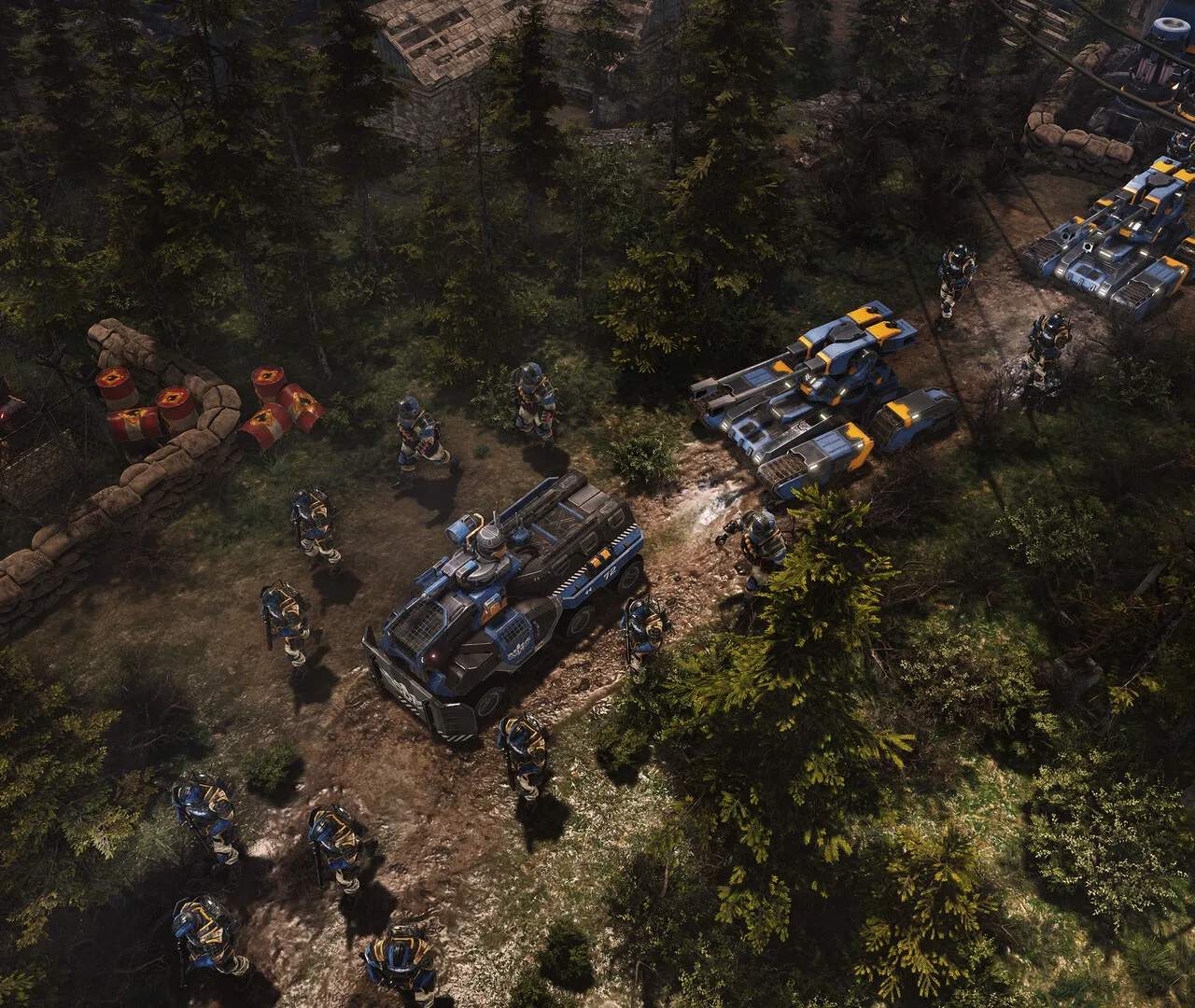
Mastering the various maps in Tempest Rising is crucial for consistent victory. Each battlefield presents unique challenges and opportunities, from resource distribution to choke points and tactical objectives. Understanding these nuances will allow you to adapt your build orders, unit compositions, and overall game plan to dominate your opponents. This section provides detailed strategies for common map archetypes and specific examples where applicable.
Resource Management and Expansion
Effective resource management is the bedrock of any successful strategy. Tempest Rising features two primary resources: Tempest Ore (primary currency for units and structures) and Power (required for advanced structures and abilities). Maps often feature varying distributions of these resources, dictating early-game priorities.
- Main Ore Veins: Your starting location will always have a primary Tempest Ore vein. Prioritize establishing a Refinery and deploying Harvesters immediately. For GDF, consider an early Supply Depot for faster Harvester deployment. Dynastic leverage their initial Drone Carrier to quickly secure initial ore.
- Secondary Ore Fields: Most maps feature smaller, often contested, secondary ore fields. These are vital for mid-to-late game economic scaling.
- Early Scouting: Use fast, cheap units like GDF Scouts or Dynastic Recon Drones to locate these fields early.
- Forward Expansion: Once identified, consider a forward Refinery or Dynastic Processing Plant protected by defensive structures (e.g., GDF Watchtowers, Dynastic Plasma Turrets) to secure these resources. Be prepared for early skirmishes over these locations.
- Power Nodes: Power is often found in specific, sometimes elevated, locations. Securing these with Power Generators (GDF) or Fusion Cores (Dynastic) is essential for unlocking higher-tier technology and unit production.
- Defensive Placement: Power structures are vulnerable. Always place them within range of base defenses or protected by mobile units.
- Strategic Denial: Denying your opponent access to easily accessible Power Nodes can severely cripple their tech progression.
Choke Points and Defensive Postures
Many maps are designed with natural choke points – narrow passages, bridges, or elevated ramps – that can be exploited for both offense and defense.
- Identifying Choke Points: During the initial scout, mark potential choke points on your minimap. These are critical for funneling enemy attacks or launching concentrated assaults.
- Defensive Fortifications:
- GDF: Utilize Watchtowers, Bunkers (garrisoned with Riflemen or Grenadiers), and Anti-Air Turrets at key choke points. Deploy Minefields in front of these defenses to deter ground pushes.
- Dynastic: Deploy Plasma Turrets and Shield Generators to create formidable defensive lines. The Dynastic's ability to quickly deploy structures makes them excellent at fortifying positions.
- Offensive Breaching: When attacking a fortified choke point, use area-of-effect abilities (e.g., GDF Artillery Barrage, Dynastic Plasma Storm) to soften defenses. Employ heavy armor units like GDF Mammoth Tanks or Dynastic Obliterators to absorb damage while your infantry or specialized units clear out defensive structures.
High Ground Advantage and Vision Control
Maps often feature elevated terrain that provides significant tactical advantages, primarily increased vision and range for units stationed there.
- Vision Towers/Outposts: Some maps include neutral structures that, once captured, provide extended vision over large areas. Prioritize capturing these early with an infantry squad to gain crucial intel on enemy movements and expansions.
- Elevated Positions for Artillery: Units like GDF Artillery or Dynastic Siege Tanks benefit immensely from high ground, allowing them to shell enemy bases or unit formations from a safe distance.
- Anti-Air Placement: Positioning Anti-Air units (e.g., GDF Wolverines, Dynastic Skyguard Turrets) on high ground can give them a better line of sight and engagement range against airborne threats.
Specific Map Archetypes and Strategies
"Twin Peaks" (Example Map)
This map features two elevated plateaus, each serving as a primary starting base, separated by a central low-ground valley with scattered Tempest Ore veins and Power Nodes. Two main ramps connect each plateau to the valley.
- Early Game:
- Immediately establish your primary Refinery and Harvesters.
- Send a fast scout unit (GDF Scout, Dynastic Recon Drone) to the central valley to identify contested ore fields and Power Nodes.
- Prioritize securing one of the central Power Nodes. For GDF, this might involve a forward Power Generator protected by a Watchtower. For Dynastic, a Fusion Core and Plasma Turret.
- Begin light harassment of the enemy's Harvesters in the valley if they attempt an early expansion.
- Mid Game:
- Fortify the ramps leading to your plateau with defensive structures. These are critical choke points.
- Establish a secondary expansion in the central valley to secure additional Tempest Ore.
- Utilize the high ground of your plateau for long-range units. GDF You can deploy Artillery to shell enemy expansions in the valley, while Dynastic You can position Siege Tanks.
- Control of the central valley is paramount. Engage in skirmishes to push back enemy attempts to dominate the resource-rich low ground.
- Late Game:
- Focus on overwhelming the enemy's fortified ramps. Use combined arms approaches: heavy armor to draw fire, infantry to clear defenses, and air support to eliminate key targets.
- Consider flanking maneuvers through less-defended areas of the valley, or even air drops onto the enemy's plateau if air superiority is achieved.
- Maintain constant pressure on their economy by targeting their Harvesters and secondary Refineries.
"River Divide" (Example Map)
Characterized by a large river bisecting the map, with limited bridge crossings and often a central island or fordable shallow areas. Resources are typically spread out along both riverbanks.
- Early Game:
- Secure your initial Tempest Ore.
- Scout the river crossings and potential shallow water paths. These are your primary avenues of attack and defense.
- Prioritize building a small, mobile force to contest the central river crossings. GDF Humvees with Riflemen or Dynastic Hovertanks are excellent for this.
- If possible, establish a forward base or defensive structures near a key bridge to control access.
- Mid Game:
- Control of the bridges is critical. Fortify them heavily with defenses. GDF can use Bunkers and Watchtowers, while Dynastic can deploy Plasma Turrets and Shield Generators.
- Consider naval units if available, or air units to bypass the river entirely. GDF Orca Gunships or Dynastic Storm Drones can quickly cross the river and harass enemy bases.
- Look for opportunities to establish a small, protected expansion on the enemy's side of the river, especially if there's a less-defended shallow crossing.
- Late Game:
- Launch coordinated assaults across multiple bridges or via air/naval routes to split enemy defenses.
- Utilize long-range artillery from your side of the river to bombard enemy positions on the opposite bank.
- A strong air force can be decisive on this map, allowing you to bypass ground defenses and strike directly at the enemy's vulnerable production or resource structures.