Next Queue Reading
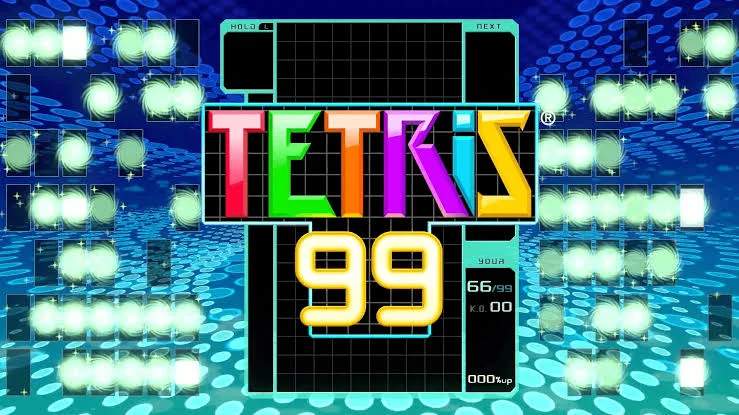
Mastering Tetris 99 requires more than just quick reflexes; it demands foresight. The "Next Queue" display, located prominently beside your main playfield, is your crystal ball into the immediate future of falling Tetriminos. Learning to effectively read and anticipate this queue is a critical skill for high-level play, allowing you to plan your placements, set up combos, and avoid sticky situations.
Understanding the Next Queue
The Next Queue typically shows the next 3-5 Tetriminos that will drop into your playfield. While the exact number can vary slightly based on screen resolution or game mode, the principle remains the same: it's a sequence of upcoming pieces generated from a "bag" system.
- The Bag System: Tetris 99, like most modern Tetris games, uses a "7-bag" randomizer. This means that every set of seven unique Tetriminos (I, J, L, O, S, T, Z) will appear exactly once before the bag is refilled and a new set begins. This predictability is your greatest asset.
- Visualizing the Future: Don't just glance at the next piece; actively process the entire visible queue. Imagine how each piece will fit into your current stack and how it will influence the subsequent pieces.
Actionable Walkthrough Steps for Next Queue Reading
1. Immediate Piece Assessment
Focus on the very next Tetrimino in the queue. This is your most critical piece of information for the current drop.
- Identify the Shape: Quickly recognize the Tetrimino (e.g., "I-block," "L-block," "T-spin piece").
- Determine Best Placement: Based on your current stack, where can this piece go to clear lines, set up a T-Spin, or maintain a flat surface?
- Consider Hold Piece: If the next piece is inconvenient, immediately evaluate if your Hold Queue can offer a better alternative.
2. Two-Piece Planning (The "Look-Ahead")
Once you've assessed the immediate piece, extend your planning to include the second piece in the queue.
- Synergy and Conflict: Do the first two pieces work well together? Can they form a quick line clear or a small combo? Or do they present a challenge, requiring you to adjust your stack to accommodate both?
- Setting Up for Success: If you see an "I-block" followed by a "T-block," you might want to create a 4-wide well for the "I-block" and a T-Spin setup for the "T-block."
- Avoiding Traps: If you see two awkward pieces in a row (e.g., two "Z-blocks" when you need to fill a gap), you know you'll need to be creative or consider using your Hold.
3. Three-Piece and Beyond (Advanced Planning)
For experienced players, reading three or more pieces ahead becomes crucial for sustained offense and defense.
- Combo Chains: Look for opportunities to chain multiple line clears. For instance, if you see an "L-block," then a "J-block," then an "I-block," you might be able to set up a Double, then a Triple, then a Tetris.
- T-Spin Setups: Identifying "T-blocks" far in advance allows you to meticulously craft the necessary overhangs and gaps for powerful T-Spin Doubles or Triples.
- Garbage Management: If you anticipate a wave of incoming garbage, knowing the next few pieces can help you decide whether to clear lines immediately to send garbage back, or to build a stable stack to absorb the attack.
- "Bag Memory": With practice, you'll start to unconsciously track which pieces have appeared in the current 7-bag. If you haven't seen an "I-block" in a while, and you're nearing the end of a bag, you can strongly anticipate one coming soon, allowing you to prepare a Tetris well.
4. Integrating the Hold Queue Strategy
Your "Hold" slot is an extension of your Next Queue. It allows you to swap your current falling piece with a piece you've saved.
- Strategic Swapping: If the next piece in the queue is not ideal for your current situation, check your Hold. If the Hold piece is perfect, swap it in.
- Saving Key Pieces: Often, you'll want to save an "I-block" for a Tetris, or a "T-block" for a T-Spin. By holding these critical pieces, you effectively extend your Next Queue planning even further.
- Emergency Measures: If you're in a tight spot and the next few pieces are unhelpful, a well-timed Hold swap can buy you precious seconds and prevent a top-out.
Key Locations and Visual Cues
- Next Queue Display: Located on the right side of your main playfield.
- Hold Queue Display: Located on the left side of your main playfield.
- Incoming Garbage Indicator: Pay attention to the gray lines accumulating on the left side of your playfield. This indicates incoming garbage and should influence your queue reading to prioritize line clears.
By consistently practicing these steps, you'll develop an intuitive understanding of the Next Queue, transforming it from a simple display into a powerful strategic tool that will elevate your Tetris 99 gameplay.