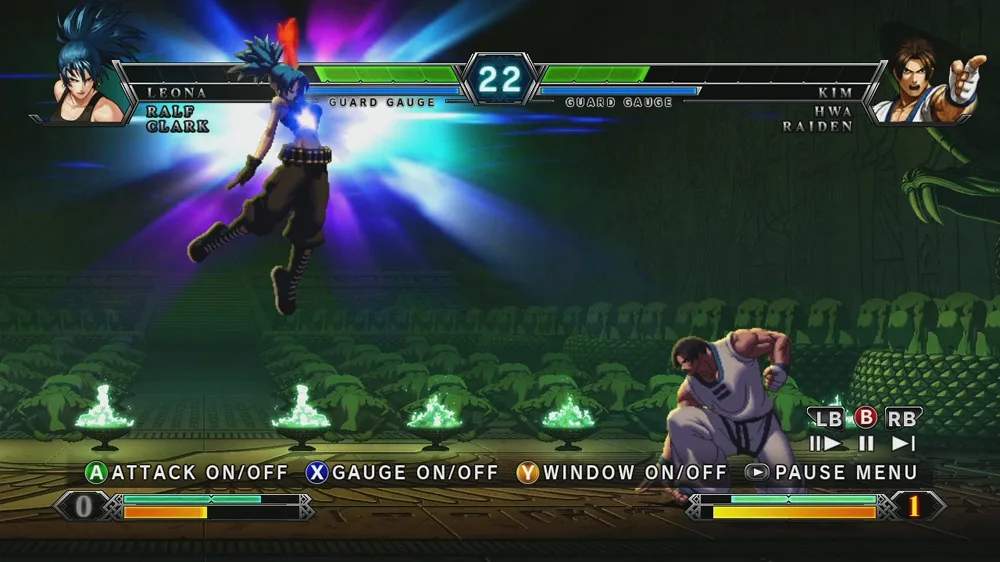
Damage Scaling & Combo Theory
Understanding damage scaling and how it interacts with KOFXIII's combo systems is paramount to maximizing your offensive potential. Unlike some fighting games where longer combos always mean more damage, KOFXIII employs a dynamic scaling system that significantly reduces the damage output of subsequent hits within a single combo. Mastering this system means learning to construct efficient, high-damage routes rather than simply stringing together as many hits as possible.
Understanding Damage Scaling
Damage scaling in KOFXIII begins immediately after the first hit of a combo. Each subsequent hit applies a reduced percentage of its base damage. The more hits you land, the more severe the scaling becomes. This is why a simple two-hit combo might deal proportionally more damage than a 20-hit monstrosity if the latter relies on many weak attacks.
- Initial Hit Bonus: The very first hit of a combo often deals 100% of its base damage, making strong openers crucial.
- Rapid Diminishment: The damage reduction is most pronounced in the early stages of a combo. The 2nd, 3rd, and 4th hits will see significant drops.
- Move Type Impact: Different move types scale differently. Normals generally scale more aggressively than special moves, and DMs/SDMs (Desperation Moves/Super Desperation Moves) have their own scaling properties, often retaining more damage even deep into a combo.
- Climax Cancel (EX DM to Neo Max): While powerful, the Neo Max itself is subject to scaling based on the hits preceding it. However, its high base damage often ensures it still deals substantial damage.
Optimizing Combo Damage: Core Principles
To consistently deal high damage, focus on these principles when constructing your combos:
1. Prioritize Strong Openers
Start your combos with your character's highest damage-per-hit normal or special move that allows for follow-ups. For example:
- Ryo Sakazaki: A well-placed
c.D(Crouching Hard Kick) orf.B(Forward Light Kick) into a special move likeKo'ou Ken (qcf+P)can be a strong start. - Kyo Kusanagi: His
c.B, c.A(Crouching Light Kick, Crouching Light Punch) chain is quick but scales quickly. Consider starting with ac.Dor a jump-in attack if possible.
2. Limit Light Attacks in Long Combos
While light attacks (A/B buttons) are excellent for confirming hits and extending combos, relying too heavily on them will drastically reduce your overall damage due to scaling. Use them sparingly, primarily for linking into stronger attacks or special moves.
- Actionable Step: Practice combos that transition from light attacks into heavy attacks or special moves as quickly as possible. For instance,
c.B, c.A > [Special Move]is often better thanc.B, c.A, c.B, c.A > [Special Move].
3. Integrate Special Moves and EX Specials Early
Special moves and especially EX Special Moves (requiring 1 stock of Power Gauge) often have better damage retention through scaling. Using them earlier in a combo can yield higher returns.
- Strategy: After a strong normal opener, immediately cancel into an EX Special Move if it allows for further combo extension. This "front-loads" higher damage before scaling becomes too severe.
- Example: Many characters can go from a
c.Dorj.D(Jump Hard Kick) into an EX Special Move for a powerful start.
4. Strategic Use of Drive Cancel and Super Cancel
These mechanics are crucial for extending combos, but their damage efficiency varies:
- Drive Cancel (DC): Allows you to cancel a special move into another special move. While it extends combos, the second special move will be heavily scaled. Use DCs to set up a DM/SDM or to gain corner carry, not necessarily for raw damage if a shorter, more impactful combo exists.
- Super Cancel (SC): Canceling a special move into a DM or an EX Special into a Neo Max. This is generally the most efficient way to end a combo for maximum damage. The DM/Neo Max will still be scaled, but its high base damage ensures a significant chunk of health is removed.
- Actionable Step: Identify your character's most damaging Super Cancel routes. For example, Kyo's
hcb+K (EX Aragami) > qcf,qcf+P (Orochinagi)is a common and effective Super Cancel.
5. Climax Cancel (EX DM to Neo Max)
The ultimate damage option, consuming 3 Power Gauge stocks. While the Neo Max itself is subject to scaling, its immense base damage means it will always deal significant damage, even at the end of a long combo. However, ensure the preceding EX DM hits cleanly to maximize the Neo Max's impact.
- Strategy: Only use Climax Cancels when you are confident it will close out the round or deal critical damage. Practice the timing for the
EX DM > Neo Maxinput, as it can be tight. - Location: This is typically the final hit of your most damaging combos.
Practical Application: Combo Construction Flow
When building combos, think in terms of phases:
- Opener: A strong normal (e.g.,
j.D,c.D) or a quick confirm (e.g.,c.B, c.A). - Extension/Conversion: Cancel into a special move or EX special. This is where you decide if you're going for a short, high-damage burst or a longer, meter-intensive route.
- Mid-Combo Meter Usage: Use Drive Cancels to link special moves or Super Cancels to transition into DMs/SDMs.
- Finisher: End with your most damaging available option – a DM, SDM, or a Climax Cancel (EX DM into Neo Max) for maximum impact.
By understanding and applying these principles of damage scaling and combo theory, you'll move beyond simply landing hits and start landing truly devastating, round-winning combos in The King of Fighters XIII.