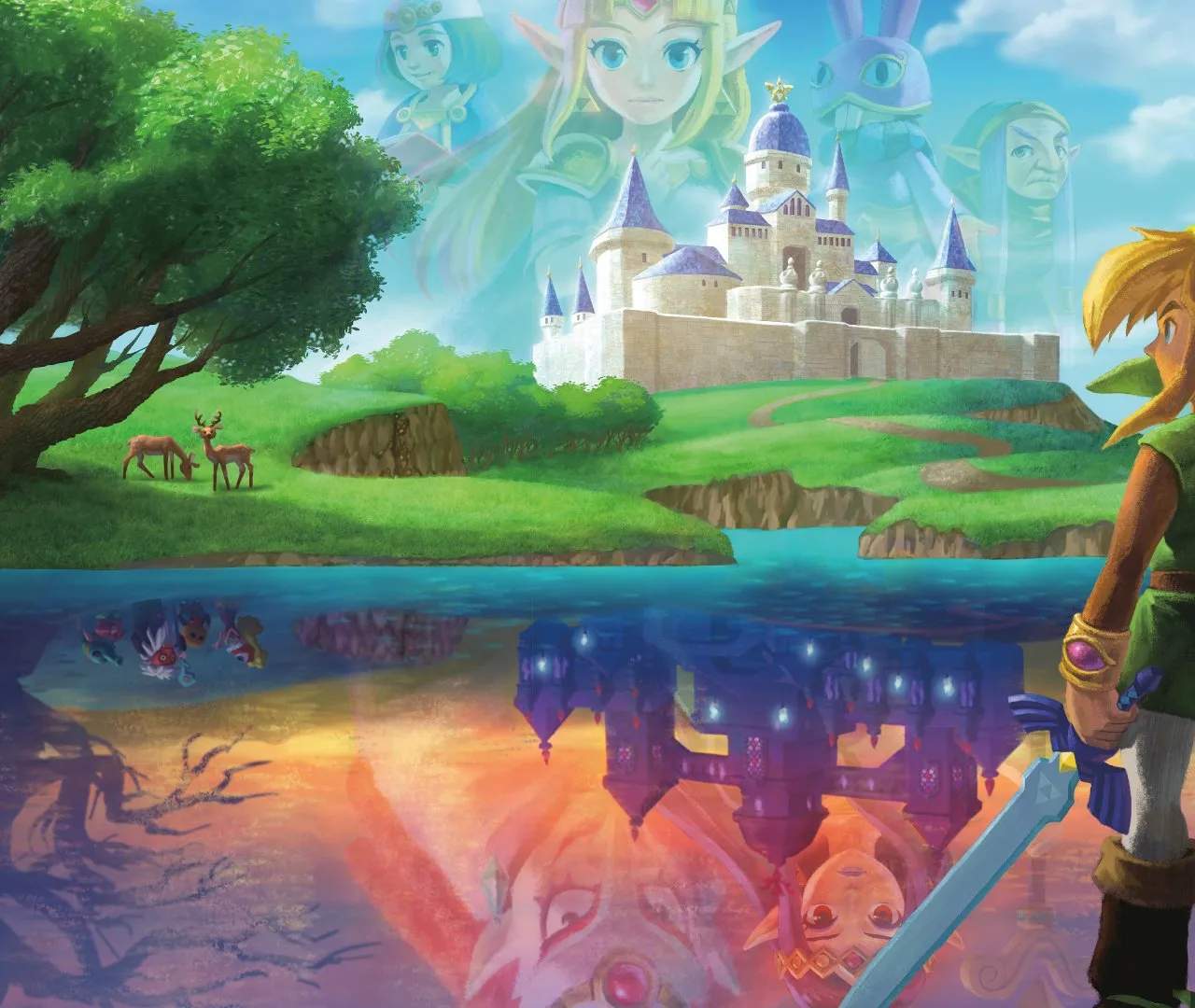
Gameplay Mechanics
Welcome, hero of Hyrule and Lorule! This section delves deep into the core mechanics that define your adventure in The Legend of Zelda: A Link Between Worlds. Mastering these systems is crucial for overcoming challenges, solving intricate puzzles, and ultimately saving both realms.
The Energy Gauge: Your Lifeline for Items
Unlike previous Zelda titles that relied on a limited magic meter or consumable ammunition for special items, A Link Between Worlds introduces the innovative Energy Gauge. This green bar, located at the top-left of your screen, governs the use of almost all your rented and purchased items.
- How it Works: Each time you use an item like the Bow, Hookshot, or Tornado Rod, a portion of the Energy Gauge depletes. The cost varies per item; for instance, the Bow consumes less energy per shot than a full swing of the Tornado Rod.
- Recharging: The Energy Gauge automatically and rapidly recharges when you are not actively using an item. This encourages more frequent and strategic use of your arsenal without the constant worry of running out of resources.
- Strategic Use:
- Conservation: While it recharges quickly, don't spam high-cost items unnecessarily. For example, when facing multiple enemies, prioritize melee attacks with your Master Sword for weaker foes and save your Bow for distant or flying threats.
- Burst Damage: For bosses or heavily armored enemies, consider unleashing a rapid succession of high-damage items like the Fire Rod or Ice Rod, then retreating to allow your gauge to refill before re-engaging.
- Puzzle Solving: Many puzzles require precise timing and multiple item uses. Practice using items in quick succession to understand their energy consumption and recharge rate.
Merging into Walls: The 2D Mechanic
The ability to merge into walls as a 2D painting is the signature mechanic of A Link Between Worlds. This transformation is not just a gimmick; it's fundamental to exploration, combat, and puzzle-solving across both Hyrule and Lorule.
- Activation: Press the 'A' button when standing flush against a wall, cliff face, or certain objects. Link will flatten into a painting, allowing him to move along the surface.
- Energy Consumption: While merged, your Energy Gauge will slowly but continuously deplete. If the gauge runs out, Link will automatically pop out of the wall. This limits how long you can remain merged, adding a layer of urgency to wall-based puzzles and traversal.
- Applications:
- Traversal: Reach otherwise inaccessible ledges, cross gaps, navigate narrow passages, and bypass obstacles. Look for cracks, uneven surfaces, or distinct wall patterns that indicate mergeable areas.
- Puzzle Solving: Many dungeons and overworld puzzles revolve around merging. You might need to merge to activate switches on distant walls, sneak past enemies, or access hidden rooms. Pay close attention to the environment for subtle clues.
- Combat: Merge to dodge enemy attacks, reposition yourself, or even surprise enemies from behind. Some enemies are vulnerable only when attacked from a specific angle after merging.
- Dimension Hopping: Crucially, merging into cracks in walls allows you to travel between Hyrule and Lorule. These cracks are often marked by a shimmering, purple aura.
- Advanced Tips:
- Corner Merging: You can often merge around corners, allowing for complex pathfinding along walls. Experiment with different angles.
- Object Interaction: While merged, you cannot use items or interact with most objects. You must pop out of the wall to perform actions.
- Environmental Hazards: Be mindful of enemies or environmental hazards that can still damage you while merged. Some enemies can even knock you off a wall.
Item Rental and Purchase: Ravio's Shop
Early in your adventure, you'll encounter Ravio, a mysterious merchant who sets up shop in your house. Ravio introduces a revolutionary item acquisition system: rental and eventual purchase.
- Renting Items:
- Location: Ravio's Shop, located in Link's House just south of Kakariko Village.
- Cost: Each item has a modest rental fee (e.g., 50 Rupees for the Bow, 80 Rupees for the Hookshot).
- Benefits: You gain immediate access to a wide array of essential items very early in the game, allowing for non-linear dungeon progression. This means you aren't locked into a specific dungeon order.
- Drawback: If you fall in battle, all rented items are returned to Ravio, and you must pay the rental fee again to re-acquire them. This can be a significant drain on your Rupees, especially early on.
- Purchasing Items:
- Availability: After you've rented an item, it becomes available for purchase from Ravio.
- Cost: Purchased items are significantly more expensive than rented ones (e.g., 800 Rupees for the Bow, 1200 Rupees for the Hookshot).
- Benefits: Once purchased, an item is permanently yours. It will not be lost upon defeat, making your adventure much smoother and less costly in the long run.
- Strategy: Prioritize purchasing items that you use frequently or that are essential for upcoming dungeons. The Master Sword and the Shield are not rented from Ravio; they are acquired through story progression.
- Recommended Purchase Order: While flexible, consider purchasing the following items early for maximum benefit:
- Bow: Versatile for combat and activating distant switches.
- Hookshot: Essential for crossing gaps and reaching hidden areas.
- Hammer: Breaks obstacles and stuns certain enemies.
- Fire Rod / Ice Rod: Powerful elemental attacks and puzzle solutions.
Maiamai Hunting: Item Upgrades
Scattered across both Hyrule and Lorule are 100 tiny, purple creatures called Maiamais. Finding these lost children and returning them to their mother, Mother Maiamai, yields valuable rewards.
- Mother Maiamai's Location: She resides in a cave just north of Link's House, accessible early in the game.
- Finding Maiamais: They are often hidden in plain sight but require specific items or actions to reveal. Look under rocks, in trees, behind waterfalls, or in suspicious corners. Listen for their distinct chirping sound, which grows louder as you get closer.
- Rewards: For every 10 Maiamais you return, Mother Maiamai will upgrade one of your purchased items.
- Upgrade Benefits: Upgrades typically enhance an item's power, range, or reduce its energy consumption. For example, the upgraded Bow fires three arrows at once, and the upgraded Hookshot travels faster.
- Choosing Upgrades: You get to choose which item to upgrade. Prioritize items you use most frequently or those whose upgrades offer the most significant advantage for your playstyle.
- Strategic Hunting:
- Early Game: Focus on collecting Maiamais as you explore new areas. The early upgrades are incredibly helpful.
- Map Markers: Use your map to mark areas where you suspect a Maiamai is hidden but can't yet reach it.
- Item Synergy: Some Maiamais require specific items to reach (e.g., the Hookshot for distant ledges, the Hammer for breaking barriers).