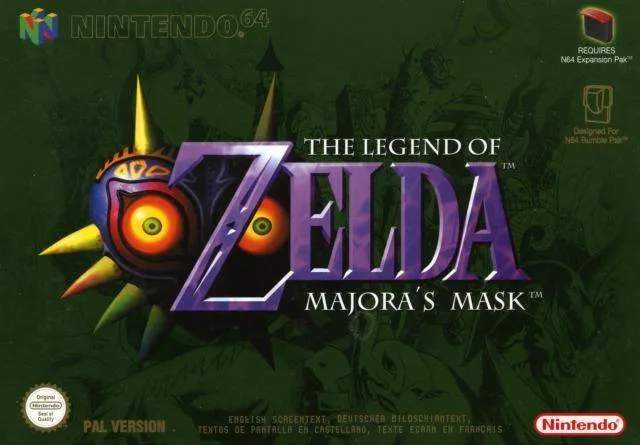
Version Differences (N64 vs. 3DS)
Welcome, seasoned adventurers and newcomers alike! Whether you're revisiting Termina or experiencing its temporal loops for the first time, understanding the distinctions between the original Nintendo 64 release of Majora's Mask and its Nintendo 3DS remake is crucial. While the core experience remains intact, the 3DS version introduces numerous quality-of-life improvements, graphical enhancements, and even some gameplay tweaks that can significantly alter your approach. This detailed guide will highlight the most impactful changes, helping you navigate Termina with optimal strategy.
Saving and Time Manipulation
- Saving System Overhaul: The most significant change for many players.
- N64: Saving was primarily tied to the Song of Time, resetting your progress to Day 1, 6 AM. Owl Statues offered temporary saves (quitting the game would erase them).
- 3DS: Owl Statues now provide permanent save points. You can save your game at any Owl Statue and quit, then reload from that exact point. The Song of Time still resets the cycle, but you have far more flexibility in saving your progress within a cycle. This greatly reduces the pressure of the three-day cycle, allowing for more experimentation.
- Strategy Tip: Utilize the Owl Statues frequently, especially before attempting challenging sections or mini-games. This allows you to tackle specific objectives without the fear of losing significant progress if you fail or run out of time.
- Song of Double Time Functionality:
- N64: The Song of Double Time allowed you to warp to the next dawn or dusk (6 AM or 6 PM).
- 3DS: This song has been enhanced! You can now select a specific hour to warp to within the current three-day cycle. This is incredibly useful for precise timing of events, such as meeting NPCs at certain times or accessing shops that open at specific hours.
- Strategy Tip: Master the new Song of Double Time. If an event occurs at, say, 4 PM on Day 2, you can now warp directly to that time instead of waiting or repeatedly playing the song. This streamlines many side quests and allows for more efficient use of your limited time.
Boss Battles and Dungeon Mechanics
Many boss encounters and dungeon puzzles have received adjustments, some minor, others more substantial. These changes often aim to streamline the experience or make certain weaknesses more apparent.
- Odolwa (Woodfall Temple Boss):
- N64: Odolwa's primary weakness was his back, requiring precise Z-targeting and sword slashes.
- 3DS: While his back is still a weak point, the 3DS version introduces a large, glowing eye on his chest that can be targeted with arrows. This provides a more accessible ranged option for damage.
- Strategy Tip: As Deku Link, use Deku Nuts to stun him, then switch to regular Link and fire arrows at his chest eye for quick damage.
- Goht (Snowhead Temple Boss):
- N64: Goht's fight primarily involved chasing him as Goron Link and using the Goron Roll to damage him.
- 3DS: The arena now features more strategically placed boost pads, making it easier to maintain speed and hit Goht. His attack patterns are slightly tweaked, and his weak point (the crystal on his back) is more consistently exposed after certain attacks.
- Strategy Tip: Focus on maintaining your Goron Roll speed and hitting the boost pads. When Goht is stunned, unleash a flurry of punches as Goron Link for maximum damage.
- Gyorg (Great Bay Temple Boss):
- N64: Gyorg's fight was often considered one of the more frustrating due to the difficulty in hitting him and the platforming.
- 3DS: The arena is redesigned with more prominent platforms, and Gyorg's attack patterns are more predictable. When he's stunned, his eye is a larger, more obvious target for arrows.
- Strategy Tip: As Zora Link, use your electric barrier to stun Gyorg when he charges. Then, quickly surface onto a platform and fire arrows at his exposed eye.
- Twinmold (Stone Tower Temple Boss):
- N64: The fight involved using the Giant's Mask to grow large and attack the Twinmold worms.
- 3DS: The Giant's Mask is now only usable during the Twinmold fight, and its effect is permanent once activated. The worms themselves are more distinct in their attack patterns, with one being vulnerable to sword attacks and the other to arrows.
- Strategy Tip: As Giant Link, focus on the red Twinmold with your sword. When the blue Twinmold appears, switch to arrows to target its tail.
Item and Mask Changes
- Bomber's Notebook:
- N64: The Bomber's Notebook was a basic log of events and schedules.
- 3DS: The Bomber's Notebook is significantly expanded. It now includes alarms for specific events, a more detailed timeline, and hints for completing side quests. It's an invaluable tool for tracking the numerous timed events in Termina.
- Strategy Tip: Consult the Bomber's Notebook regularly. Set alarms for important NPC meetings or quest triggers to ensure you don't miss anything.
- Fishing:
- N64: No fishing mechanic.
- 3DS: Two new fishing holes have been added: one in the Southern Swamp and another at the Great Bay Coast. You can catch various fish, some of which are required for certain side quests or provide rupees.
- Location: The Southern Swamp Fishing Hole is located near the entrance to Woodfall. The Great Bay Coast Fishing Hole is found near the Marine Research Lab.
- Strategy Tip: Fishing can be a relaxing way to earn rupees or complete optional objectives. Experiment with different lures and times of day to catch all the unique fish.
- Stone of Agony / Shard of Agony:
- N64: The Stone of Agony would vibrate when near secrets, providing haptic feedback through the Rumble Pak.
- 3DS: Replaced by the Shard of Agony, which provides a visual and auditory cue on the bottom screen when near secrets or hidden areas.
- Strategy Tip: Keep an eye on your bottom screen! The Shard of Agony is a fantastic tool for finding hidden grottos, chests, and Pieces of Heart.
- Deku Link Swimming:
- N64: Deku Link could only skip across water surfaces.
- 3DS: Deku Link can now dive underwater for a short period. This opens up new exploration opportunities and makes certain puzzles (like those in Woodfall Temple) slightly more accessible.
- Strategy Tip: Utilize Deku Link's new diving ability to explore submerged areas that were previously inaccessible. This can lead to hidden items or shortcuts.
Graphical and Performance Enhancements
- Visual Fidelity: The 3DS version boasts updated graphics, including higher-resolution textures, improved character models, and enhanced lighting effects. The game runs at a smoother frame rate compared to the N64 original.
- 3D Effect: The stereoscopic 3D feature of the 3DS adds depth to Termina's environments, enhancing immersion.
- Touch Screen Functionality: The bottom screen is utilized for inventory management, maps, and the Bomber's Notebook, streamlining menu navigation.
- Gyro Controls: Optional gyro controls are available for aiming with the Bow, Hookshot, and other items, offering an alternative to the Circle Pad.
By understanding these key differences, you can tailor your playthrough to the strengths of the 3DS version, making your journey through Termina even more enjoyable and efficient. Good luck, hero!