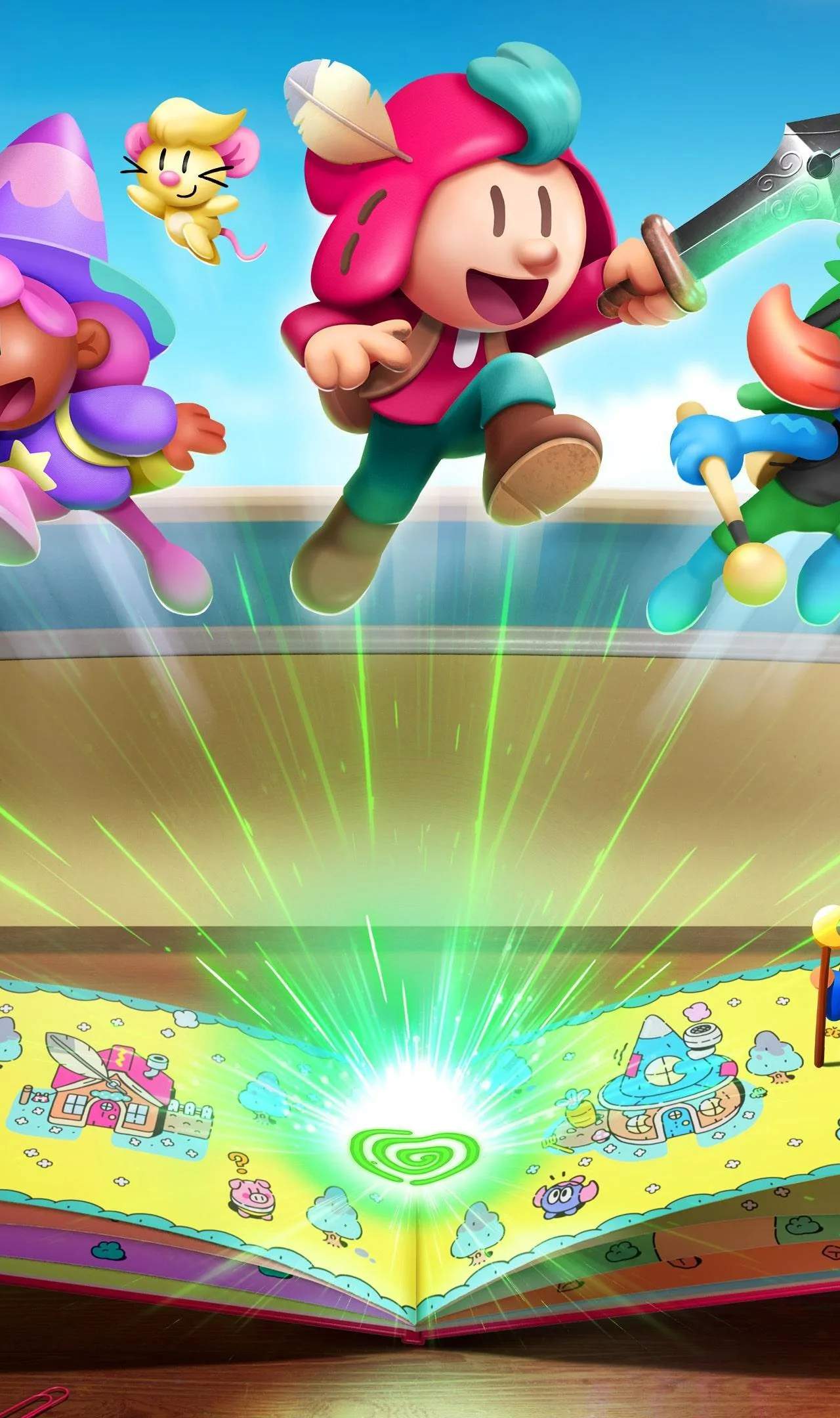
Navigate the challenging 2D Platforming Descent in Chapter 2: Tome Tower of The Plucky Squire. This guide details the mechanics, enemy patterns, and environmental hazards specific to these flat-page segments. Learn how to master precise jumps and dodges to survive the descent.
The Shift to 2D: Tome Tower's Descent
Chapter 2, 'Tome Tower,' is not solely a 3D environment. As you progress through the towering stacks of books, you'll frequently encounter sections that transition into a 2D perspective. These '2D Platforming Descent' segments are crucial for navigating the verticality of the tower and often serve as the primary means of moving downwards or through intricate passages. They require a different set of skills than the 3D exploration.
Understanding 2D Mechanics
In these 2D segments, the gameplay shifts to a side-scrolling view. Your movement will be restricted to left, right, up (jumping), and down (falling). The core mechanics of running, jumping, and dodging remain, but they are amplified in importance. Precise timing for jumps is paramount, as is the ability to quickly change direction or dodge incoming projectiles. The visual style often mimics the flat nature of book pages, with distinct illustrations and text elements forming the environment.
Platforming Challenges
The descents are designed to test your platforming prowess. You'll encounter:
- Moving Platforms: Platforms that slide, rotate, or appear and disappear, requiring careful timing.
- Spike Traps and Hazards: Environmental dangers that must be avoided through precise jumping and dodging.
- Fragile Platforms: Platforms that break shortly after you land on them, forcing quick movement.
- Wind Currents: Gusts of wind that can push you off course, requiring you to fight against them or use them to your advantage.
- Gaps and Chasms: Wide spaces that demand well-timed, long jumps.
Enemies in 2D Segments
While the enemies might be the same as those encountered in 3D, their behavior and the way you fight them can change in the 2D perspective. You'll face:
- Ink Blots: These might splat from above or move horizontally, leaving puddles that slow you down or cause damage.
- Paper Cutouts: Enemies that dart quickly across the screen, often in predictable patterns.
- Flying Enemies: Creatures that hover or swoop down, requiring you to time your attacks or dodges carefully.
Combat in 2D often involves simpler attack patterns but requires more precise positioning to avoid being hit.
The Role of the Floatio Grab
Even in 2D, the Floatio Grab can be useful. You might need to pull levers made of quills, grab floating pages that act as temporary platforms, or even pull yourself towards a ledge if you miss a jump slightly. Its application is more limited but still vital for certain puzzles and survival.
Tips for Mastering the Descent
- Master the jump: Understand the jump height and distance Skip can achieve.
- Utilize the dodge: Your dodge roll is essential for avoiding projectiles and hazards.
- Observe enemy patterns: Learn the attack sequences of 2D enemies.
- Look for safe spots: Identify areas where you can pause and plan your next move.
- Don't rush: While some sections are timed, take your time to assess the best path.
- Revisit if necessary: If you're struggling, sometimes a break and a fresh attempt can help.
Progression Through the Descent
Successfully navigating these 2D descents will lead you deeper into Tome Tower, often unlocking new areas, revealing secrets, or bringing you closer to the chapter's objective. Each descent is a self-contained challenge that tests your mastery of the fundamental platforming mechanics.