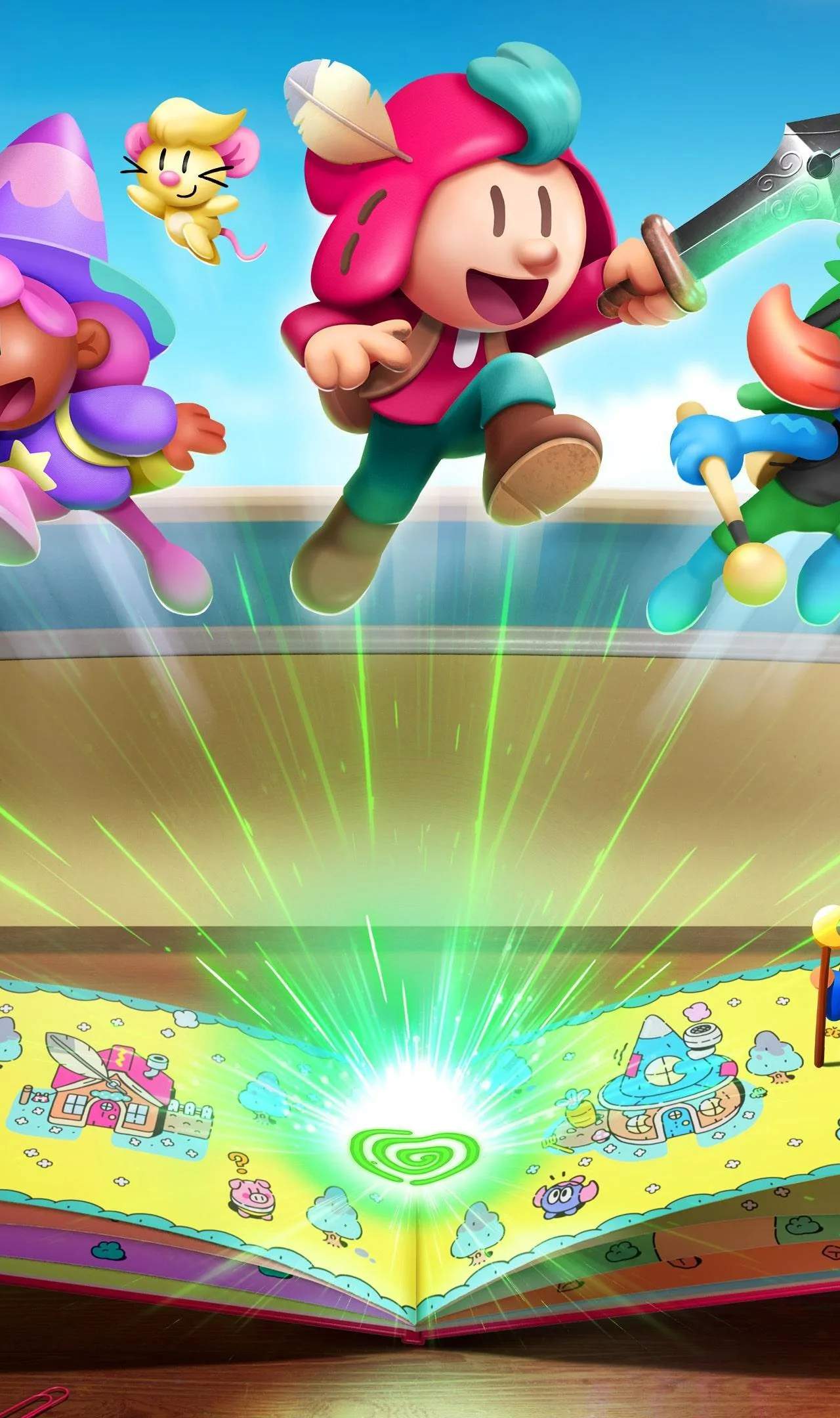
Chapter 4: A Treacherous Trail - Navigating the Real World
Chapter 4, titled "A Treacherous Trail," marks a significant turning point in The Plucky Squire, where the vibrant, ink-drawn pages of the storybook world begin to bleed into the tangible, often perilous, reality of a child's bedroom. This chapter introduces the core mechanic of transitioning between these two dimensions, presenting unique challenges, enemies, and environmental puzzles that demand a fresh approach to gameplay. Understanding how to navigate and exploit the 'Portal to the Real World' is paramount to progressing through this pivotal section of the game.
The Portal to the Real World: A Gateway Between Dimensions
The 'Portal to the Real World' in Chapter 4 is not a singular, static object but rather a dynamic gateway that allows Skip, our plucky hero, to traverse between the 2D storybook and the 3D reality. Its primary function is to facilitate progression by enabling Skip to interact with elements in both realms that are inaccessible in the other. For instance, a physical barrier in the real world might be a mere drawing on a page, or a seemingly insignificant object in the book could be a crucial lever in reality. The portal itself often appears as a shimmering, unstable rift, and its activation might be tied to specific in-game events, puzzle solutions, or the defeat of certain enemies.
Navigating the Dual Realities: A Shift in Perspective
The most striking aspect of "A Treacherous Trail" is the dramatic shift in scale and perspective. When Skip enters the real world, everyday objects transform into colossal landscapes. A spilled glass of water becomes a vast, treacherous lake, a stack of books a towering mountain range, and a discarded toy a formidable obstacle. This necessitates a complete re-evaluation of traversal mechanics. master new platforming techniques, utilizing Skip's agility to climb, swing, and leap across these oversized environments. The visual fidelity also changes, moving from the stylized, flat aesthetic of the storybook to a more detailed, textured 3D environment, which can be both awe-inspiring and disorienting.
Key Differences Between Realms:
- Perspective: 2D platforming in the storybook vs. 3D exploration in reality.
- Scale: Familiar objects become gargantuan in the real world.
- Interactivity: Different objects and mechanisms are relevant in each realm.
- Visuals: Stylized ink art vs. detailed 3D environments.
Environmental Hazards and Puzzles in the Real World
The real world is rife with dangers that are alien to the storybook. Players must be acutely aware of their surroundings and learn to identify potential threats and interactive elements. Common hazards include:
- Water Hazards: Spilled drinks, sinks, or even puddles can act as deadly bodies of water, requiring careful navigation or the use of specific abilities to cross.
- Electrical Dangers: Exposed electrical outlets or active appliances pose a significant threat, often requiring Skip to avoid them or find ways to disable them temporarily.
- Falling Objects: Unstable stacks of items, such as books or toys, can topple, creating new pathways or posing immediate danger.
- Crushing Hazards: Moving furniture, closing drawers, or even a closing door can be fatal if Skip is caught in the wrong place.
Puzzles in this chapter often involve manipulating real-world objects. This might include using Skip's 'Floatio Grab' ability to move a misplaced item that's blocking a path, activating a switch that's out of reach by using a lever-like object, or even understanding how to interact with simple machines like fans or light switches to alter the environment. The game often provides subtle visual cues to indicate interactive objects.
Enemies and Combat: New Threats Emerge
Chapter 4 introduces a new roster of enemies, some of whom are native to the real world. These can range from mundane household pests to animated objects that have taken on a life of their own. Players will encounter:
- Animated Toys: Certain toys might come to life, acting as aggressive combatants with unique attack patterns.
- Household Pests: Spiders, ants, or other small creatures can become formidable foes at this scale, often swarming or attacking from unexpected angles.
- Environmental Guardians: Some enemies might be intrinsically linked to the environment, requiring players to use the surroundings to their advantage during combat.
Combat strategies need to adapt. While Skip's core abilities remain, their effectiveness can be amplified by environmental interactions. For example, luring an enemy near a water source to electrocute them, or using a falling object to crush them. Boss encounters in this chapter are often larger-than-life and may require understanding specific environmental mechanics to defeat.
Walkthrough: Key Progression Points in "A Treacherous Trail"
The chapter typically begins with Skip finding himself unexpectedly in the real world, perhaps after a page is torn or a book is dropped. The initial objective is usually to find a way back to the storybook or to locate a specific item that has crossed over.
- Initial Awakening: Upon entering the real world, players will likely find themselves in a relatively safe starting area, such as the floor of a bedroom. Observe the immediate surroundings for interactive elements and potential pathways.
- The First Obstacle: A common early challenge involves a large physical barrier, like a wall of books or a desk. Use Skip's climbing and jumping abilities to ascend or find a way around. Look for smaller objects that can be used as stepping stones.
- Encountering Real-World Foes: Expect to face your first real-world enemies shortly after navigating the initial obstacles. These might be small, fast-moving creatures that require quick reflexes to dodge and defeat.
- The Portal's Location: The 'Portal to the Real World' might not be immediately visible. Players will often need to solve a series of environmental puzzles or overcome mini-boss encounters to reach its vicinity. This could involve activating a series of switches, redirecting light sources, or manipulating water flow.
- Activating the Portal: Once near the portal, there might be a final puzzle or a guardian enemy that must be defeated to stabilize and activate it. This could involve a timed sequence or a boss with specific attack phases that exploit the environment.
- Transitioning Back: Stepping through the activated portal will transport Skip back to the storybook, often in a different location or with a new objective. Be prepared for immediate action upon arrival, as the transition might place you in a precarious situation.
Tips for Success in the Real World:
- Master the Floatio Grab: This ability is crucial for manipulating objects in the real world, whether it's pulling levers, moving platforms, or throwing smaller items at enemies.
- Environmental Awareness: Always scan your surroundings for hazards and opportunities. A spilled drink can be a death trap or a tool to defeat enemies.
- Observe Enemy Patterns: Real-world enemies often have unique attack styles that differ from their storybook counterparts. Learn their tells and exploit their weaknesses.
- Utilize Verticality: The oversized nature of the real world means there are often multiple vertical paths. Don't be afraid to climb high and explore different routes.
- Listen to Dialogue and Cues: NPCs and environmental hints will often guide you towards the next objective or reveal puzzle solutions.
- Conserve Resources: While not explicitly detailed here, be mindful of any health or ability-replenishing items you find, as combat can be challenging.
By understanding the mechanics of the 'Portal to the Real World' and adapting to the unique challenges of this chapter, You can successfully navigate the perilous journey between dimensions and continue Skip's adventure.