Resource Management
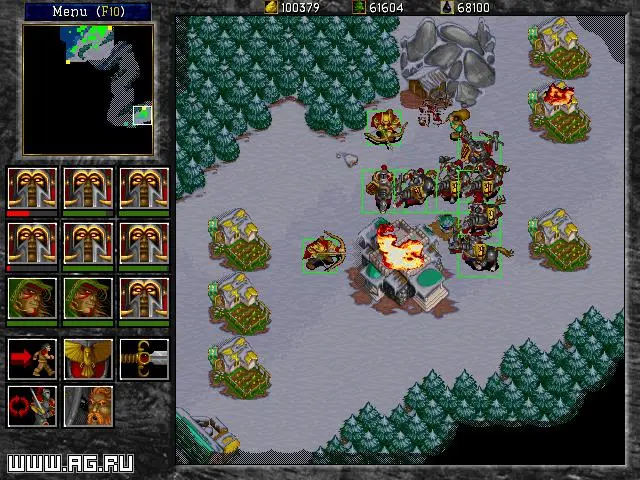
In Warcraft II: Tides of Darkness, mastery over your economy is paramount to victory. Gold, Lumber, and Oil are the three fundamental resources that fuel your war machine, enabling the construction of buildings, the training of units, and the research of vital upgrades. A well-managed resource pipeline ensures a steady flow of power, allowing you to out-produce and outmaneuver your opponents.
The Three Pillars of Power: Gold, Lumber, and Oil
Understanding the role and acquisition of each resource is the first step towards economic dominance:
- Gold: The primary currency for most unit training, advanced building construction, and high-tier upgrades. Gold is exclusively gathered by Peons (Horde) or Peasants (Alliance) from Gold Mines.
- Lumber: Essential for nearly all building construction, basic unit training (e.g., Footmen, Grunts), and many early-game upgrades. Lumber is harvested from trees by Peons/Peasants.
- Oil: Crucial for naval units, oil-based structures (e.g., Shipyards, Foundries), and certain advanced technologies. Oil is gathered by Oil Tankers (Horde) or Oil Platforms (Alliance) from Oil Patches found in water.
Optimal Worker Allocation and Efficiency
Assigning the correct number of workers to each resource type is critical to prevent bottlenecks and maximize income. Over-saturating a resource node can lead to workers idling or getting in each other's way, reducing overall efficiency.
Gold Mining
Gold Mines are the most valuable resource nodes. Their depletion is permanent, so managing them wisely is key.
- Optimal Worker Count: For a single Gold Mine adjacent to your Town Hall/Great Hall, 5-6 Peons/Peasants is generally the most efficient number. More than this often results in workers waiting to deposit gold, reducing the per-worker income rate.
- Early Game Strategy: Immediately assign 4-5 workers to gold at the start of a mission. This provides a strong economic base for initial building and unit production.
- Mid to Late Game: As your economy grows and you expand, consider building additional Town Halls/Great Halls near new Gold Mines. Each new Town Hall/Great Hall can support another 5-6 workers, effectively doubling or tripling your gold income.
- Depleted Mines: Once a Gold Mine is depleted, the workers assigned to it will become idle. Reassign them immediately to Lumber, or send them to a new Gold Mine if available. Do not let valuable workers stand idle.
Lumber Harvesting
Lumber is a renewable resource, as trees will slowly regrow over time, though this process is very slow in Warcraft II. It's more practical to expand to new forests.
- Optimal Worker Count: For a forest adjacent to your Town Hall/Great Hall, 4-5 Peons/Peasants are typically sufficient. Unlike Gold Mines, Lumber harvesting can tolerate slightly more workers without significant efficiency loss, as trees are more spread out.
- Early Game Strategy: After establishing your gold income, assign 2-3 workers to lumber. Adjust this based on your building plans; if you're rushing a Barracks and Lumber Mill, you'll need more.
- Forest Depletion: While trees regrow, it's often faster to move workers to a new, untouched patch of forest once the immediate area around your Town Hall/Great Hall becomes sparse.
- Expanding for Lumber: If distant forests are plentiful, consider building a new Town Hall/Great Hall closer to them. This reduces travel time for workers and significantly boosts lumber income. Alternatively, you can send a small group of workers to a distant forest, but be mindful of potential enemy patrols.
Oil Collection
Oil is a crucial late-game resource, especially for naval dominance.
- Optimal Worker Count: Oil Tankers/Oil Platforms are expensive units. Typically, 2-3 Oil Tankers/Platforms per Oil Patch is a good starting point. Unlike land-based workers, these units have a larger capacity and longer travel times, so fewer units can be highly productive.
- Early Game Strategy: Don't prioritize oil immediately unless the mission objectives or enemy composition (e.g., heavy naval presence) dictate it. Focus on Gold and Lumber first.
- Mid to Late Game: Once you establish a Shipyard/Foundry, start producing Oil Tankers/Platforms. Explore the map to find Oil Patches. Guard your Oil Tankers/Platforms, as they are vulnerable to enemy naval and air attacks.
- Oil Patch Depletion: Similar to Gold Mines, Oil Patches are finite. Once depleted, move your Oil Tankers/Platforms to a new patch.
- Transporting Resources: For distant Oil Patches or even Gold Mines/Forests that are isolated, using Transports (Alliance) or Goblin Transports (Horde) can be effective. Load Peons/Peasants or Oil Tankers/Platforms onto a Transport, sail them to the resource, and unload. This can be risky but provides access to otherwise unreachable resources.
Balancing Your Economy: Gold, Lumber, and Oil Income
The ideal balance of resources depends heavily on your current strategy, tech tree progression, and the specific mission objectives.
| Phase | Primary Focus | Secondary Focus | Notes | |
|---|---|---|---|---|
| Early Game (First 5-10 mins) | Gold (60-70%) | Lumber (30-40%) | Establish strong gold income for initial unit production. Lumber for Barracks/War Mill, Farm/Pig Farm. | |
| Mid Game (10-25 mins) | Gold (40-50%) | Lumber (40-50%) | Balanced for teching up (e.g., Blacksmith/Foundry, Stables/Ogre Mound) and unit production. Oil if naval presence is needed. | |
| Late Game (25+ mins) | Gold (30-40%) | Lumber (30-40%) | Oil (20-30%) | High demand for all resources. Gold for advanced units/upgrades, Lumber for fortifications/advanced buildings, Oil for powerful naval fleets and flying units. |
Strategic Considerations:
- Unit Composition: If you're building a heavily infantry-based army, you'll need more Gold. If focusing on siege weapons or advanced structures, Lumber becomes more critical. Naval dominance requires a significant Oil income.
- Tech Rush: If you're aiming for a fast tech-up to advanced units, prioritize the resources needed for those specific buildings and research. For example, a fast Gryphon Rider/Dragon rush requires a strong Gold and Lumber income.
- Defense vs. Offense: Defensive strategies often require more Lumber for walls and towers, while offensive pushes demand a constant stream of Gold for units.
- Scouting: Always scout for new resource nodes. Unclaimed Gold Mines and Oil Patches are prime targets for expansion.
Advanced Resource Management Techniques
Multiple Town Halls/Great Halls
This is arguably the most impactful advanced technique. Building additional Town Halls/Great Halls near new Gold Mines or dense forests significantly reduces worker travel time, boosting your overall resource income. This also provides additional build queues and rally points, decentralizing your production.
- Placement: Build them as close as possible to the Gold Mine or forest you intend to exploit.
- Defense: New expansions are vulnerable. Ensure you have adequate defenses (towers, units) to protect your workers and structures.
- Cost: Town Halls/Great Halls are expensive (Gold and Lumber), so ensure your existing economy can support the investment.
Using Transports for Distant Resources
When land routes are blocked or too dangerous, or when resources are on islands, Transports (Alliance) or Goblin Transports (Horde) become invaluable. They can ferry Peons/Peasants to isolated Gold Mines or Oil Tankers/Platforms to distant Oil Patches.
- Procedure:
- Build a Shipyard/Foundry.
- Train a Transport.
- Load 4-6 Peons/Peasants or 2-3 Oil Tankers/Platforms onto the Transport.
- Sail the Transport to the desired resource location.
- Unload the workers/tankers.
- Optionally, leave the Transport nearby for quick redeployment or return it to your main base.
- Risks: Transports are slow and vulnerable. Ensure the waters are clear of enemy naval units or air units before deploying.
Resource Hotkeys and Grouping
use hotkeys to quickly select and manage your workers. Grouping workers by resource type (e.g., all gold miners on Group 1, all lumberjacks on Group 2) allows for rapid reallocation and checking their status.
- Reallocation: If you notice a surplus of one resource and a deficit of another, quickly select a group of workers and reassign them.
- Scouting with Workers: In the early game, a single Peon/Peasant can be used to scout for additional Gold Mines or Oil Patches, but be wary of enemy patrols.
Common Pitfalls and How to Avoid Them
- Idle Workers: The biggest economic sin. Always check your Town Hall/Great Hall and resource nodes for idle Peons/Peasants. Reassign them immediately.
- Resource Hoarding: While it's good to have a buffer, excessively hoarding resources without spending them means you're not maximizing your production potential. Build units, research upgrades, and expand!
- Neglecting Oil: In land-locked maps, oil might seem irrelevant. However, many maps feature water, and a strong navy can be a game-changer, especially for controlling choke points or attacking undefended flanks.
- Poor Expansion Timing: Expanding too early without adequate defense can lead to your new base being overrun. Expanding too late can leave you resource-starved in the late game. Find a balance.
- Ignoring Upgrades: Don't forget economic upgrades like "Wood Cutting" or "Gold Mining" at the Lumber Mill/Foundry. These provide a significant boost to your gathering rates.
By diligently applying these principles of resource management, you will lay a solid foundation for your military campaigns in Warcraft II: Tides of Darkness, ensuring a steady flow of resources to crush your enemies and emerge victorious.