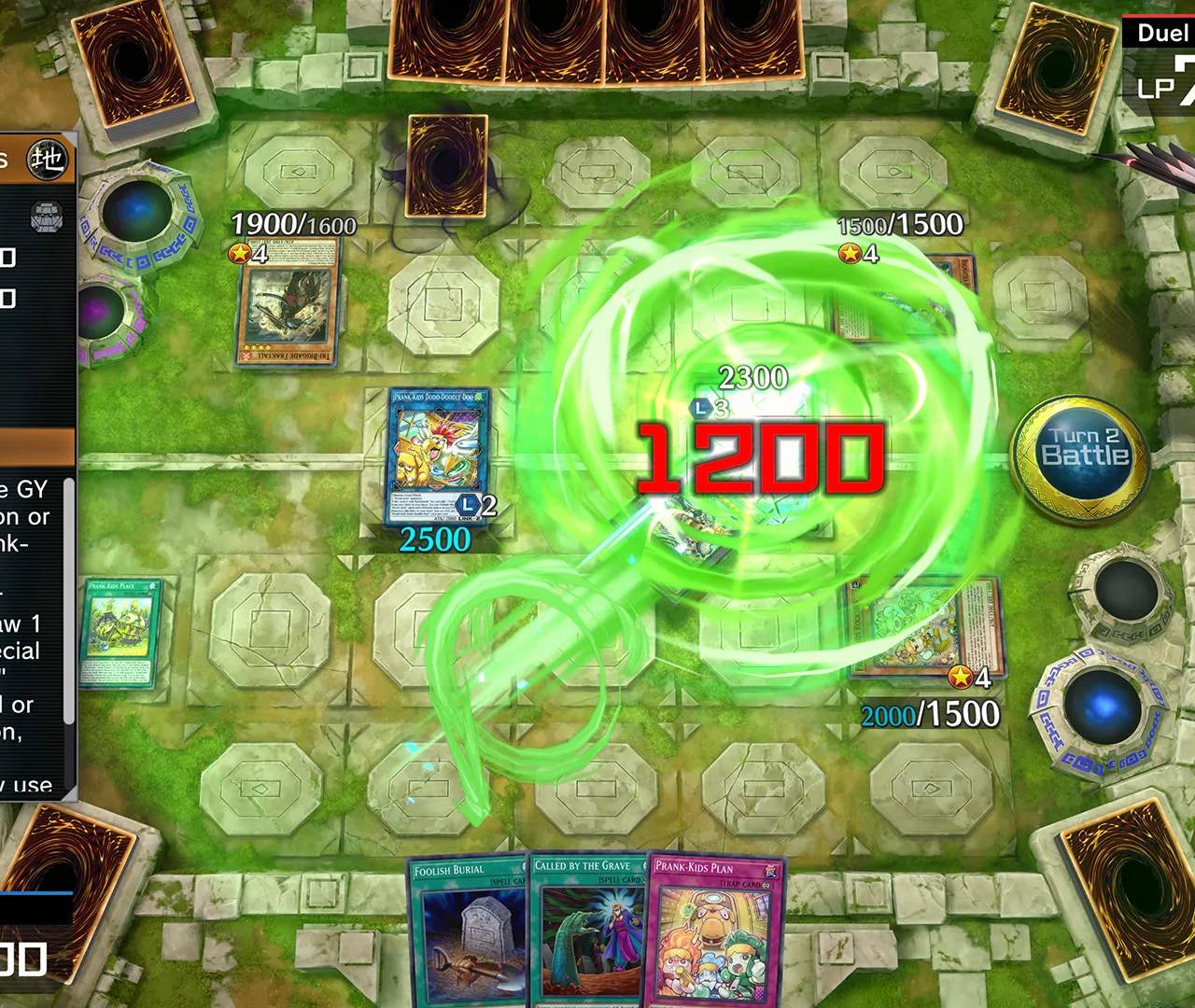
Deck Building Strategies
Welcome, aspiring Duelists, to the comprehensive guide on crafting formidable decks in Yu-Gi-Oh! Master Duel. The journey to becoming a Master Duelist begins not on the field, but in the Deck Editor. This section will arm you with the knowledge and actionable steps to construct decks that are both powerful and consistent, ready to face any challenge the digital world throws at you.
I. Understanding Your Core Strategy
Before you even think about individual cards, you need a clear vision for your deck. What is its primary goal? How does it aim to win?
- Identify Your Archetype/Engine: Most competitive decks revolve around a central archetype (e.g., "Swordsoul," "Tri-Brigade," "Floowandereeze") or a powerful engine (e.g., "Adventure Token," "DPE" - Destiny HERO - Destroyer Phoenix Enforcer). Start by selecting one that appeals to your playstyle and resource availability. You can browse archetypes by searching in the Deck Editor or by checking the "Card List" for specific card names.
- Define Your Win Condition:
- Aggro/OTK (One Turn Kill): Focus on quickly summoning powerful monsters and dealing 8000 damage in a single turn (e.g., "Numeron," "Ignister").
- Control: Aim to disrupt your opponent's plays, control the board, and slowly gain advantage (e.g., "Eldlich," "Sky Striker").
- Combo: Execute intricate sequences of summons and effects to establish an unbreakable board or achieve a specific win condition (e.g., "Drytron," "Adamancipator").
- Stun: Prevent your opponent from playing altogether using floodgates and powerful continuous effects (e.g., "True Draco," "Mystic Mine" - though Mystic Mine is currently banned in Master Duel, the concept remains).
- Resource Management: Consider how your deck generates and utilizes resources (hand advantage, graveyard resources, extra deck monsters). A good deck ensures a steady flow of cards and options.
II. The 40-Card Rule: Consistency is Key
While the game allows for decks between 40 and 60 cards, competitive play overwhelmingly favors 40-card decks. This maximizes your chances of drawing your most important cards.
- Minimize Brick Hands: A "brick hand" is a starting hand with unplayable cards. A smaller deck reduces the likelihood of this.
- Maximize Power Spells/Traps: Cards like "Pot of Desires," "Ash Blossom & Joyous Spring," and "Infinite Impermanence" are crucial. Running a 40-card deck increases the probability of drawing these impactful cards.
III. Card Ratios and Ratios Breakdown
A balanced deck typically follows a general ratio, though this can vary greatly depending on the archetype.
- Monsters (18-22): These are your primary playmakers.
- Core Archetype Monsters: Max out on your most important monsters (3 copies). These are the cards that start your combos or provide essential disruption.
- Extenders: Monsters that can special summon themselves or facilitate further plays (e.g., "Effect Veiler," "Ghost Belle & Haunted Mansion").
- Hand Traps: Essential for disrupting your opponent's turn 1 plays (e.g., "Ash Blossom & Joyous Spring," "Maxx 'C'," "Infinite Impermanence"). Aim for 6-9 hand traps in most competitive decks.
- Spells (10-14): Spells often provide consistency, removal, or combo pieces.
- Search Spells: Cards that add specific monsters or spells from your deck to your hand (e.g., "Preparation of Rites," "Emergency Teleport"). Max out on these.
- Board Breakers: Spells that clear your opponent's board (e.g., "Lightning Storm," "Harpie's Feather Duster," "Dark Ruler No More"). Include 2-3 depending on your meta read.
- Consistency Spells: Cards that draw more cards or mill to the graveyard (e.g., "Pot of Prosperity," "Pot of Extravagance").
- Traps (6-10): Traps offer reactive disruption and protection.
- Counter Traps: Powerful negation that can stop critical plays (e.g., "Solemn Judgment," "Solemn Strike").
- Floodgates: Continuous traps that restrict both players' actions (e.g., "Skill Drain," "Gozen Match"). Use these strategically, ensuring they don't hinder your own strategy too much.
- Archetype Traps: Traps specific to your archetype that provide synergy and disruption.
IV. The Extra Deck: Your Toolbox (15 Cards)
Your Extra Deck is a vital resource, often containing your most powerful monsters and combo pieces. Always fill it to 15 cards.
- Fusion Monsters: Monsters summoned by Fusion Spells (e.g., "Predaplant Verte Anaconda" - though banned, it illustrates the concept).
- Synchro Monsters: Monsters summoned by tuning Tuner monsters with non-Tuner monsters. Include a range of levels to cover different situations.
- Xyz Monsters: Monsters summoned by overlaying monsters of the same level. Rank 4 Xyz monsters are often generic and powerful (e.g., "Number 41: Bagooska the Terribly Tired Tapir," "Divine Arsenal AA-ZEUS - Sky Thunder").
- Link Monsters: Essential for opening up Extra Monster Zones and facilitating further summons. Generic Link-2, Link-3, and Link-4 monsters are crucial (e.g., "Accesscode Talker," "Apollousa, Bow of the Goddess," "Knightmare Unicorn").
- Staples: Include generic Extra Deck monsters that can fit into almost any strategy and provide powerful effects (e.g., "Borreload Savage Dragon," "Baronne de Fleur").
V. The Side Deck: Adapting to the Meta (15 Cards)
While Master Duel's ranked ladder doesn't feature a traditional side deck, understanding side decking principles is crucial for tournaments and custom matches. Even in ranked, having a "side deck mentality" helps you understand common tech choices.
- "Going First" Cards: Cards that strengthen your turn 1 board (e.g., more hand traps, specific floodgates).
- "Going Second" Cards: Cards designed to break your opponent's established board (e.g., "Lightning Storm," "Evenly Matched," "Kaiju" monsters).
- Matchup Specific Cards: Cards that are particularly effective against certain popular archetypes (e.g., "Dimensional Barrier" against Fusion/Synchro/Xyz/Link heavy decks).
VI. Testing and Refinement
Building a deck is an iterative process. Don't expect perfection on your first try.
- Solo Mode Practice: Test your combos and consistency in Solo Mode duels. This allows you to understand your deck's strengths and weaknesses without the pressure of ranked play.
- Casual Duels: Play against other players in Casual Duels to get a feel for how your deck performs against various strategies.
- Ranked Duels: The ultimate test. Pay attention to what cards you draw, what cards you wish you had, and what cards are dead in your hand.
- Analyze Your Replays: Master Duel provides a replay function. Watch your losses and even your wins to identify misplays, suboptimal card choices, and areas for improvement.
- Stay Updated: The Master Duel meta is constantly evolving. Keep an eye on popular decks and tech choices by checking community forums, YouTube channels, and in-game rankings. Adjust your deck accordingly.
By following these detailed steps and continually refining your approach, you'll be well on your way to constructing powerful and consistent decks that can conquer the Master Duel ladder!