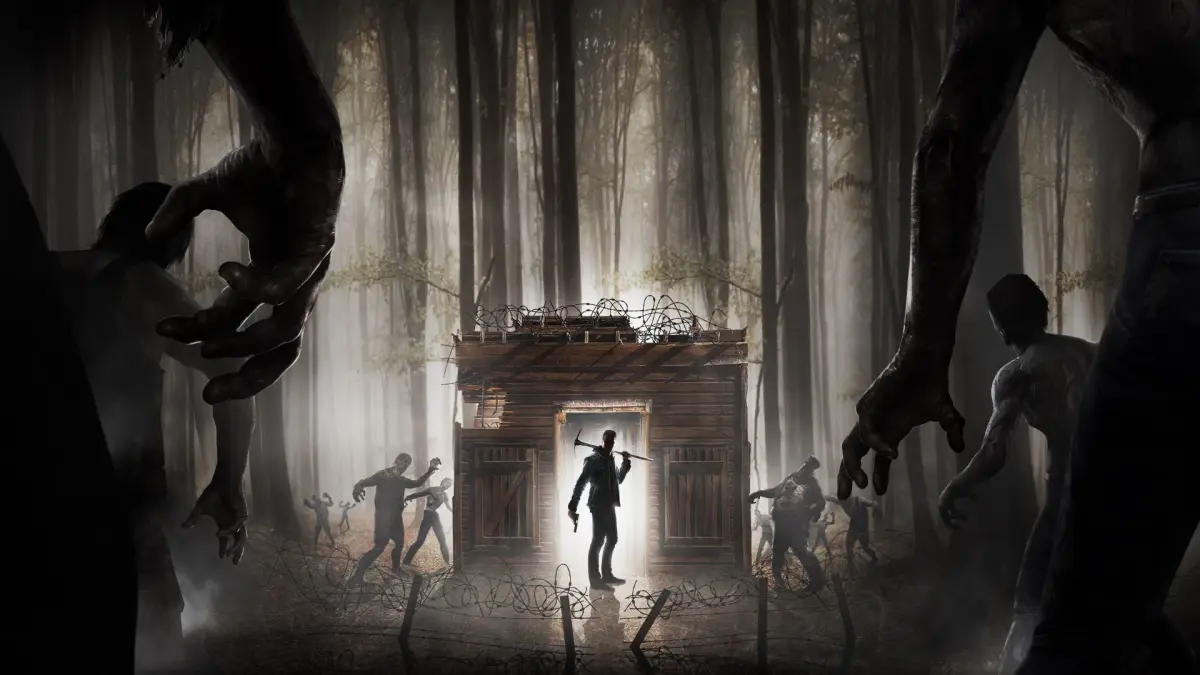
Welcome to 7 Days to Die, a brutal open-world RPG where you'll fight for survival against zombie hordes in a post-apocalyptic wasteland. You'll need to scavenge for resources, craft essential tools and weapons, build a secure base, and manage your hunger and thirst, all while preparing for the relentless zombie attacks that culminate in a terrifying Blood Moon horde every seven days.
This guide will help you navigate the steep learning curve, from surviving your first day and night to mastering the crucial Trader system and understanding how Skill Magazines unlock new crafting recipes and improve your gear. We'll cover everything from finding water and food to tactical combat and vehicle management, ensuring you're ready to face the challenges ahead.
Blood Moon Horde (Advanced)
Learn advanced strategies for surviving the Blood Moon Horde in 7 Days to Die. This guide covers optimal base defense, weapon choices, and tactics to overcome the toughest zombie waves.
This guide is for the advanced Blood Moon Horde encounter in 7 Days to Die. It assumes a solid understanding of game mechanics and focuses on strategies for experienced players.
- 1Base Fortification: Reinforce your core structure with durable blocks (e.g., steel, concrete). Create multiple layers of defense, including kill corridors and escape routes.
- 2Trap Placement: Strategically place traps like blade traps, electric fences, and turrets in kill zones. Ensure they are powered and maintained.
- 3Weaponry: Equip high-tier firearms (assault rifles, shotguns) and melee weapons (e.g., spiked club, sledgehammer). Consider explosives for crowd control.
- 4Ammunition and Resources: Stockpile ample ammunition, healing items, and repair materials. Crafting stations should be readily accessible.
- 5Combat Tactics: Utilize elevated positions to gain an advantage. Focus fire on special infected. Maintain situational awareness and adapt to changing enemy paths.
- 6Horde Night: Engage enemies systematically, drawing them into your prepared defenses. Prioritize survival and efficient elimination of threats.
- Upgrade your armor to the highest tier available.
- Use decoys to lure zombies into traps.
- Consider using a sniper rifle for ranged headshots on tougher enemies.
- Keep a backup weapon and repair kits readily available.
- Scout potential horde paths beforehand to optimize trap placement.
- Manage your stamina effectively during combat.
Vehicle Crafting and Upgrades — 7 Days to Die Guide
Master vehicle crafting and upgrades in 7 Days to Die. Enhance your mobility, resource gathering, and storage capacity for survival in Navezgane.
Vehicle Crafting and Upgrades — 7 Days to Die Guide
Master vehicle crafting and upgrades in 7 Days to Die. Enhance your mobility, resource gathering, and storage capacity for survival in Navezgane.
Electrical System Guide
Master the Electrical System in 7 Days to Die. Learn to power generators, wire lights, and set up automated defenses to fortify your base against zombie hordes.
In the world of 7 Days to Die, electricity is a game-changer, transforming your humble base into a fortified stronghold. Understanding and implementing electrical systems is key to unlocking advanced defenses, automated traps, and efficient lighting. This guide will walk you through the fundamentals of setting up your own power grid.
The core of any electrical system is the Generator. This is the primary source of power for your base. Generators require fuel, typically gasoline, to operate. You'll need to craft or find gasoline cans to keep your generator running. The more generators you have, and the higher their quality, the more power you can output, allowing you to run more devices simultaneously.
Next, you'll need Wiring and Connectors. These are used to transmit power from your generator to your devices. You'll find various types of wiring, including basic electrical wire and more advanced conduits. Connectors allow you to branch out power to multiple devices from a single source. Pay attention to the power requirements of each device; overloading a circuit can cause it to malfunction or even break.
The most common use for electricity is powering Defensive Turrets. These automated weapons are invaluable for repelling zombie hordes, especially during Blood Moon nights. You can set up machine gun turrets, shotgun turrets, and even rocket turrets, all powered by your electrical grid. Ensure they have a clear line of sight to common zombie approach paths.
Beyond defenses, electricity can power Lighting. Efficient lighting not only makes your base more navigable but can also deter certain types of zombies or creatures that are attracted to darkness. Consider using motion-activated lights to conserve power when you're not actively moving through an area.
Other useful electrical devices include Electric Fences, which can stun and damage zombies, and Automated Doors, which can provide quick entry and exit points for survivors while acting as a barrier to the undead. You can also power Crafting Stations with electricity, though this is less common as most stations are self-powered or don't require external power.
To manage your electrical systems effectively, consider using a Control Panel. This allows you to toggle power to different circuits, enabling or disabling specific devices or groups of devices as needed. This is particularly useful for managing fuel consumption and ensuring your most critical defenses are always active.
- Generator: The power source, requires fuel (gasoline).
- Wiring and Connectors: Transmit power from generators to devices.
- Defensive Turrets: Automated weapons for base defense.
- Lighting: Improves visibility and can deter enemies.
- Electric Fences: Stun and damage zombies.
- Automated Doors: Controlled entry and exit points.
- Control Panel: Manages power distribution to different circuits.
Getting Started
Learn the essentials of 7 Days to Die with our comprehensive beginner's guide. Covers controls, first steps, survival tips, building basics, and combat strategies for new players.
This guide is for new players of 7 Days to Die, assuming a default 'Nomad' preset. If you're completely new, consider the 'First Steps' guide.
7 Days to Die is an open-world survival and crafting game with diverse playstyles. This guide offers advice for inexperienced players.
Terminology
- Zombies: Refers to all humanoid NPC enemies.
- Early Game: The initial phase of gameplay.
- Mid Game: When a player has a safe base, resources, and sufficient weaponry.
- Late Game: When a player is nearly self-sustained and can handle most threats.
- End Game: When a player has a well-defended fortress and is fully self-sustained.
Controls
Game controls can be customized in the Options menu. Basic controls include:
| Action | Key/Button |
|---|---|
| Movement | WASD |
| Jump | SPACE |
| Run | Left Shift (Hold) |
| Crouch/Stealth | C (Hold) or Left Control (Toggle) |
| Primary Action/Attack | Left Click |
| Secondary Action/Aim/Place | Right Click |
| Interact | E (Hold for radial menu) |
| Reload/Take All | R (Hold for radial menu) |
| Drop Item | Q |
| Crafting Window | Tab (Hold for Main UI radial menu) |
| Character Window | B |
| Map Window | M |
| Game Menu/Pause | Esc |
Refer to the full Controls guide for more details.
First Steps
For beginners, playing the prefab map Navezgane is recommended. Avoid spawn settings higher than 'Low' to prevent being overwhelmed by large zombie groups.
The First Day
Immediately begin gathering Small Stones.
Similar guides you might like






100% Human-Written. AI Fact-Checked. Community Verified. Learn how AntMag verifies content