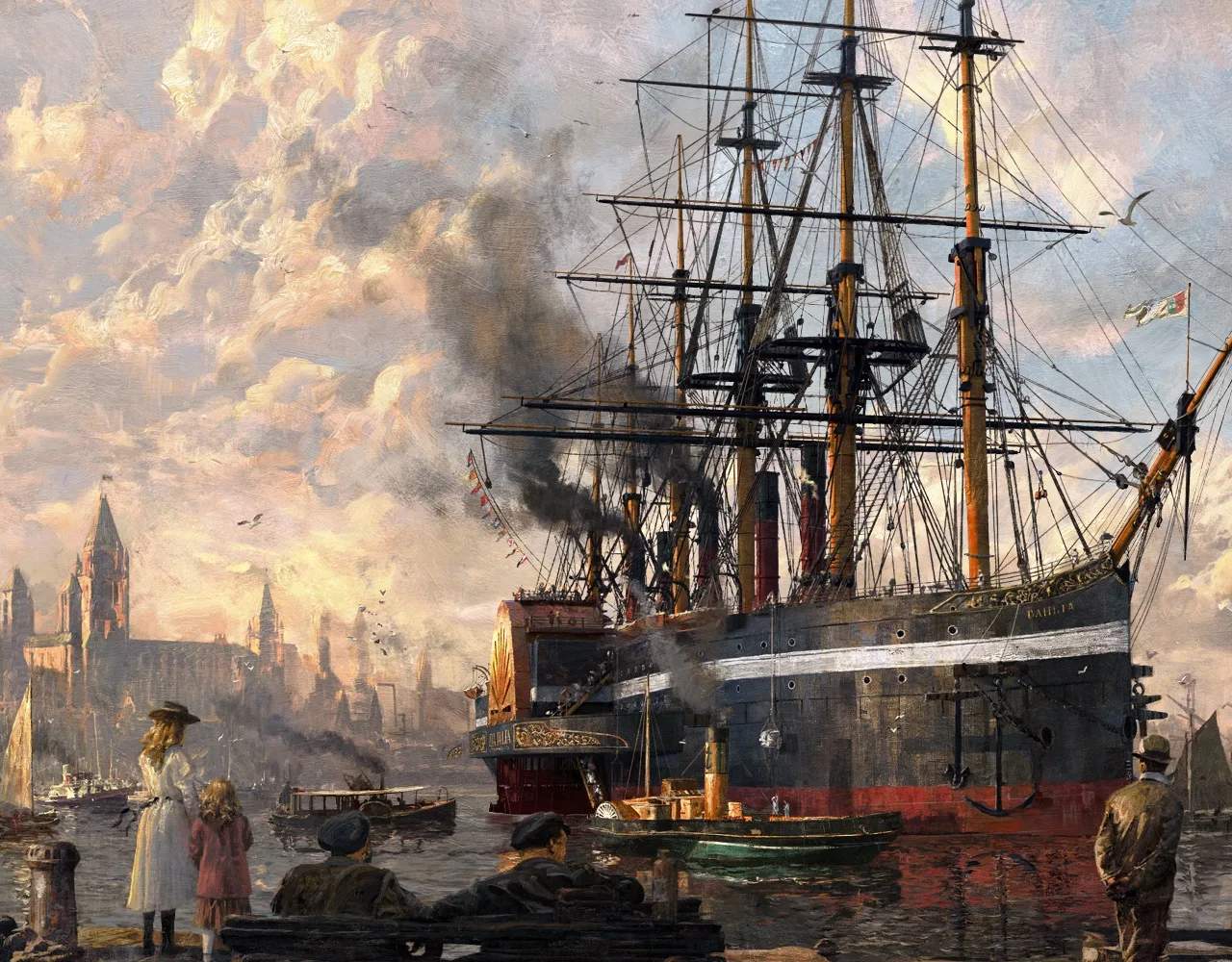
Docklands Strategies
The Docklands DLC introduces a powerful new layer of economic complexity and optimization to Anno 1800. Far more than just a cosmetic addition, the Docklands allow you to transform surplus production into valuable imports, circumventing complex production chains and significantly boosting your island's efficiency. Mastering the Docklands is crucial for late-game expansion and maintaining a thriving empire.
Understanding the Core Mechanic: Export & Import
At its heart, the Docklands operates on a simple principle: you export goods you have in abundance to import goods you need. This trade is facilitated by the Main Wharf and various Depots, which you upgrade to increase their storage capacity and the number of trade slots available. The value of goods is determined by their rarity and production complexity. For instance, exporting a common good like Wood will yield fewer Export Value points than exporting a high-tier good like Pocket Watches or Steam Carriages.
The Export Value accumulated from your exports is then used to 'pay' for your imports. Each import has a specific Import Value cost. The key is to find a balance where your exports generate enough value to cover your desired imports, ideally with a surplus.
Early Game Docklands Setup
While the Docklands are most impactful in the mid to late game, establishing them early can provide significant advantages:
- Initial Placement: Place your Main Wharf strategically to allow for future expansion with additional Depots and Loading Wharves. Consider proximity to your industrial zones for efficient export logistics.
- Basic Exports: Start by exporting readily available surplus goods like Wood, Bricks, or even Schnapps. These won't generate massive export value, but they'll get your Docklands operational.
- Targeted Imports: Early imports can be incredibly useful for jump-starting production chains. Consider importing Steel Beams to accelerate construction, or Advanced Weapons if you're struggling with early military production.
- Upgrade Priority: Focus on upgrading your Main Wharf to unlock more trade slots and increase its storage capacity. This allows for more simultaneous trade routes and larger stockpiles.
Mid-Game Docklands Optimization
As your empire grows, the Docklands become a powerful tool for streamlining complex production chains and addressing resource bottlenecks:
Strategic Export Choices
Shift your export focus to higher-value goods as your production capabilities expand. This maximizes your Export Value generation:
- New World Goods: Exporting surplus Coffee, Chocolate, Rum, or Cotton Fabric from the New World can be highly lucrative due to their higher base value.
- Advanced Old World Goods: Once established, consider exporting goods like Canned Food, Sewing Machines, Light Bulbs, or even Gramophones. These goods have complex production chains, making their export value significantly higher.
- Overproducing for Export: Don't be afraid to intentionally overproduce certain goods specifically for export. This can be more efficient than setting up an entire production chain for a low-volume import.
Targeted Import Strategies
Use imports to bypass difficult or resource-intensive production chains:
- Rare Resources: Import Gold, Gems, or Furs to avoid establishing complex mining operations in difficult-to-reach locations or to supplement existing production.
- Intermediate Goods: Importing Steel, Glass, or Filaments can significantly reduce the footprint and workforce requirements of your industrial zones. This is especially useful for densely populated islands.
- Luxury Goods: Instead of building extensive production lines for Jewelry or Pocket Watches, consider importing them directly to satisfy your Investor population's needs. This frees up valuable island space and workforce.
- New World Imports for Old World: Importing New World goods like Coffee Beans or Cocoa directly to the Old World can be a game-changer, especially if you're struggling with trade routes or island space in the New World.
Docklands Modules & Items
The Docklands can be further enhanced by various modules and items:
- Loading Wharves: Build multiple Loading Wharves to increase the speed at which goods are loaded and unloaded, preventing bottlenecks.
- Depots: Upgrade your Depots to their maximum capacity to handle larger volumes of goods and ensure continuous trade.
- Specialists: Look for specialists at the Research Institute or from various traders that specifically boost Docklands efficiency. Examples include:
- The Harbour Master: Increases loading speed.
- The Master of Trade: Increases export value or reduces import cost for specific goods.
- The Efficient Stevedore: Reduces loading/unloading time.
- Trade Union Items: Certain Trade Union items, when placed near your Docklands, can provide further bonuses to loading speed, storage, or even the value of traded goods. Experiment with items like The Golden Ship's Bell or The Efficient Crane.
Advanced Docklands Tactics
For the truly ambitious player, the Docklands offer opportunities for highly specialized and efficient empires:
Single-Island Specialization
Dedicate an entire island to producing a few high-value goods for export, then import everything else needed for its population. This creates highly efficient, focused production hubs.
"Import Everything" Strategy
In extreme late-game scenarios, with a robust economy, you can export a massive surplus of one or two extremely high-value goods (e.g., Steam Carriages, Airships) and import almost everything else your population needs. This drastically simplifies logistics and reduces the need for complex multi-island production chains.
Dynamic Trade Adjustments
Regularly review your Docklands trade routes. As your economy evolves, the value of goods and your needs will change. Adjust your exports and imports to maintain optimal efficiency and address new bottlenecks.
- Monitor Stock Levels: Keep an eye on your island's stock levels. If you're accumulating a massive surplus of an exported good, consider increasing its export quantity. If an imported good is constantly running low, increase its import quantity or find an alternative source.
- Respond to Crises: The Docklands can be a lifesaver during crises. If a production chain breaks down, quickly set up an import route for the affected good to prevent your population from rioting.
Docklands Building Overview
Here's a quick reference for the key Docklands buildings and their functions:
| Building | Primary Function | Key Upgrades/Benefits |
|---|---|---|
| Main Wharf | Central hub for all Docklands operations. Manages trade slots and storage. | Increased trade slots, higher storage capacity, unlocks more advanced modules. |
| Depot | Expands storage capacity for exported and imported goods. | Increases overall storage, allowing for larger trade volumes. |
| Loading Wharf | Increases the speed at which goods are loaded onto and unloaded from ships. | Reduces loading/unloading times, preventing bottlenecks with high trade volumes. |
| Customs House | (Not directly part of Docklands DLC, but complements it) Reduces import/export duties. | Reduces the cost of importing goods and increases the profit from exporting. |
By strategically integrating the Docklands into your empire, you can unlock unprecedented levels of efficiency, overcome production challenges, and truly master the art of trade in Anno 1800.