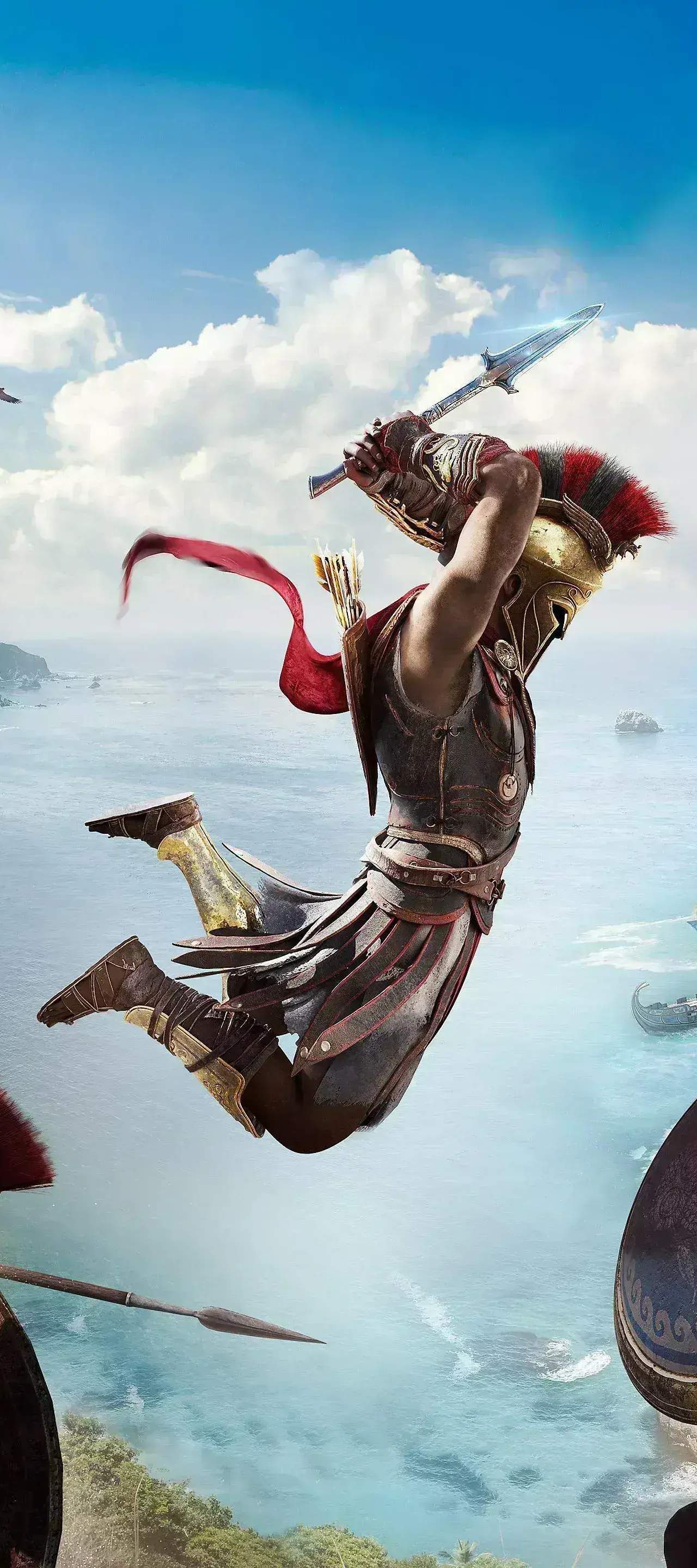
Historical Accuracy vs. Game Narrative
Assassin's Creed Odyssey masterfully blends historical fact with its compelling fictional narrative. While the game strives for authenticity in its depiction of Ancient Greece, it also takes creative liberties to serve its overarching story and gameplay mechanics. Understanding this balance can enhance your experience and appreciation for the world Ubisoft has crafted.
The Peloponnesian War: A Historical Canvas
The central conflict of Assassin's Creed Odyssey is the Peloponnesian War, fought between the Athenian-led Delian League and the Spartan-led Peloponnesian League. The game accurately portrays the political tensions, military strategies, and cultural differences between these two dominant powers. As a Misthios, your choices directly impact the war effort, though the ultimate historical outcome remains unchanged.
- Naval Warfare: The game's naval combat, featuring triremes and biremes, is a historically inspired representation of ancient Greek naval battles. While the dramatic ramming and boarding mechanics are exaggerated for gameplay, the general tactics reflect historical accounts.
- Conquest Battles: These large-scale land engagements are a core gameplay loop. While the specific battles you participate in are often fictionalized, they accurately represent the chaotic and brutal nature of ancient Greek warfare. Participating in these battles, such as those found in the region of Megaris during Chapter 1: A New Sun Rises, allows you to influence regional control, earning valuable Drachmae and gear.
- Historical Figures: You will encounter numerous historical figures, including Perikles, Sokrates, Aspasia, and Herodotos. Their personalities, philosophical stances, and roles in society are largely consistent with historical records, though their interactions with Kassandra or Alexios are, of course, fictionalized. For example, during the quest "Consulting a Ghost" in Chapter 3: History in the Making, you meet Herodotos, who serves as a guide and chronicler, much like his historical counterpart.
Mythology and the First Civilization: Fictional Elements
Beyond the historical backdrop, Assassin's Creed Odyssey weaves in elements of Greek mythology and the series' overarching First Civilization lore. These aspects are where the game takes its most significant narrative liberties.
- Mythical Creatures: Encounters with creatures like the Minotaur, Medusa, and the Cyclops are purely mythological. These are presented as powerful, often corrupted, beings that challenge your skills. To confront the Minotaur, for instance, you'll embark on the questline beginning with "Of Minotaurs and Men" on the island of Messara.
- Artifacts of the First Civilization: The Isu, or First Civilization, are a recurring element in the Assassin's Creed universe. Their advanced technology and powerful artifacts, such as the Staff of Hermes Trismegistus, are central to the game's main storyline and explain the protagonist's extraordinary abilities. These artifacts are entirely fictional and serve to connect Odyssey to the broader Assassin's Creed lore.
- Demigod Abilities: Kassandra/Alexios's superhuman abilities, such as the "Hero Strike" or "Spartan Kick," are explained by their lineage as a descendant of Leonidas and their connection to the First Civilization. These abilities are designed for engaging gameplay and are not historically accurate.
Navigating the Narrative: Tips for Players
To fully appreciate the game's blend of history and fiction, consider the following:
- Engage with the Database: The in-game database (accessible from the main menu) provides detailed historical context for locations, characters, and events. Reading these entries, especially for figures like Perikles or the city of Athens, will deepen your understanding of the real history that inspired the game.
- Embrace the "What If": Approach the mythological elements and First Civilization lore as a "what if" scenario within a historically rich setting. This allows you to enjoy the fantastical aspects without expecting strict historical accuracy.
- Observe the World: Pay attention to the architecture, clothing, daily life, and philosophical discussions. The developers put immense effort into recreating the visual and cultural aspects of Ancient Greece, even if the narrative takes creative turns. For example, the detailed recreation of the Acropolis in Athens is a testament to this dedication.
By understanding where the game adheres to history and where it diverges for narrative and gameplay purposes, you can gain a richer, more nuanced appreciation for the immersive world of Assassin's Creed Odyssey.