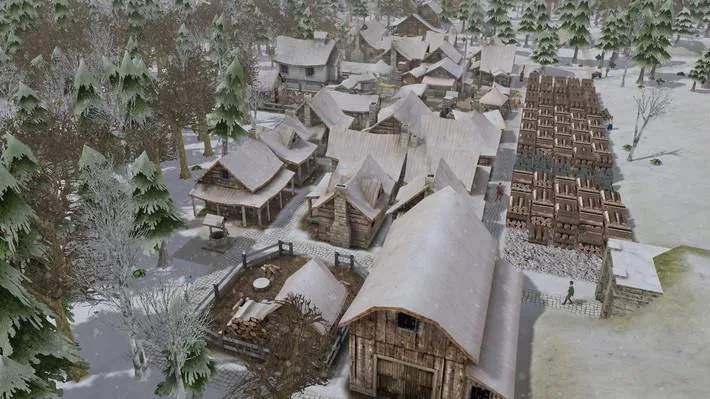
Advanced Farming & Crop Rotation
Once your settlement has stabilized with a reliable food source from Gatherer's Huts and Fishing Docks, it's time to transition into more efficient, large-scale food production through advanced farming techniques. Simply building a farm and assigning workers isn't enough for long-term sustainability; strategic crop rotation is key to maximizing yields and preventing soil degradation.
Farm Placement & Size
Optimal farm placement is crucial. Aim for flat, fertile land close to your housing and storage barns to minimize travel time for your Farmers. While the game allows for various farm sizes, a common and highly efficient size is 15x15 tiles. This size allows for a single Farmer to manage the entire plot effectively, ensuring they can plant, tend, and harvest before the season ends. Larger farms often require multiple Farmers, which can be less efficient per worker if not managed carefully.
- Initial Setup: Start with at least two 15x15 farms. This allows for immediate crop rotation strategies.
- Proximity: Build Storage Barns adjacent to your farms. This significantly reduces the time Farmers spend transporting harvested goods, allowing them to return to work faster.
- Tool Access: Ensure your Farmers have easy access to Tools. Worn-out tools reduce efficiency, leading to lower yields. Consider placing a Blacksmith nearby or maintaining a well-stocked Storage Barn with Tools.
Understanding Crop Types & Yields
Banished features several crop types, each with different growing seasons and yields. Understanding these differences is fundamental to effective crop rotation:
- Corn: High yield, but a longer growing season. Excellent for staple food production.
- Wheat: Moderate yield, shorter growing season. Can be processed into Flour at a Windmill (if using mods) or used directly as food.
- Potatoes: Moderate yield, shorter growing season. Good for diversifying food sources.
- Beans: Moderate yield, shorter growing season. Another good option for diversity.
- Squash: Moderate yield, shorter growing season. Similar to Beans and Potatoes.
- Cabbage: Moderate yield, shorter growing season.
- Herbs: Low food yield, but crucial for Herbalists to produce medicine. Always dedicate a small farm or a section of a larger farm to Herbs once your population grows.
The "yield" of a crop is also influenced by the Farmer's efficiency, tool quality, and the absence of disease or pests (though these are less common in vanilla Banished than in some other city builders).
Implementing Crop Rotation Strategies
Crop rotation is not explicitly modeled as a "soil fertility" mechanic in Banished, but it is a critical strategy for managing labor and ensuring consistent food supply throughout the year. The primary goal is to stagger planting and harvesting times to prevent all your farms from requiring attention simultaneously, which can lead to missed harvests and food shortages.
The Two-Farm Rotation (Early Game)
This is the simplest and most effective rotation for new settlements with limited Farmers.
- Farm 1: Corn
- Farm 2: Wheat/Potatoes/Beans
Walkthrough:
- Year 1:
- Spring: Plant Corn in Farm 1. Plant Wheat (or Potatoes/Beans) in Farm 2.
- Summer: Both crops grow. Farmers tend to both fields.
- Autumn: Harvest Wheat first (shorter growing season). Once Farm 2 is harvested, your Farmers will move to harvest Corn in Farm 1. This staggered approach ensures you don't miss the harvest window for either crop.
- Winter: Farmers will transport food to Storage Barns and prepare for the next planting season.
- Subsequent Years: Repeat the same pattern. The benefit here is primarily labor management, as the different harvest times ensure your limited Farmers aren't overwhelmed.
The Three-Farm Rotation (Mid-Game Expansion)
As your population grows and you can support more Farmers, expanding to three farms allows for even better labor distribution and a more diverse food supply.
- Farm 1: Corn
- Farm 2: Wheat
- Farm 3: Potatoes/Beans/Squash/Cabbage
Walkthrough:
- Spring: Plant Corn in Farm 1, Wheat in Farm 2, and your chosen shorter-season crop in Farm 3.
- Summer: All crops grow.
- Autumn:
- Harvest Farm 3 (shortest season).
- Then, harvest Farm 2 (Wheat).
- Finally, harvest Farm 1 (Corn).
- Benefits: This rotation provides three distinct harvest windows, spreading out the labor demand for your Farmers. This minimizes the risk of crops rotting in the field due to insufficient labor during peak harvest times. It also provides a more varied diet for your citizens, which can contribute to overall happiness and health.
Advanced Considerations
- Labor Allocation: Always ensure you have enough Farmers assigned to your fields. A good rule of thumb for 15x15 farms is one Farmer per field, but during peak harvest, having a few unassigned Laborers available can help prevent spoilage.
- Seed Management: Keep a close eye on your seed stock. If you run out of a particular seed, you won't be able to plant that crop. Trading Posts are your primary source for new seeds. Prioritize acquiring all available crop seeds early in the game to ensure agricultural diversity.
- Disaster Preparedness: While rare, blights can occur, devastating an entire crop. Diversifying your crops across multiple farms and using different types of food production (Gatherers, Fishers, Hunters) provides a buffer against such events.
- Education: Educated Farmers work more efficiently. Build a School early to ensure your future workforce is well-trained.
By carefully planning your farm layouts and implementing these crop rotation strategies, you can ensure a stable and abundant food supply for your growing Banished settlement, even through harsh winters and unexpected challenges.