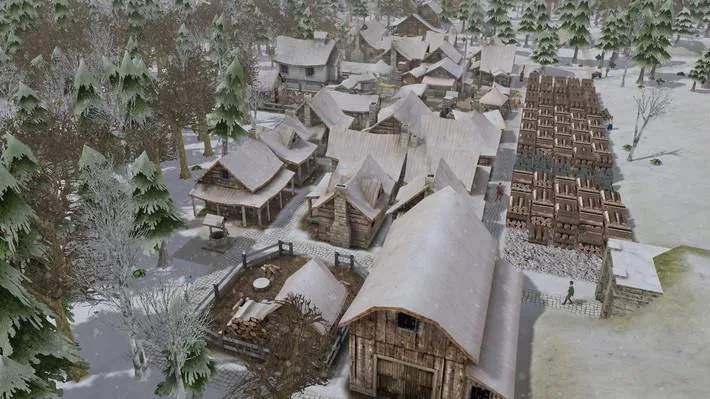
Building Tiers & Upgrades
Mastering the tiered building system in Banished is crucial for long-term survival and prosperity. Each tier unlocks new possibilities, from basic shelter to advanced production and defense. Understanding the prerequisites and strategic timing for upgrades will significantly impact your settlement's growth and resilience.
Tier 1: Foundations of Survival
Your journey begins with the most basic structures, focused on immediate needs and resource gathering. These buildings are essential for establishing a foothold in the harsh wilderness.
- Hunter's Lodge: Your first source of food and hides.
- Location: Best placed near dense forests for optimal animal spawns.
- Strategy: Build 2-3 early to ensure a steady food supply. Upgrade to a Trapper's Post (Tier 2) once you have a stable population and need more consistent hide production.
- Cost: 20 Wood, 10 Stone.
- Gatherer's Hut: Provides berries, mushrooms, and other edible plants.
- Location: Position within a large forest area. The larger the forest, the more resources it can gather.
- Strategy: Crucial for diversifying your food sources. Consider building a Forager's Camp (Tier 2) later for increased efficiency and a wider range of gathered goods.
- Cost: 15 Wood, 5 Stone.
- Woodcutter's Lodge: Essential for producing firewood and logs.
- Location: Anywhere near a forest.
- Strategy: Maintain a balance between cutting down trees and replanting. Over-logging leads to resource depletion. Upgrade to a Sawmill (Tier 2) to process logs into more valuable lumber.
- Cost: 10 Wood.
- Storage Barn: Stores all raw materials and finished goods.
- Location: Central to your production buildings to minimize travel time for workers.
- Strategy: Build multiple as your settlement grows. Upgrading to a Large Storage Barn (Tier 2) significantly increases capacity.
- Cost: 30 Wood, 15 Stone.
Tier 2: Expansion and Specialization
Once your basic needs are met, Tier 2 buildings allow for greater efficiency, specialized production, and the beginnings of a more complex economy. These upgrades often require more advanced materials.
- Trapper's Post (Upgrade from Hunter's Lodge): Increases hide production and provides a small amount of meat.
- Prerequisites: Requires a fully staffed Hunter's Lodge and access to Iron.
- Strategy: Focus on this upgrade when you need more leather for clothing or tools.
- Cost: 40 Wood, 20 Stone, 5 Iron.
- Forager's Camp (Upgrade from Gatherer's Hut): Gathers a wider variety of plants, including medicinal herbs.
- Prerequisites: Requires a fully staffed Gatherer's Hut and access to Stone Tools.
- Strategy: Essential for producing herbal medicine later on.
- Cost: 30 Wood, 15 Stone, 5 Iron Tools.
- Sawmill (Upgrade from Woodcutter's Lodge): Processes logs into lumber, a vital building material for advanced structures.
- Prerequisites: Requires a fully staffed Woodcutter's Lodge and access to Iron.
- Strategy: Prioritize this upgrade early in Tier 2 to accelerate construction of other advanced buildings.
- Cost: 50 Wood, 25 Stone, 10 Iron.
- Blacksmith: Produces crucial tools (Stone Tools, Iron Tools) and later, weapons.
- Location: Near your mines and storage for efficient resource flow.
- Strategy: A constant supply of tools is paramount for worker efficiency. Ensure a steady supply of Iron Ore.
- Cost: 60 Wood, 30 Stone, 15 Iron.
- Mine: Extracts Iron Ore and Coal.
- Location: Can only be built on designated ore deposits found throughout the map. Use the "Resource Overlay" to locate them.
- Strategy: Mines are finite resources. Plan their placement carefully and consider alternative resource acquisition later (e.g., trading).
- Cost: 80 Wood, 40 Stone.
Tier 3: Advanced Infrastructure and Defense
Tier 3 unlocks complex production chains, robust housing, and defensive structures, allowing your settlement to become a thriving town capable of self-sufficiency and protection.
- Stone House (Upgrade from Wooden House): Provides better insulation, reducing firewood consumption, and increases citizen happiness.
- Prerequisites: Requires a fully built Wooden House and access to Stone and Lumber.
- Strategy: Gradually upgrade all Wooden Houses to Stone Houses to improve overall living conditions and resource efficiency.
- Cost: 40 Stone, 20 Lumber.
- Tailor: Produces clothing from hides and wool, improving citizen happiness and cold resistance.
- Prerequisites: Requires a steady supply of Hides (from Trapper's Post) or Wool (from Sheep Pasture).
- Strategy: Essential for preventing citizens from freezing in colder climates.
- Cost: 70 Wood, 35 Stone, 10 Iron Tools.
- Trading Post: Allows for trade with nomadic merchants, acquiring rare resources or selling surplus goods.
- Location: Best placed along a river or major path for easier merchant access.
- Strategy: Use the Trading Post to balance your economy, especially for resources you lack locally (e.g., Seeds, Livestock).
- Cost: 100 Wood, 50 Stone, 20 Lumber.
- Watchtower: Provides early warning against bandit raids and can house guards for defense.
- Location: Strategically place at key entry points to your settlement or near valuable production areas.
- Strategy: Staff with trained guards (available after building a Barracks) to deter or repel threats.
- Cost: 80 Stone, 40 Lumber, 15 Iron.
- Barracks: Trains and houses guards, providing a dedicated defense force.
- Prerequisites: Requires a steady supply of Iron and a growing population.
- Strategy: Essential for protecting your citizens and resources from increasingly aggressive bandit incursions in later game stages.
- Cost: 120 Stone, 60 Lumber, 30 Iron, 10 Iron Tools.
Remember, the key to successful building and upgrading in Banished is careful planning and resource management. Always consider the long-term impact of your construction choices on your settlement's economy, population, and defense.