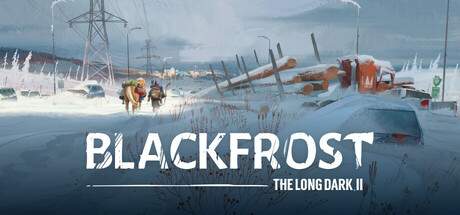
Navigating Blackfrost: The Long Dark II in foggy or low-visibility conditions presents a significant challenge, demanding careful observation and strategic movement. These conditions drastically reduce your line of sight, making it easy to become disoriented and lose your bearings, even in familiar territory.
Understanding Fog Mechanics
Fog can roll in unexpectedly, often accompanied by a drop in temperature. It can range from a light mist that slightly obscures distant objects to a dense, impenetrable wall of white that limits visibility to mere meters. Unlike blizzards, fog does not typically bring strong winds or heavy snowfall, but its impact on navigation is equally severe.
Strategies for Low Visibility Navigation
- use Sound Cues: Listen intently for environmental sounds. The distant howl of a wolf, the creak of a frozen structure, or the sound of running water can provide clues to your surroundings when visual information is scarce.
- Follow Established Paths (with Caution): If you are on a known path or road, try to stick to it. However, be aware that snowdrifts can obscure these paths, and you may still stray off course.
- Use Your Compass and Map: These are your most reliable tools in low visibility. Regularly check your compass to maintain a consistent direction of travel. If you have a map, try to orient yourself by identifying any features you can faintly discern or by triangulating your position based on known landmarks.
- Mark Your Path: If you are venturing into an unknown area or need to backtrack, consider leaving temporary markers. This could be as simple as dropping small, distinct items or breaking branches (if available) to create a trail.
- Seek Shelter: If the fog is too dense and you are unsure of your location or direction, it is often safer to find a temporary shelter and wait for visibility to improve. This could be a cave, a rock overhang, or even the lee side of a large structure.
- Reduce Speed: Do not rush through foggy conditions. Move at a deliberate pace, constantly scanning your surroundings and checking your navigation tools.
The Danger of Disorientation
Becoming disoriented in fog can lead to several critical survival threats: wandering into dangerous terrain (like thin ice or ravines), becoming separated from your base camp, or simply expending valuable energy and resources without making progress. Always prioritize safety over speed when visibility is compromised.