Combat Mechanics & Advanced Strategies
Welcome, Sensei! This section delves deep into the combat system of Blue Archive, moving beyond basic understanding to equip you with the advanced strategies needed to dominate even the toughest encounters. Mastering these mechanics is crucial for efficient resource farming, challenging raids, and climbing the PvP ladder.
Understanding the Core Combat Loop
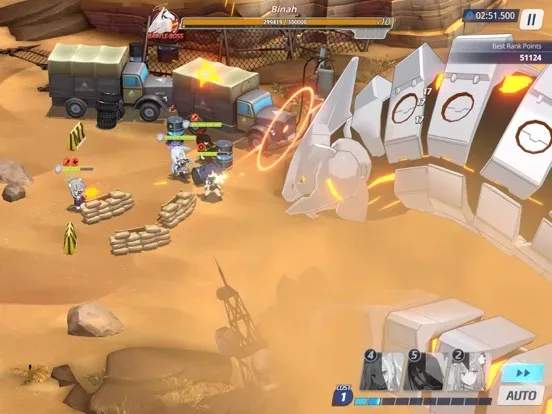
Blue Archive's combat is a dynamic blend of real-time action and strategic ability usage. Your students automatically engage enemies, but your intervention with their EX Skills is what truly turns the tide.
- Auto-Attack Fundamentals: Students will continuously attack the nearest enemy within their range. Different weapon types (e.g., Assault Rifles, Shotguns, Sniper Rifles) have varying ranges and attack patterns. Pay attention to their effective range to optimize positioning.
- EX Skill Management: These are your primary tools for direct intervention. Each EX Skill costs a certain amount of EX Gauge points. The EX Gauge fills up over time and through student actions. Efficiently managing this resource is paramount.
- Cover System: Students will automatically seek cover when available, reducing incoming damage. However, some enemies can bypass cover or destroy it. Understanding when to reposition or use skills that force enemies out of cover is key.
Advanced EX Skill Synergies & Chaining
Don't just use EX Skills as they come off cooldown. Strategic chaining can amplify their effects dramatically. Look for students whose skills complement each other.
- Damage Amplification:
- Debuff First, Damage Second: Students like Haruna (Casual) with her EX Skill "Explosive Shot" can apply a DEF reduction debuff. Follow this immediately with a high-damage EX Skill from a student like Iori ("Piercing Shot") or Hina ("Inferno Bullet") to maximize output.
- Critical Buffs: Students who provide Critical Rate or Critical Damage buffs (e.g., Serina with her Sub Skill "First Aid Kit" or certain Tactical Support students) should ideally activate their buffs just before your main damage dealers unleash their EX Skills.
- Crowd Control (CC) Chains:
- Stun & AoE: Use a student with a reliable stun (e.g., Tsubaki's EX Skill "Provoke") to group enemies or interrupt dangerous attacks. Immediately follow up with an Area-of-Effect (AoE) damage dealer like Hoshino ("Sleepy Bomb") or Aru ("Explosion of Justice") to clear the stunned group.
- Knockback & Wall Splat: While less common, some skills can knock enemies back. If an enemy is knocked into a wall or another obstacle, they can be briefly stunned, creating a window for further damage.
- Healing & Shield Timing:
- Pre-emptive Healing: Don't wait until your students are critically low. Use healing EX Skills like Serina's "Emergency Treatment" or Koharu's "Divine Punishment" when a significant burst of enemy damage is anticipated, or when a key student is about to take heavy hits.
- Shield Stacking: Students like Yuuka ("Iron Wall Defense") or Tsubaki ("Provoke") provide shields. Stacking these shields can absorb immense damage, allowing your attackers to safely dish out punishment.
Targeting Priority & Enemy Management
Not all enemies are created equal. Prioritizing targets can significantly reduce incoming damage and shorten combat duration.
- High-Threat Targets: Always identify and eliminate enemies that pose the greatest threat first. This often includes:
- Healers: Enemies that can heal their allies (e.g., certain "Medical Drone" types or "Support Golems").
- Snipers/Artillery: Long-range enemies that deal high damage to your backline (e.g., "Heavy Sniper" or "Mortar Turrets").
- Crowd Controllers: Enemies that can stun, charm, or otherwise incapacitate your students (e.g., "Disruptor Bots").
- Mob Thinning: For large groups of weaker enemies, focus on AoE skills to quickly thin their numbers. This reduces the overall damage your team takes.
- Boss Mechanics: For boss encounters, understand their attack patterns and weaknesses. Some bosses have specific parts that can be targeted for extra damage or to disable certain abilities.
Optimal Team Composition for Specific Challenges
Your team isn't just about your favorite students. It's about building a cohesive unit tailored to the challenge at hand.
- Raid Teams:
- Damage Type Matching: Always match your main damage dealers' attack types (Explosive, Piercing, Mystic) to the raid boss's defense type. For example, for a boss with Heavy Armor, prioritize Piercing damage students like Haruna or Izuna.
- Sustained Damage & Buffs: Include students who provide consistent damage buffs (e.g., Kotama's EX Skill "Tactical Support") and reliable healers (e.g., Hanae's EX Skill "Healing Field") for prolonged fights.
- PvP (Tactical Challenge) Teams:
- Burst Damage: PvP often favors quick, decisive victories. Students with high burst damage EX Skills (e.g., Iori, Hina, Aru) are highly valued.
- Crowd Control: Disrupting enemy formations with stuns or knockbacks (e.g., Tsubaki, Hoshino) can create openings for your damage dealers.
- Tankiness & Survivability: A strong frontline tank (e.g., Yuuka, Tsubaki) is essential to protect your damage dealers.
- Story & Event Stages:
- Flexibility: These stages often have varied enemy compositions. A balanced team with a mix of damage types, a healer, and a tank is generally effective.
- Specific Gimmicks: Some stages introduce unique mechanics (e.g., enemies immune to certain damage types, environmental hazards). Adapt your team accordingly.
Gear & Equipment Optimization
Beyond student levels and skills, equipment plays a vital role in their performance.
- Tier Upgrades: Always prioritize upgrading your students' gear to the highest possible tier. Each tier provides significant stat boosts.
- Sub-Stats: Pay attention to the sub-stats on your equipment. For example, Crit Rate and Crit Damage are excellent for damage dealers, while HP and Defense are crucial for tanks.
- Set Bonuses: Some equipment sets provide powerful bonuses when multiple pieces are equipped. Always aim to complete these sets for your key students.
The Importance of Terrain Advantage
Different students excel in different terrains. This isn't just cosmetic; it directly impacts their performance.
- Terrain Affinity: Each student has a terrain affinity (e.g., Urban, Outdoor, Indoor). Matching a student's affinity to the stage's terrain grants them a significant damage bonus and reduces incoming damage. Conversely, a poor affinity incurs penalties.
- Strategic Deployment: When planning your team, always check the stage's terrain and prioritize students with matching affinities. This can make a huge difference in challenging content.