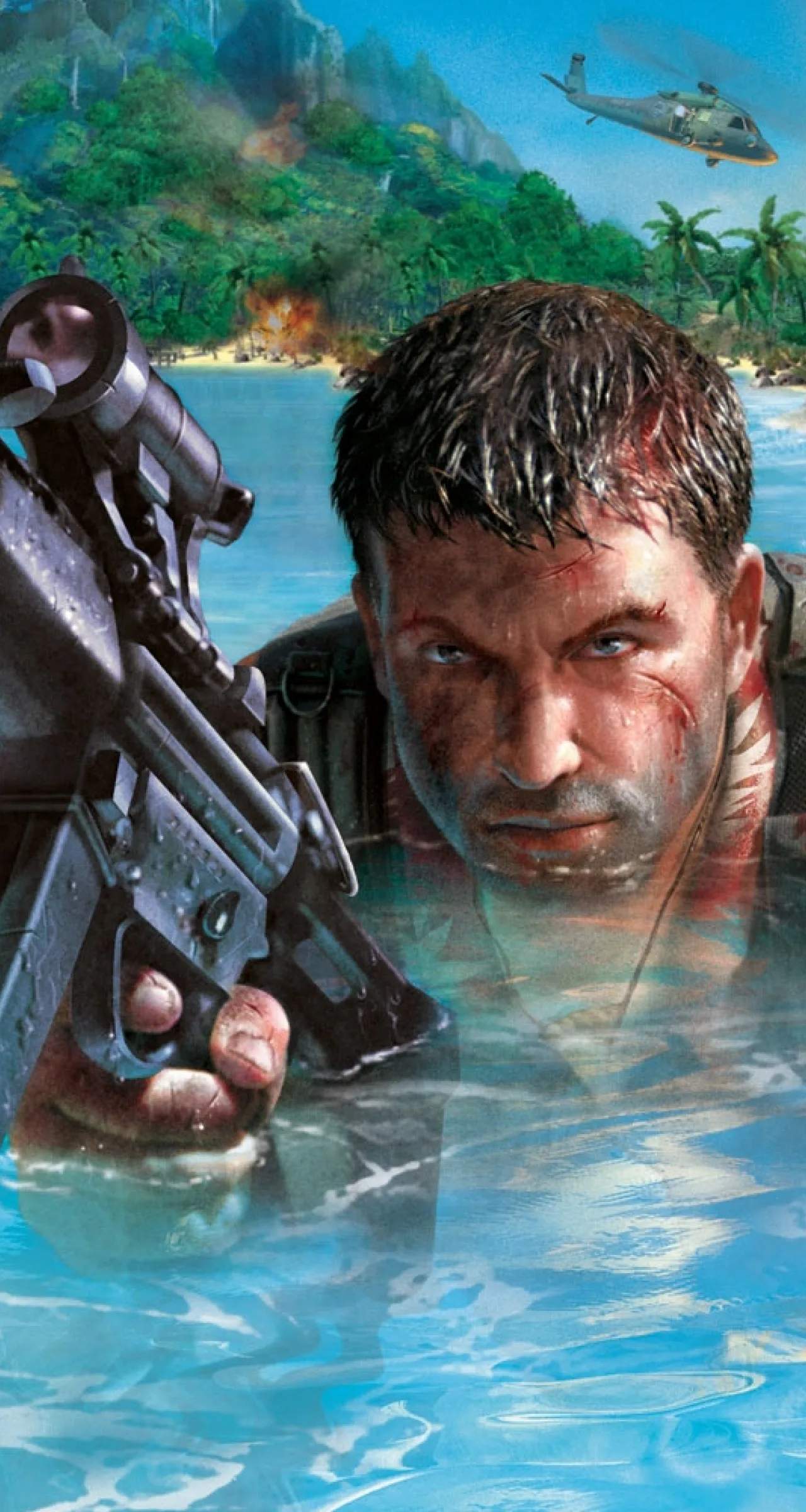
Post-Game Content
Congratulations, mercenary! You've navigated the treacherous jungles of the Rook Islands, faced down hordes of genetically-engineered creatures, and confronted the megalomaniacal Dr. Krieger. But the fight for survival and supremacy doesn't necessarily end with the credits. While the original Far Cry (2004) is primarily a linear single-player experience, it offers several avenues for continued engagement and replayability. This comprehensive guide will detail the options available to you after completing Jack Carver's harrowing journey, from revisiting the campaign on higher difficulties to exploring the robust multiplayer modes and the enduring legacy of its map editor.
Replaying the Campaign: Mastering the Jungle
The core of Far Cry lies in its gripping single-player narrative. Once you've completed the story, the most direct way to extend your experience is to replay the campaign. This allows you to experiment with different strategies, discover hidden paths, and truly master the game's challenging combat mechanics.
Difficulty Modes: Escalating the Challenge
Far Cry offers several difficulty settings that significantly alter enemy AI, damage output, and your own resilience. Replaying on a higher difficulty isn't just about tougher enemies; it forces a complete re-evaluation of your tactics, emphasizing stealth, precision, and environmental awareness.
- Easy: For players new to FPS games or those who prefer a more relaxed, story-focused experience. Enemies are less accurate, deal less damage, and are less aware of your presence.
- Medium: The standard experience, offering a balanced challenge. Enemies are competent, and tactical thinking begins to be rewarded.
- Hard: A significant step up. Enemies are more aggressive, accurate, and perceptive. You'll take more damage, and health regeneration is slower. Stealth becomes crucial, and direct confrontations are often suicidal without careful planning.
- Realistic: The ultimate test of skill and patience. Enemies are extremely deadly, often capable of killing you in one or two shots. Their awareness is heightened, and they will actively flank and coordinate. Health regeneration is minimal, making every hit count. This mode demands mastery of all game mechanics, from weapon handling to environmental exploitation.
Strategies for Higher Difficulties:
- Embrace Stealth: On Hard and Realistic, direct assaults are rarely viable. Utilize the dense jungle foliage, tall grass, and shadows to your advantage. Prioritize silent takedowns with the Machete or suppressed weapons.
- Scout Thoroughly: Before engaging any enemy outpost or patrol, use your binoculars to tag enemies, identify their patrol routes, and locate heavy weapon emplacements or snipers.
- Prioritize Targets: Eliminate snipers and heavy weapon specialists (like those with rocket launchers or mounted machine guns) first. These pose the greatest threat.
- Use Cover Wisely: Soft cover (like bushes) can conceal you, but hard cover (rocks, structures) is essential for surviving firefights. Never stay in the open for long.
- Conserve Ammunition: Ammo can be scarce on higher difficulties. Aim for headshots to maximize damage and conserve rounds. Switch to your Machete for isolated enemies to save bullets.
- Exploit the Environment: Look for explosive barrels, fuel tanks, or unstable structures that can be used to your advantage. Lure enemies into traps or create diversions.
- Master Movement: Constantly move, flank, and reposition during combat. Standing still is a death sentence.
Discovering Secrets and Easter Eggs
While Far Cry doesn't have a "secret ending" in the traditional sense, replaying the campaign allows you to uncover subtle narrative details, environmental storytelling, and developer Easter eggs you might have missed during your initial playthrough. The vast, open-ended level design encourages exploration.
- Hidden Paths: Many missions offer multiple routes to an objective. Experiment with different approaches – a stealthy jungle path might bypass a heavily guarded checkpoint, or a daring swim could lead to an unexpected vantage point.
- Environmental Lore: Pay attention to the details in abandoned labs, military outposts, and native villages. Notes, scientific equipment, and propaganda posters often provide deeper insight into the game's lore and the tragic experiments conducted by Krieger.
- Weapon Stashes: Some powerful weapons or large caches of ammunition are hidden off the beaten path. Thorough exploration can reward you with a tactical advantage.
Multiplayer: The Unending Conflict
Beyond the single-player campaign, Far Cry features a robust multiplayer component that offered countless hours of competitive and cooperative gameplay. While official servers may no longer be active for all platforms, dedicated communities and private servers often keep the experience alive.
Multiplayer Modes:
- Deathmatch (DM): The classic free-for-all mode. Every mercenary for themselves.
- Objective: Be You with the most kills when the time limit expires or the kill limit is reached.
- Strategy: Learn the maps, control power weapon spawns, and master movement to outmaneuver opponents.
- Team Deathmatch (TDM): Two teams battle for supremacy.
- Objective: The team with the most collective kills wins.
- Strategy: Coordinate with teammates, cover flanks, and focus fire on key targets.
- Assault: A unique objective-based mode where one team attacks and the other defends a series of objectives.
- Objective (Attackers): Capture and hold a series of control points within a time limit.
- Objective (Defenders): Prevent the attackers from capturing all objectives until the time runs out.
- Strategy (Attackers): Coordinated pushes, smoke grenades for cover, and focusing on one objective at a time.
- Strategy (Defenders): Establish strong defensive positions, utilize choke points, and communicate enemy movements.
- Predator: A unique mode where one team plays as the powerful, cloaked "Predators" (Trigens) and the other as human mercenaries.
- Objective (Predators): Eliminate all human players. Predators have enhanced speed, strength, and a cloaking ability.
- Objective (Humans): Survive the Predator onslaught or eliminate all Predators. Humans rely on teamwork and firepower.
- Strategy (Predators): Utilize stealth, ambush tactics, and hit-and-run attacks. Exploit your superior mobility.
- Strategy (Humans): Stick together, cover each other's backs, and listen for the tell-tale shimmer of a cloaked Predator. Use shotguns and automatic weapons for close-quarters defense.
Multiplayer Tips:
- Map Knowledge: Learn the layouts, weapon spawns, health pack locations, and common choke points for each map.
- Weapon Proficiency: Experiment with different weapons to find what suits your playstyle. The MP5 is a versatile choice, while the Shotgun dominates close quarters.
- Teamwork (TDM, Assault, Predator): Communicate with your team, share information, and coordinate attacks or defenses.
- Movement: Don't stand still. Use cover, strafe, and jump to make yourself a harder target.
- Sound Cues: Listen for footsteps, gunshots, and the distinctive sounds of Trigens to locate enemies.
The Map Editor: Unleashing Creativity
One of Far Cry's most enduring post-game features is its powerful and intuitive map editor. This tool allowed players to design and share their own custom maps, extending the game's lifespan almost indefinitely. While primarily a PC feature, the community-driven content provided endless new experiences.
Key Features of the Map Editor:
- Terrain Sculpting: Create diverse landscapes, from rolling hills and dense jungles to treacherous mountains and serene beaches.
- Object Placement: Populate your maps with a vast array of in-game assets, including buildings, vehicles, vegetation, environmental hazards, and decorative elements.
- AI Pathing: Design complex patrol routes and behaviors for AI enemies, creating challenging combat scenarios.
- Scripting (Advanced): For more ambitious creators, the editor allowed for basic scripting to create custom events, triggers, and mission objectives.
- Multiplayer Integration: Custom maps could be designed specifically for any of the multiplayer modes, offering fresh battlegrounds for the community.
Creating Your Own Maps:
- Launch the Editor: On PC, the map editor is usually accessible from the game's main menu or a separate executable in the game directory.
- Choose a Template: Start with a blank canvas or an existing map template to get a feel for the tools.
- Sculpt the Terrain: Use the terrain tools to raise/lower ground, smooth surfaces, and apply different textures (grass, sand, rock).
- Add Water: Define water levels to create rivers, lakes, or oceans.
- Place Objects: Browse the object library and drag-and-drop elements onto your map. Consider strategic placement for cover, choke points, and visual interest.
- Populate with AI: Add enemy AI, set their patrol routes, and define their aggression levels for single-player or co-op experiences.
- Define Spawns & Objectives: For multiplayer maps, place player spawn points, weapon spawns, and objective markers (for Assault/Predator modes).
- Test Your Map: Regularly test your map in-game to identify balance issues, bugs, or areas that need refinement.
- Share with the Community: Once complete, save and share your map with other players through fan websites and forums.
Finding Community Maps:
While direct in-game browsing for community maps might be limited on older platforms, PC You can often find archives of user-created content on dedicated Far Cry fan sites and forums. These maps offer a virtually endless supply of new single-player challenges and multiplayer arenas.
The Legacy: Modding and Preservation
The original Far Cry, particularly on PC, has a dedicated modding community that continues to enhance and expand the game. While not "post-game content" in the traditional sense, mods offer a way to experience the game in entirely new ways long after completing the vanilla campaign.
- Graphical Enhancements: Texture packs, lighting overhauls, and shader injections can bring the 2004 visuals closer to modern standards.
- Gameplay Overhauls: Mods might introduce new weapons, refine AI behavior, or alter core game mechanics for a fresh challenge.
- Fan-Made Campaigns: Some ambitious modders have even created entirely new single-player campaigns using the game's engine and assets.
Exploring these community-driven efforts requires some technical know-how (installing mods, joining private servers), but the rewards are often well worth the effort for dedicated fans looking to keep the spirit of Far Cry alive.
In conclusion, while Far Cry (2004) doesn't feature a dynamic "post-game world" with evolving challenges like later titles in the series, its robust difficulty settings, engaging multiplayer, and powerful map editor provide ample opportunities for continued enjoyment and replayability. Whether you're striving for mastery on Realistic difficulty, dominating in multiplayer skirmishes, or unleashing your creativity with the map editor, Jack Carver's first adventure offers a lasting legacy for those willing to delve deeper into its tropical depths.
Compare post-game content inFar Cry New Dawn