Common Mistakes and How to Avoid Them
Even seasoned rhythm-puzzle veterans can stumble in the vibrant world of Lumines Remastered. This section details common pitfalls and provides actionable strategies to keep your board clear and your score soaring.
Ignoring the Timeline (The "Sweeper")
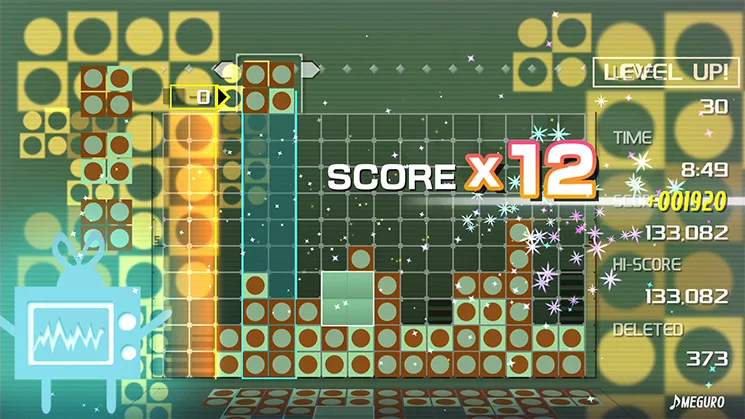
One of the most fundamental mistakes players make is not paying enough attention to the Timeline, also known as the "Sweeper." This line constantly moves across your playfield, clearing any connected blocks of the same color. Mismanaging its rhythm can lead to an overwhelming board.
- The Mistake: Dropping blocks haphazardly without considering where the Timeline is currently located or where it will be next. This often results in isolated single blocks or small groups that the Timeline can't clear efficiently, leading to a cluttered board.
- How to Avoid It:
- Anticipate the Sweep: Always observe the Timeline's speed and position. Aim to complete your color blocks just before it passes over them. This maximizes your clearing potential and prevents blocks from being left behind.
- Create Chains: Focus on building larger, contiguous blocks of the same color. The Timeline will clear all connected blocks it passes over. A single sweep can clear multiple rows and columns if you've set them up correctly.
- use "Hold": If you have a block that doesn't fit your current strategy but could be useful later, use the "Hold" function (typically the L1/LB button) to temporarily store it. This allows you to wait for a more opportune moment or for the Timeline to move into a better position.
Over-Focusing on Single-Color Blocks
While clearing single-color blocks is the core mechanic, becoming too fixated on them can be detrimental, especially as the game speeds up.
- The Mistake: Only looking for opportunities to create 2x2 squares of a single color. This can lead to neglecting the other color in your falling block, creating an imbalance on the board, and potentially leaving you with many "orphan" blocks.
- How to Avoid It:
- Think in Pairs: Remember that each falling block consists of two squares. Always consider how both squares will impact your board. Can one square complete a 2x2 while the other sets up a future clear?
- Strategic Placement of "Off-Color" Squares: Don't just dump the "unwanted" color. Try to place it in a way that either:
- Creates a small, easily clearable group for a future sweep.
- Positions it next to other blocks of its color, building towards a larger clear.
- Pushes it to the side of the board where it can be dealt with later without obstructing your main clearing area.
- Prioritize Clearing Over Perfect Placement: Sometimes, a quick, smaller clear is better than waiting for a perfect 2x2 setup that might never materialize, especially when the board is getting full.
Panicking Under Pressure and Dropping Blocks Too Fast
As the music intensifies and the blocks fall faster, it's natural to feel the pressure. However, rushing your decisions is a common cause of game-ending mistakes.
- The Mistake: Rapidly dropping blocks without taking a moment to assess the board. This often leads to misplacing blocks, creating unmanageable gaps, or burying valuable clear opportunities.
- How to Avoid It:
- Take a Breath: Even in fast-paced sections, you usually have a fraction of a second to make a decision. Use that time wisely.
- Scan the Board: Before dropping, quickly scan the entire playfield. Look for:
- Immediate 2x2 clear opportunities.
- Areas where you can set up future clears.
- Any "danger zones" (tall columns or isolated blocks) that need attention.
- Use the "Soft Drop" (Down Button): Instead of hard-dropping every block, use the soft drop to guide blocks into place. This gives you more control and allows for last-second adjustments. Only hard drop when you are absolutely certain of your placement.
- Practice in Challenge Mode: If you find yourself panicking, spend time in Challenge Mode on easier difficulties to build muscle memory and confidence in your block placement under varying speeds.
Neglecting the Edges of the Playfield
Many players tend to focus their efforts on the center of the board, leaving the far left and right edges to become cluttered and difficult to clear.
- The Mistake: Allowing columns on the extreme left or right to grow too high with mixed colors, making them almost impossible to clear without a very specific block or a lucky chain reaction.
- How to Avoid It:
- Maintain Evenness: Try to keep your board as level as possible across all columns. This provides more options for block placement and prevents "dead zones."
- use Corner Clears: Don't be afraid to use the corners to start or complete 2x2 blocks. Sometimes, a block that seems useless in the center can be perfectly placed on the edge.
- Prioritize Edge Management: If an edge column starts to get high, make it a priority to bring it down, even if it means sacrificing a slightly larger clear in the middle. A clean edge gives you more room to maneuver.