Understanding the Timeline's Impact
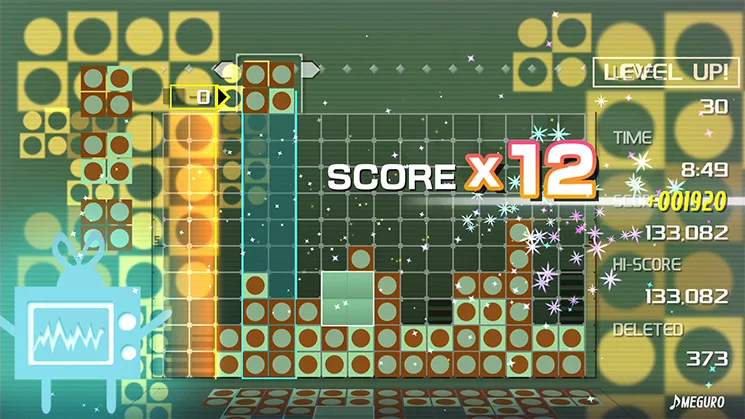
The Timeline, often referred to as the "Beat Line" or "Scan Line" in other rhythm-puzzle games, is arguably the most crucial element in Lumines Remastered. It's not just a visual flourish; it's the engine that drives your score, clears your blocks, and dictates your strategic approach. Mastering its rhythm and understanding its mechanics is paramount to achieving high scores and clearing challenging stages.
How the Timeline Works
The Timeline is a horizontal line that continuously sweeps from left to right across your playfield. Its primary function is to clear any completed 2x2 squares (or larger formations) of the same color. Crucially, these blocks are only cleared when the Timeline passes over them, not immediately upon formation.
- Speed Variation: The Timeline's speed is directly tied to the currently playing song's tempo. Faster songs mean a faster Timeline, which can be both a blessing and a curse.
- Chain Reactions: When the Timeline clears blocks, any blocks above them will fall. If these falling blocks create new 2x2 squares, they will also be cleared when the Timeline passes over them again. This is the foundation of high-scoring chain reactions.
- Score Multiplier: The more blocks the Timeline clears in a single pass (especially through chain reactions), the higher your score multiplier for that specific clear.
Actionable Strategies for Timeline Mastery
1. Anticipate the Clear
This is the most fundamental skill. Don't just focus on forming squares; focus on forming them in time for the Timeline. You have a brief window between forming a square and the Timeline reaching it. Use this time wisely.
- Pre-emptive Stacking: If the Timeline is approaching from the left, and you have a 2x2 square formed on the right, you have time to drop more blocks on top of it or adjacent to it to set up further clears.
- Avoid Premature Clears: Sometimes, forming a 2x2 square immediately isn't the best move. If you can hold off and drop another block to create a larger 2x3 or 3x3 formation of the same color, the Timeline will clear all of it at once, yielding a much higher score.
2. Leverage Timeline Speed Changes
Different skins (music tracks) have vastly different Timeline speeds. Adapt your playstyle accordingly.
- Slow Timelines (e.g., "Shinin'"): These offer more breathing room. Use this time to meticulously plan larger formations and set up elaborate chain reactions. You can afford to wait for the perfect block. Focus on building vertical stacks of single-color blocks to maximize potential clears.
- Fast Timelines (e.g., "Heavenly Star"): Speed is of the essence. Focus on rapid 2x2 clears to keep your playfield from filling up. Don't get greedy trying to build massive chains if it means risking a game over. Prioritize survival and quick, efficient clears.
- Transitional Phases: When a skin changes, the Timeline speed often changes dramatically. Be prepared for this shift. If moving from a slow to a fast skin, quickly clear any pending formations. If moving from fast to slow, take a moment to re-evaluate your strategy and start building for larger clears.
3. The "Waterfall" Technique
This advanced strategy maximizes chain reactions by carefully stacking blocks. The goal is to create multiple horizontal layers of 2x2 squares, one above the other, that will all clear in succession as the Timeline passes.
- Build a Base: Create a solid 2x2 square of a single color at the bottom of your playfield.
- Stack Vertically: Directly above this, build another 2x2 square of the same color. You can continue this for several layers.
- Trigger the Clear: When the Timeline passes over the bottommost square, it clears. The blocks above fall, forming a new 2x2 square in its place.
- Chain Reaction: As the Timeline continues its sweep, it then clears this newly formed square, and the process repeats. This creates a satisfying "waterfall" of clearing blocks and a massive score boost.
This technique requires precise block placement and a good understanding of the Timeline's speed for the current skin. It's particularly effective during slower Timeline phases.
4. Managing "Garbage" Blocks
Blocks that aren't part of a 2x2 square are often referred to as "garbage" or "orphan" blocks. The Timeline will ignore these. Your goal is to integrate them into new 2x2 squares or clear them by forming squares around them.
- Strategic Placement: When dropping new blocks, try to use them to complete existing single-color lines or partial squares, rather than creating more isolated blocks.
- "Bridge" Blocks: Sometimes, a single block can act as a "bridge" to connect two separate single-color areas into a larger clear. Look for these opportunities.
Impact on Score and Survival
Understanding the Timeline's impact isn't just about high scores; it's also about survival. A slow Timeline can allow your playfield to fill up if you're not clearing efficiently. A fast Timeline can overwhelm you if you can't keep up with its pace.
By actively engaging with the Timeline's mechanics, anticipating its movements, and adapting your strategy to its speed, you'll transform from a reactive player to a proactive master of the Lumines grid.