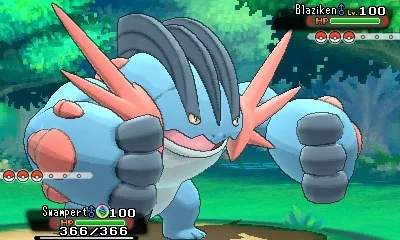
How to Tell Legal From Hacked Pokémon
In the world of Pokémon Omega Ruby and Alpha Sapphire, trading with other players is a core experience. However, with the rise of online communities and various tools, it's possible to encounter Pokémon that aren't quite legitimate. These are often referred to as "hacked" or "generated" Pokémon. While some might seem harmless, using them in official competitions or even in some online battles can lead to disqualification or even bans. This section will guide you through identifying potentially hacked Pokémon so you can trade and battle with confidence.
Why Does it Matter?
Beyond the ethical considerations, using hacked Pokémon can:
- Corrupt Save Data: In rare cases, extremely poorly generated Pokémon can cause issues with your game save.
- Disqualification: If you participate in official Pokémon tournaments, using hacked Pokémon will get you disqualified.
- Unfair Advantage: Pokémon with impossible stats or movesets can ruin the competitive balance.
- Loss of Trust: Trading hacked Pokémon can damage your reputation within the Pokémon community.
Key Indicators of a Hacked Pokémon
When you receive a Pokémon, especially through Wonder Trade or Global Trade System (GTS), take a moment to examine its details. Here's a checklist of things to look for:
1. Impossible Stats (IVs/EVs)
While a Pokémon can have perfect Individual Values (IVs) in all six stats, it's extremely rare to find naturally. Combined with maxed-out Effort Values (EVs) in all stats, it becomes highly suspicious.
- Actionable Step: Visit the IV Judge in the Battle Resort's Pokémon Center. He will give you a general assessment of your Pokémon's IVs. If he says "Stats like those are the mark of a truly superior Pokémon!" and "It's got outstanding stats, that's what I think! Those stats can't be beat!", it means it has perfect 31 IVs in all stats. While possible, be wary if this is combined with other red flags.
- Actionable Step: Check the Pokémon's summary screen. If all six stats (HP, Attack, Defense, Special Attack, Special Defense, Speed) have a blue glow around them, it indicates maximum EVs. A legitimate Pokémon can only have a total of 510 EVs distributed, not 252 in all six.
2. Illegal Abilities
Some Pokémon have specific abilities that are only obtainable through certain methods (e.g., Hidden Abilities from the Dream World or Friend Safari in previous generations). If a Pokémon has an ability it shouldn't legitimately possess, it's hacked.
- Actionable Step: Consult online resources like Serebii.net or Bulbapedia to verify a Pokémon's possible abilities. For example, if you receive a Greninja with the ability "Wonder Guard," it's definitively hacked, as Wonder Guard is a signature ability of Shedinja.
3. Impossible Movesets
Pokémon learn moves through leveling up, TMs/HMs, Egg Moves, or Move Tutors. If a Pokémon has a move it cannot legitimately learn by any of these methods, it's hacked.
- Actionable Step: Again, use online encyclopedias to check a Pokémon's learnset. Pay close attention to Egg Moves – if a Pokémon has an Egg Move but its origin game or parentage doesn't make sense, it could be suspicious.
4. Suspicious Origin Information
The Pokémon's summary screen provides crucial details about its origin.
- Original Trainer (OT) Name: Be wary of generic or obviously "hacker" sounding names (e.g., "GENNED", "PKMNHACK").
- Trainer ID (TID) and Secret ID (SID): While harder to verify without external tools, impossible TID/SID combinations can indicate a hack.
- Met Location: A Pokémon should be met in a location where it can legitimately be caught or hatched. For instance, a Kyogre met in "Route 101" is impossible.
- Met Level: Legendary Pokémon often have fixed encounter levels. If you receive a Level 1 Rayquaza, it's a clear sign of hacking.
- Poké Ball: Some Pokémon can only be caught in specific Poké Balls (e.g., Master Ball for certain legendaries, or specific Apricorn Balls from previous generations). A legendary caught in a standard Poké Ball might be fine, but a Pokémon that can only be found in the wild caught in a Cherish Ball (usually reserved for event Pokémon) is suspicious.
- Date Met: An impossible date (e.g., far in the future) is a dead giveaway.
5. Event Pokémon Discrepancies
Event Pokémon are distributed with very specific characteristics. Any deviation is a red flag.
- Ribbons: Event Pokémon often come with specific Ribbons (e.g., Classic Ribbon, Wishing Ribbon). If an event Pokémon lacks its expected Ribbon, or has one it shouldn't, it's suspicious.
- Held Item: Event Pokémon often come holding a specific item. If it's missing or has an incorrect item, be cautious.
- Nature/IVs: While some event Pokémon can have random Natures and IVs, others are "locked" to specific ones. Research the specific event to know what to expect.
6. Shiny Locked Pokémon
Certain legendary Pokémon in Omega Ruby and Alpha Sapphire (and other games) are "shiny locked," meaning they cannot legitimately be encountered as shiny. These include:
- Groudon (Omega Ruby)
- Kyogre (Alpha Sapphire)
- Rayquaza
- Deoxys
- Cosplay Pikachu
- Steven's Beldum (event)
If you receive a shiny version of any of these Pokémon, it is 100% hacked.
What to Do If You Suspect a Hacked Pokémon
If you believe you've received a hacked Pokémon:
- Do Not Use in Online Battles/Tournaments: To avoid potential penalties, refrain from using it competitively.
- Release It: The safest option is to release the Pokémon. This prevents it from accidentally entering your competitive teams or being traded to an unsuspecting player.
- Do Not Trade It: Do not pass on a potentially hacked Pokémon to someone else.
By being vigilant and checking these details, you can ensure your Pokémon collection remains legitimate and your online experiences are fair and enjoyable!