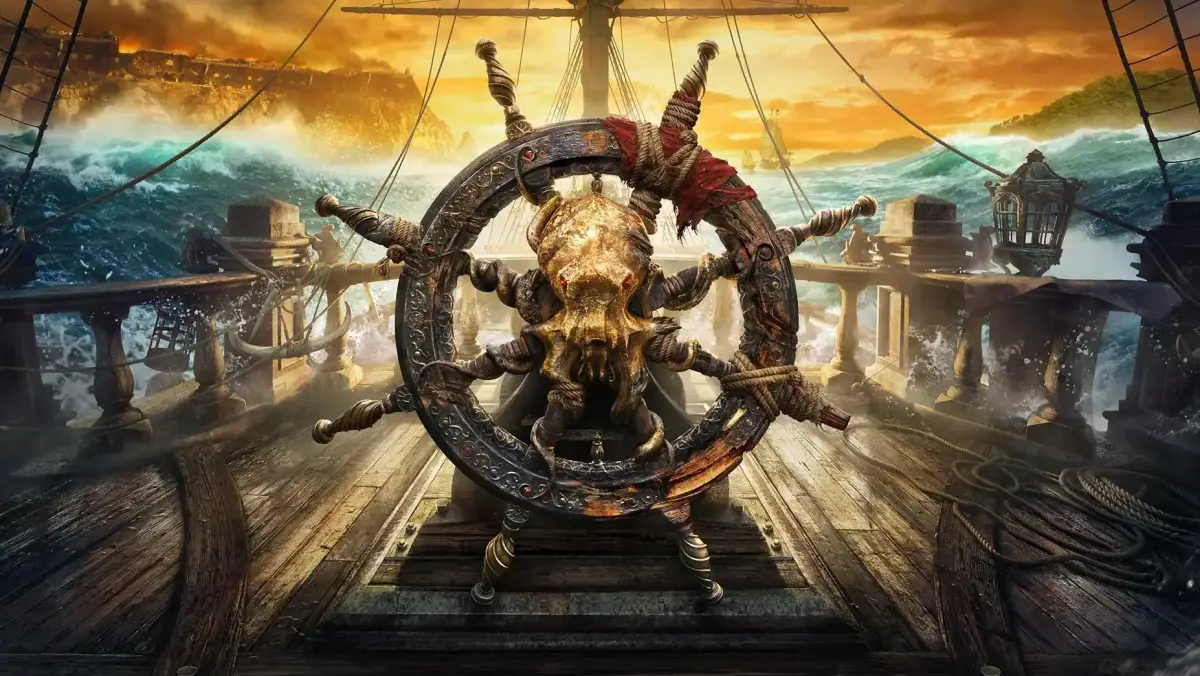
Welcome to Skull and Bones, a sprawling open-world RPG where you carve out your legend as a pirate captain on the high seas. Developed by Ubisoft Singapore, this 2024 title throws you into a world of naval combat, resource management, and daring raids. You'll build your fleet, upgrade your ships, and engage in thrilling ship-to-ship battles as you aim to become the most feared pirate in the Indian Ocean.
This guide is your essential companion to mastering the game's many challenges. We'll walk you through everything from the initial setup and understanding ship combat mechanics to successfully executing lucrative raids and confronting the game's legendary threats. Get ready to discover efficient ways to gather resources, optimize your ship upgrades for maximum tactical advantage, and ultimately conquer the open sea to establish your dominance.
CURSOR DESCRIPTIONS
Learn about cursor descriptions in Skull and Bones! We break down what each cursor means so you can navigate the seas like a seasoned pirate. Essential info for new players.
Understanding Your Cursor in Skull and Bones
Alright, so you've just jumped into Skull and Bones, and you're probably seeing all sorts of different mouse pointers flying around. Don't sweat it! Think of your cursor like your pirate's eye – it tells you what you're looking at and what you can do with it. Let's break down the common ones so you don't get caught off guard.
The Standard Arrow
This is your bread and butter. When you see the regular arrow, it just means you're hovering over something you can't directly interact with, like the general game world or UI elements that aren't buttons.
The Hand Pointer
See a little hand popping up? That means you've found something clickable! This could be a button in the menu, an item in your inventory, a quest giver, or even another player's ship you can target. Go ahead and give it a click!
The Target Reticle
This one's pretty straightforward, especially when you're out on the waves. The target reticle usually means you're aiming at something you can attack or interact with in a combat or targeting sense. Keep an eye on this when you're lining up a shot on an enemy vessel or a specific objective.
The Spinning Wheel/Hourglass
If your cursor turns into a spinning wheel or an hourglass, it means the game is busy doing something. It could be loading a new area, processing an action, or saving your progress. Just hang tight for a moment; it'll go back to normal soon.
Specialized Cursors
Depending on the situation, you might see other, more specific cursors. For example, when you're interacting with a map, you might get a magnifying glass. When you're repairing your ship, you might see a wrench. These are usually pretty intuitive, but if you're ever unsure, just remember the basic rule: if the cursor changes, it's trying to tell you something about your current interaction.
Pro Tip:
Don't be afraid to hover over things! Getting familiar with how your cursor changes is one of the quickest ways to learn the ropes and avoid missing out on opportunities or making accidental clicks. Happy sailing!
closer or pick up
Learn about the Back-up Arrow in Skull and Bones, used to back out of views, close books, and return items to your inventory.
The Back-up Arrow is an essential UI (user interface) element that allows you to navigate out of various interactions within Skull and Bones. You must move the cursor to the bottom of the screen to see this arrow.
The Back-up Arrow serves multiple purposes:
- Exiting close-up views of objects or the environment.
- Closing books or other readable items.
- Returning books, papers, or objects you have examined back to your inventory or their original location.
- Always look for the Back-up Arrow at the bottom of your screen when you want to exit a detailed view or interaction.
- Mastering the use of the Back-up Arrow is key to efficient inventory management and interaction with the game world.
where they were picked up.
Discover where to pick up crucial items and resources in Skull and Bones. This guide details locations for crafting materials, weapons, and more to aid your pirate journey.
This section of the Skull and Bones wiki is dedicated to detailing the locations where various items can be picked up. This includes essential crafting materials, weapons, and other resources necessary for your progression in the game.
- 1Crafting Materials: Various resources such as fibers, metals, and rare components can be found at specific locations like lumberyards, foundries, and weavers. These are crucial for upgrading your ship and equipment.
- 2Weapons and Armor: While many weapons and armor pieces are crafted or obtained through contracts, some may be found as loot from defeated enemies or discovered in hidden caches.
- 3Resources from Vendors and Shops: Certain common resources and even some specialized items can be purchased from vendors and shops located in settlements and outposts across the game world.
- 4Loot from Ships and Forts: Engaging in naval combat and raiding enemy strongholds are primary methods for acquiring valuable cargo, which often includes a mix of resources, commodities, and sometimes even rare blueprints.
- 5Treasure Maps: Following treasure maps will lead you to hidden stashes containing a variety of valuable items, including gold, rare materials, and unique equipment.
- Pay close attention to the interactive map for icons indicating resource nodes and points of interest.
- Completing contracts and investigations often rewards you with specific items or the means to acquire them.
- Explore thoroughly, as many valuable pickups are hidden in less obvious locations.
actually turning left or right
Explore the major factions in Skull and Bones, from the powerful Dutch Merchant Company to the mysterious Sea People. Learn about their territories, ships, and how they influence the Seven Seas.
Factions
Ahoy there, Captain! So you're looking to understand who's who on the Seven Seas in Skull and Bones? It's a big ocean out there, and it's not just you and the Davy Jones' Locker. There are several major groups, called factions, all vying for power and profit. Think of them as the big players – some are massive trading companies, others are local groups with their own ways, and then there are the pirates themselves.
These factions control different parts of the map, and knowing who's where can really help you navigate. They've all got their own ships, sailors, and even settlements. Some are established powers, like the Dutch Merchant Company or the Compagnie Royale, while others are more like the indigenous Sea People or the cunning Clan of Fara. And don't forget the pirates, like The Helm, who aren't afraid to stir the pot.
Mega-Corps
These are the big, organized players, often with a national backing. They've got serious naval power and are usually focused on trade and controlling key areas.
Dutch Merchant Company
These Dutch sailors are trying to make a name for themselves in the East Indies. They arrived looking to help their struggling country, but don't let that fool you – the Dutch Merchant Company (or DMC) is a major force. They control the southern half of the East Indies, with their main hub being the Oosten Capital along the Naga Coastline. If you bump into one of their big ships or fleets unprepared, your journey could end pretty quickly!
The Dutch were actually the first Western faction to really push into the Indian Ocean trade. They set up this company as a sort of monopoly, flying their orange, white, and blue pennant. They've seized ports and forts, becoming a huge trading power.
Compagnie Royale
Another major European power, the Compagnie Royale is France's answer to the growing trade empires. They're also focused on controlling lucrative trade routes and territories.
- Royal Holdings: Expect them to have a strong presence in areas they consider their own.
- Chorus Fleet: They've got their own fleets to protect their interests, so watch out for them.
British Trading Alliance
The British are here to compete, too. They've got significant naval power and are keen on establishing their dominance in trade and territory.
- British Naval Power: Their warships are formidable, so be prepared if you cross paths.
Local Factions
These are the groups native to certain regions. They often have a deep connection to their lands and waters.
- Sea People: Mysterious and ancient, they guard their territories fiercely.
- Clan of Fara: These folks have their own culture and way of life, often found in specific regions.
- Confederation of Ungwana: A collective of groups, likely with their own territories and traditions.
- Dominion of Rempah: Another established local power, with its own sphere of influence.
- Sultanate of Sohar: A more traditional power structure, likely controlling key ports.
- Khamot kingdom: A kingdom with its own unique identity and territories.
Pirate Factions
These are the outlaws, the ones who live by the pirate code (or their own twisted version of it). They're often the most unpredictable.
- Rogues: Independent pirates, likely operating on their own or in small groups.
- Privateers: Pirates who might have a license from a nation to attack certain enemies. Tricky business!
- The Helm: A major pirate organization. They're ambitious and have their own agenda.
- The Pirate Round: This sounds like a significant event or gathering for pirates.
- Conflict with the Fleet of Pestilence: They're not getting along with another group.
- The Fleet of Pestilence: Led by the 'Plague King', these guys sound dangerous and maybe a bit unhinged.
- The Madness of the Plague King: Whatever this is, it's probably not good news for anyone nearby.
Faction Mechanics
Understanding how these factions operate is key to your success. It's not just about fighting; it's about strategy.
- Ships, Fleets and supply routes: Factions use these to move goods and project power. Disrupting them can be profitable, but also dangerous.
- Control of Capital Settlements and Military Bases: These are the strongholds. Taking them or defending them is a major undertaking.
- Merchant Convoys: These are the lifeblood of trade for many factions. They're often well-defended, but the rewards can be huge.
So, keep an eye on these factions, Captain. Knowing who controls what, and who's feuding with whom, will make you a much smarter pirate out on the waves!
Similar guides you might like


100% Human-Written. AI Fact-Checked. Community Verified. Learn how AntMag verifies content