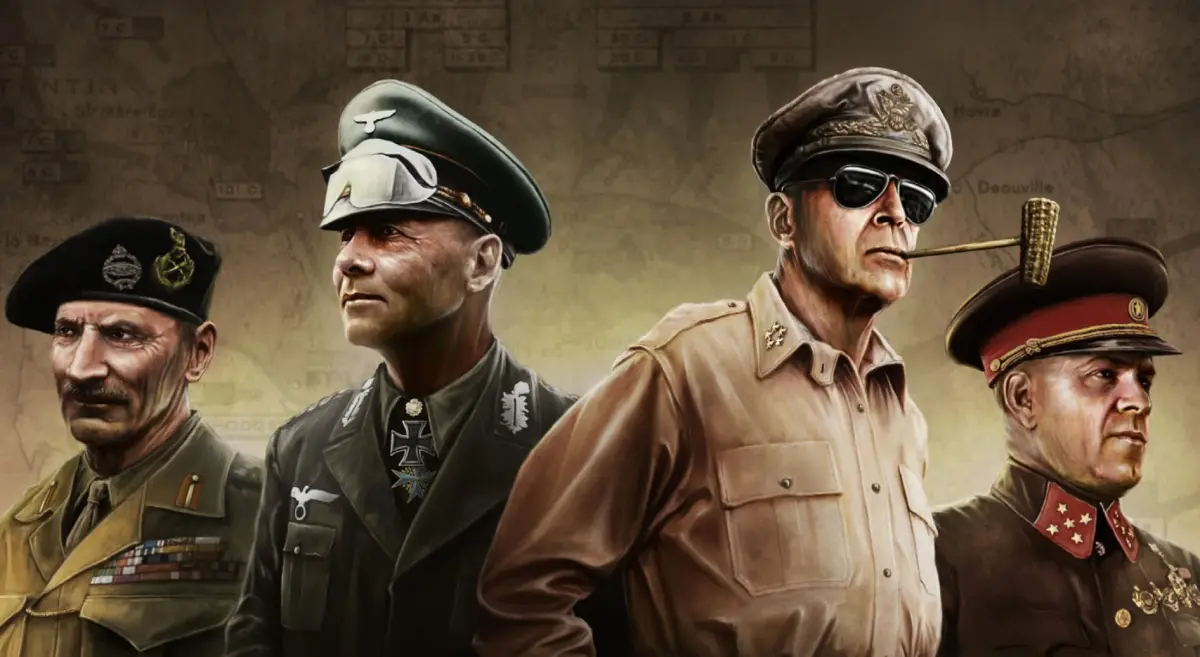
Learn how to optimize army composition in Hearts of Iron IV by creating specialized task forces instead of mixed armies to maximize combat effectiveness and mobility.
The game manual suggests forming armies with a mix of different troop types. However, this guide argues that while mixed armies are less vulnerable, they are also less potent. For example, an army composed solely of mountaineer divisions will perform better in mountains than a mixed force including regular infantry, cavalry, and heavy tanks. Similarly, tanks are superior on plains. A crucial consideration is that armies move at the speed of their slowest division. A force of fast tanks accompanied by slow early infantry will be significantly hindered.
A more effective approach is to divide large armies into smaller, specialized task forces, each composed of one type of unit or similar units. This allows for the assignment of generals whose doctrines best suit the army's composition (e.g., a defense doctrine general for artillery-brigaded infantry, or a panzer leader for tank task forces). These task forces can still attack simultaneously, achieving the benefits of a mixed force without the disadvantage of reduced speed.
Consider an example of 10 divisions: 5 slow infantry and 5 fast cavalry. Separating them into two task forces offers several advantages:
- Mobility: If a battle is won, the faster cavalry task force can move and capture the province more quickly.
- General Experience: More generals gain experience.
- Trait Specialization: Each task force can be assigned a general with traits suited to its role (e.g., an offensive doctrine general for infantry to increase damage, or a defense doctrine general for cavalry to aid in defending captured provinces).
Regarding commander bonuses:
- One large army (10 divisions) led by a Field Marshal: Every division receives the full bonus from the commander.
- Two task forces (5 divisions each) led by a Field Marshal and a General: Every division receives its individual commander bonus. Divisions in the General-led task force also receive the Field Marshal's overall commander bonus. This allows for better trait selection and, more importantly, enables the cavalry task force to move at its full speed without being slowed by infantry.
Comparing commander bonuses when led by a General:
- One large army (10 divisions) led by a General: 90% of divisions receive the overall commander bonus and 90% receive the individual commander bonus.
- Two task forces (as above) each led by a General: 90% of divisions receive the overall commander bonus, and 100% receive the individual commander bonus. The mobility advantages also apply.
Therefore, it is generally advisable to create separate task forces. However, the decision to utilize the mobility advantage should be strategic. Predict the strength needed to defend a newly captured province. If the opponent is retreating and unlikely to counter-attack immediately, a faster task force can capture the province sooner. This is also beneficial if the opponent's retreat path is long. Always assess the situation and decide individually. Conversely, if the opponent has significant troop concentrations in adjacent provinces, synchronizing the arrival of task forces might be safer to prevent them from being attacked individually upon arrival.
100% Human-Written. AI Fact-Checked. Community Verified. Learn how AntMag verifies content