Understand Soulcalibur frame data to master offensive and defensive tactics, identifying safe attacks and punishing opponent mistakes effectively.
Understanding frame data is crucial for elevating your Soulcalibur gameplay from mashing to masterful. Every action in Soulcalibur, from basic pokes to elaborate strings and even guarding, has a specific number of frames associated with its startup, active hitboxes, and recovery. Mastering this information allows you to identify safe attacks, punish opponents effectively, and understand the nuances of character matchups.
Key Frame Data Concepts
- Startup Frames: The number of frames from when you input a move until its first active hitbox appears. Faster startup means the move comes out quicker.
- Active Frames: The duration during which a move's hitbox is present and can connect with an opponent.
- Recovery Frames: The number of frames after a move's active frames end until your character can perform another action. High recovery can leave you vulnerable.
- On Block Advantage/Disadvantage: This is perhaps the most critical frame data point. It tells you how many frames you are "plus" (advantage) or "minus" (disadvantage) after your opponent blocks your attack.
- Plus Frames (+): You recover faster than your opponent, allowing you to act first. This is ideal for continuing pressure or setting up mix-ups.
- Minus Frames (-): Your opponent recovers faster than you, giving them an opportunity to retaliate. Large negative frames mean the move is easily punishable.
- Even Frames (0): Both players recover at the same time, leading to a neutral situation.
- On Hit Advantage/Disadvantage: Similar to on block, but indicates the frame situation after your attack successfully hits the opponent. This determines if you can follow up with a combo or if the opponent can recover and retaliate.
How to use Frame Data in Practice
While memorizing every single frame value for every character isn't feasible, understanding the general principles and focusing on key moves will drastically improve your game.
1. Identifying Punishable Moves
The most immediate benefit of frame data is recognizing when an opponent's move is "unsafe" on block. Generally, moves that are -10 frames or more on block are considered punishable by a quick attack. For example:
- If your opponent uses a move that is -14 on block, you can often retaliate with a fast 10-frame jab (like A) or a 12-frame kick (like B) for a guaranteed hit.
- Look for character-specific punishers. Many characters have dedicated "punish" moves designed for these situations, often involving a quick input like
6Aor2B.
2. Maintaining Pressure with Plus Frames
Conversely, understanding your own character's moves that are plus on block allows you to maintain offensive pressure. If your attack leaves you at +2 on block, you have a 2-frame advantage. This means:
- Your next attack will come out 2 frames faster than your opponent's fastest attack, assuming they try to jab.
- You can use this advantage to initiate another quick poke, attempt a throw, or bait a counter-attack.
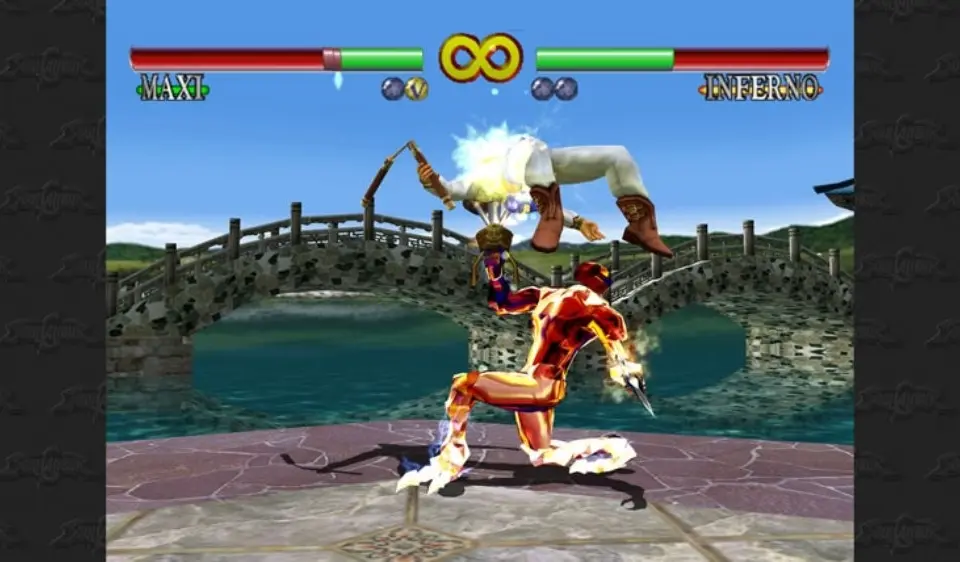
- Example: Maxi's Pure Soul Loops (PSL) often involve moves that leave him at slight frame advantage, allowing him to continue his intricate offense.
3. Understanding Wake-Up Options
Frame data also plays a role in wake-up situations. When an opponent is knocked down, their wake-up options (e.g., quick roll, rising attack) have their own frame properties. Knowing these allows you to:
- Meaty Attacks: Time your attacks to hit as the opponent is just getting up, catching their wake-up frames.
- Safe Jumps/Setups: Position yourself to be plus on block or hit if they attempt a rising attack.
4. Character-Specific Nuances
Every character has their own unique frame data profile. Some characters, like Maxi, rely on intricate strings and stance transitions where understanding the frame advantage at each step is paramount for effective execution and mix-ups. Other characters might have slower, more damaging attacks that are heavily minus on block, requiring careful spacing.
Accessing Frame Data
While Soulcalibur games don't always display detailed frame data directly in-game, dedicated communities and resources are invaluable:
- Online Guides & Wikis: Websites like 8wayrun.com are excellent sources for comprehensive, community-compiled frame data for various Soulcalibur titles.
- Training Mode: While not providing raw numbers, the in-game training mode allows you to set the AI to block or counter-attack after your moves, helping you empirically test which moves are safe or punishable. Experiment with different character matchups.
By integrating frame data knowledge into your gameplay, you'll start to see the game not just as a series of attacks, but as a precise dance of timing and advantage, unlocking a deeper level of strategic play.
100% Human-Written. AI Fact-Checked. Community Verified. Learn how AntMag verifies content