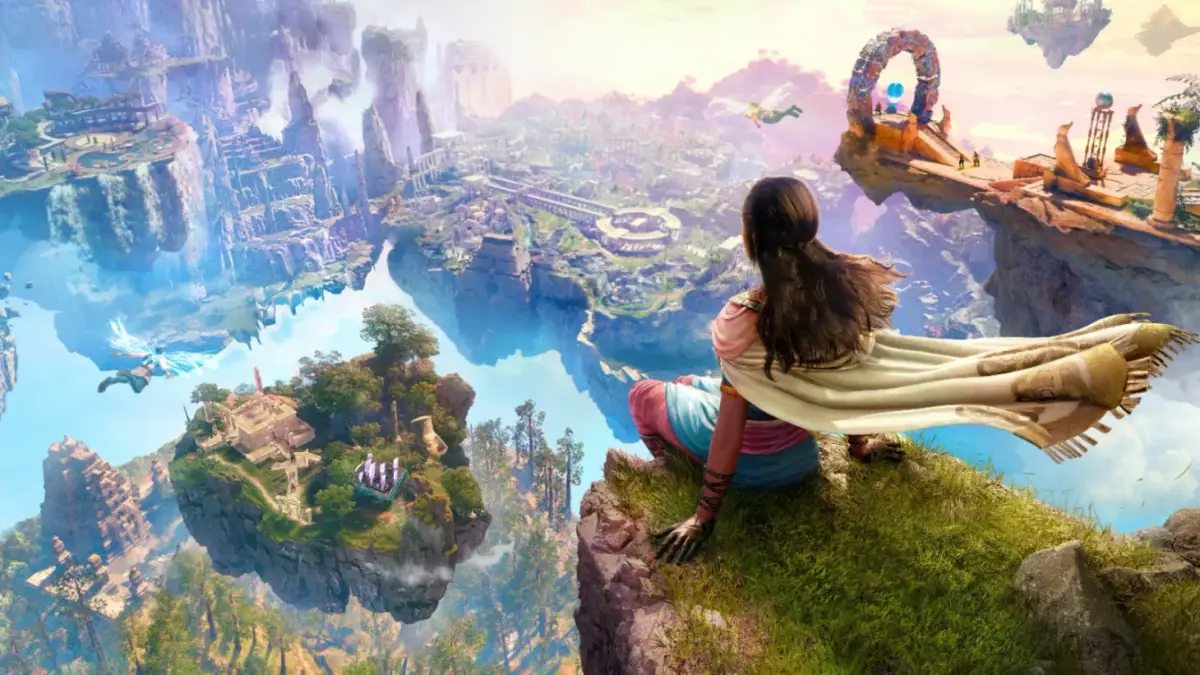
Master perspectives in Islands of Insight. Learn when to use 1st and 3rd person views for exploration, puzzle-solving, and immersive gameplay.
Islands of Insight offers players the flexibility to switch between first-person and third-person perspectives, a feature that significantly impacts gameplay, exploration, and puzzle-solving. Understanding when and why to utilize each perspective can dramatically enhance your experience and efficiency in navigating the game's intricate world and challenges.
The first-person perspective immerses you directly into the world, offering a more intimate and detailed view of your surroundings. This is ideal for close-up observation of puzzle elements, reading lore entries, and experiencing the game's atmosphere. However, it can sometimes limit your field of vision and make it difficult to gauge distances or perceive the overall layout of an area. The third-person perspective, on the other hand, provides a broader view of your character and the environment, making it easier to spot hidden pathways, assess spatial relationships, and navigate complex terrain. It's invaluable for platforming and understanding the scale of puzzles.
- First-Person Perspective: Immersive, detailed observation, ideal for close-up puzzle interaction and lore reading.
- Third-Person Perspective: Broader field of view, essential for spatial awareness, platforming, and environmental assessment.
- Seamless Switching: The ability to change perspectives on the fly without interruption.
- Strategic Application: Knowing when each perspective is most beneficial.
For instance, when you encounter a complex Logic Board, you might initially use the first-person view to carefully examine each component and its connections. However, when trying to understand how the board fits into the larger environmental context or to identify potential pathways around it, switching to third-person would be more advantageous. Similarly, during a challenging platforming sequence, the third-person view allows you to better judge jumps and avoid obstacles, while the first-person view might be useful for pinpointing the exact landing spot or interacting with a specific ledge.
When to Use Each Perspective
Here's a guide for optimal perspective usage:
- For Detailed Observation: Use first-person to read text, examine intricate puzzle pieces, or appreciate environmental details.
- For Spatial Awareness: Switch to third-person for platforming, navigating mazes, assessing distances, and understanding the layout of an area.
- For Combat (if applicable): Third-person often provides a better overview of enemy positions and attack patterns.
- For Exploration: Use third-person to scout ahead and identify potential points of interest or hidden paths.
- When Stuck on a Puzzle: Try switching perspectives; sometimes a new angle reveals the solution.
Mastering the ability to fluidly switch between first and third-person perspectives is a subtle yet powerful skill that will significantly enhance your ability to solve puzzles and explore the rich world of Islands of Insight.
100% Human-Written. AI Fact-Checked. Community Verified. Learn how AntMag verifies content