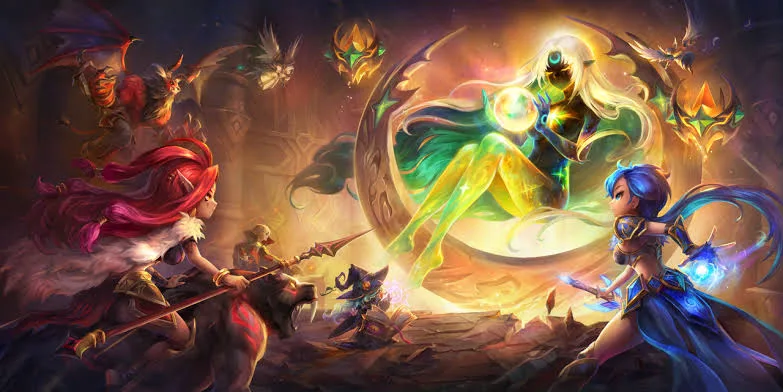

Understand Monster Skills and Leader Skills in Summoners War. This guide breaks down active, passive, and leader abilities for optimized team compositions.
Understanding your monsters' abilities is paramount to success in Summoners War. This section will break down the intricacies of both active/passive Monster Skills and the crucial Leader Skills, offering actionable strategies to optimize your team compositions.
Monster Skills: The Core of Combat
Every monster in Summoners War possesses a unique set of skills, typically comprising one basic attack and two to three additional abilities. These skills can be active (requiring a turn to use) or passive (triggering automatically under certain conditions).
Skill Types & Their Impact:
- Damage Skills: These are your primary offensive tools. Pay close attention to their damage multipliers (e.g., "Attacks the enemy 2 times with a 300% ATK ratio") and any additional effects like Defense Break, Branding, or Glancing Hit debuffs. Monsters like the Fire Inugami (Raoq) excel with multi-hit attacks that can trigger his passive, "Team Up."
- Support Skills: Crucial for team survival and buffing. Look for skills that provide healing (e.g., Water Undine's "Cleanse"), shield generation, Attack Buff, Defense Buff, or Immunity. The Wind Pixie (Shannon) is a prime example, offering both Attack and Defense buffs, alongside a Slow debuff.
- Crowd Control (CC) Skills: These abilities disrupt enemy turns and control the battlefield. Common CC effects include Stun, Freeze, Sleep, Provoke, and Silence. The Water Magic Knight (Lapis) is an early-game CC powerhouse with her AoE Freeze.
- Debuff Skills: Skills that inflict negative status effects on enemies, weakening them or preventing them from acting effectively. Examples include Attack Break, Defense Break, Slow, Continuous Damage (DoT), and Unrecoverable. The Dark Harpu (Felleria) is known for her powerful Attack Break.
- Passive Skills: These abilities activate automatically without consuming a turn. They can range from increasing stats (e.g., Fire Beast Monk's "Meditate" increasing Defense) to granting extra turns (e.g., Verdehile's "Time to Engage") or counter-attacking. Understanding passives is key to unlocking a monster's full potential.
Skill-Up Strategy:
To enhance your monster's skills, you'll need to feed them either duplicate monsters or Devilmon. Skill-ups reduce cooldowns, increase damage, improve activation rates of effects, and sometimes even add new effects. Prioritize skill-ups on:
- Key Debuffs/Buffs: Monsters whose primary role is to apply a crucial debuff (like Defense Break) or buff (like Immunity) benefit immensely from increased activation rates.
- Long Cooldowns: Reducing cooldowns on powerful skills (e.g., a monster's third skill) allows for more frequent use in battle.
- Damage Dealers: While not always the top priority, increasing damage on your main attackers can significantly speed up runs.
Location for Devilmon: You can obtain Devilmon from the Glory Shop (Arena), Guild Shop, monthly events, and occasionally from Cairos Dungeon drops (though rare).
Leader Skills: The Team's Foundation
Leader Skills are unique abilities that apply to your entire team when the monster possessing it is designated as the team leader. These skills provide significant stat boosts or other advantages, making team composition a strategic puzzle.
Understanding Leader Skill Types:
Leader Skills can boost various stats and apply in different scenarios:
- Universal Leader Skills: These apply to all monsters on your team regardless of their element or type. Examples include "Increase Ally ATK by 33%" or "Increase Ally HP by 44%." These are highly versatile.
- Elemental Leader Skills: These only apply to monsters of a specific element. For instance, "Increase Water Ally ATK by 50%." These are excellent for mono-element teams or when you have a strong elemental synergy.
- Type-Specific Leader Skills: These apply only to monsters of a certain type (Attack, Defense, HP, Support). An example would be "Increase Attack Type Ally ATK by 40%."
- Location-Specific Leader Skills: Some Leader Skills only activate in certain content, such as "Increase Ally ATK by 33% in Guild Content" or "Increase Ally SPD by 24% in Dungeons." These are invaluable for optimizing specific farming or competitive teams.
Strategic Application of Leader Skills:
Choosing the right leader is critical for maximizing your team's effectiveness. Consider the following:
- Content Focus:
- Cairos Dungeons (Giants Keep, Dragons Lair, Necropolis): Prioritize Leader Skills that boost relevant stats for the dungeon. For Giants B10, a "Increase Ally SPD by 24% in Dungeons" (e.g., Baretta) or "Increase Ally HP by 44%" (e.g., Veromos) can be game-changing for early teams.
- Arena/Guild Wars: Speed Leader Skills (e.g., Vanessa, Psamathe, Seara) are often king in PvP to ensure your team moves first. Alternatively, HP or ATK leaders can be used for tankier or cleave compositions.
- ToA/ToAH: HP, SPD, or Resistance Leader Skills are generally preferred for survivability and turn cycling against challenging waves.
- Team Synergy: If you're running a team heavily reliant on a specific element (e.g., a Water damage dealer core), an elemental Leader Skill can provide a larger boost than a universal one.
- Stat Gaps: Use Leader Skills to compensate for weaknesses in your rune quality or monster base stats. If your team is struggling with survivability, an HP or DEF leader can help. If you need more damage, an ATK leader is appropriate.
Always review your team's overall stats and the demands of the content you're tackling before locking in your leader. A well-chosen Leader Skill can turn a struggling team into a formidable force!
100% Human-Written. AI Fact-Checked. Community Verified. Learn how AntMag verifies content