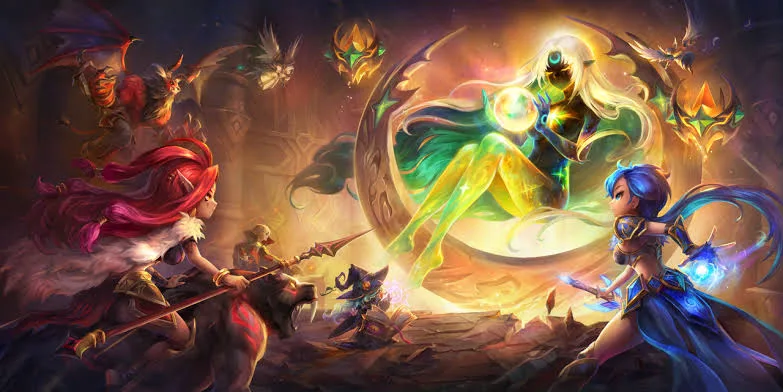

Master Summoners War monster and rune management. Learn efficient storage and inventory tactics to improve your progression and save resources.
As you progress through Summoners War, your collection of monsters and runes will grow exponentially. Efficiently managing your Monster Storage and Inventory is crucial for maximizing your progression, saving valuable time, and avoiding unnecessary resource expenditure. This detailed guide will walk you through best practices for keeping your collection organized and optimized.
Understanding Monster Storage
Your Monster Storage is where all your unsummoned monsters reside. It's distinct from your active monster slots, which are for monsters you're actively using in battles or assigning to structures. Maintaining a clean and purposeful storage is key to quick monster identification and efficient power-ups.
Accessing and Navigating Storage
- From the main island screen, tap the "Monster" icon at the bottom.
- Select the "Storage" tab at the top of the Monster menu.
- Here, you'll see all your stored monsters. You can sort them by various criteria such as Grade, Attribute, Level, and Awaken status using the sorting options at the top right.
- Utilize the "Filter" option to quickly locate specific monsters (e.g., all 3-star Fire monsters, or all unawakened monsters).
Storage Expansion Strategy
- Initial Capacity: You start with a limited number of monster storage slots.
- Expansion Costs: Storage slots can be expanded using Crystals. The cost increases with each expansion, so prioritize wisely.
- When to Expand: Expand your storage when you consistently find yourself running out of space, especially during events that reward many monsters (e.g., Secret Dungeons, Summoning Stone rotations). Aim to have enough space to comfortably hold fodder, fusion materials, and potential future projects without constant clearing.
Effective Monster Management
Don't let your storage become a graveyard of forgotten monsters. Regular culling and organization will save you headaches in the long run.
Fodder Management
Fodder monsters (low-grade monsters used to level up other monsters) are the most common occupants of your storage. Efficiently handling them is paramount.
- Identifying Fodder: Generally, 1-star and 2-star monsters are prime fodder. Some 3-star monsters can also be considered fodder if they have no current or future utility (e.g., not fusion materials, not strong PvP/PvE options).
- Leveling Fodder: Use your 1-star and 2-star rainbowmon (found in Cairos Dungeon, events, and as scenario drops) to quickly level up fodder monsters to their max level, preparing them for evolution.
- Evolution Chains: Plan your evolution chains. For example, to make a 6-star monster, you'll need five 5-star monsters as evolution material. This means evolving many 2-star into 3-star, 3-star into 4-star, and so on.
- Selling vs. Using: Never sell 2-star or higher monsters for Mana Stones unless you are absolutely desperate. They are far more valuable as evolution material. 1-star monsters can be sold if you have an abundance, but generally, they are also best used as fodder.
Fusion Hexagram Materials
The Fusion Hexagram is a critical building for obtaining powerful monsters. Keep track of the monsters required for fusion.
- Marking Fusion Monsters: As soon as you acquire a monster required for a Fusion Hexagram recipe (e.g., Fire Succubus for Veromos, Water Undine for Sigmarus), immediately "Lock" it (tap the monster, then the lock icon) to prevent accidental use as fodder or selling.
- Dedicated Storage Section: Consider dedicating a portion of your storage specifically for fusion materials, making them easy to find when you're ready to fuse.
- Prioritize Fusions: Focus on fusing key monsters like Veromos and Sigmarus early on, as they significantly boost your progression.
Skill-Up Monsters
Many monsters benefit greatly from having their skills leveled up. This requires feeding duplicate monsters or Devilmon.
- Saving Duplicates: When you summon a duplicate of a valuable monster (especially 4-star and 5-star nat-monsters), do not immediately use it as fodder. Lock it and store it for skill-ups.
- Devilmon Usage: Devilmon (obtained from Glory Shop, events, and ToA rewards) are universal skill-up materials. Use them wisely on high-priority, hard-to-obtain monsters (e.g., Legendary 5-star monsters). Avoid using Devilmon on monsters that can be easily skilled up with their natural 3-star or 4-star counterparts.
Future Projects & Niche Monsters
Some monsters might not be immediately useful but have potential for later game stages or specific content.
- Identify Potential: Research monsters you acquire. A seemingly weak 3-star monster might be a hidden gem for specific content (e.g., Spectra for ToA, Colleen for Raids).
- Tagging System: Utilize the in-game tagging system (tap monster, then the tag icon) to categorize monsters for future use (e.g., "ToA," "Raid," "PvP Project").
- Limited Storage for Projects: Don't hoard every monster. If a monster has no clear path to utility within your current progression goals, consider if it's worth the storage space.
Inventory Management: Runes & Artifacts
Your Rune and Artifact inventory is just as crucial as your monster storage. A cluttered rune inventory can make rune farming a nightmare.
Accessing and Navigating Inventory
- From the main island screen, tap the "Runes" icon.
- You'll see your entire rune collection. Similar to monsters, you can sort by various criteria (Set, Grade, Slot, Main Stat) and filter by specific properties.
- The "Artifacts" tab is located next to the Runes tab. Manage them similarly.
Rune & Artifact Culling Strategy
This is where most players struggle. Be ruthless in selling runes and artifacts that don't meet your standards.
- Early Game (Scenario & Giants B1-B5):
- Sell all 1-star and 2-star runes.
- Sell most 3-star runes, keeping only exceptionally good ones with desirable main stats (e.g., %ATK, %HP, %DEF, SPD) for your early core team.
- Focus on keeping 4-star runes with good main stats and at least one useful sub-stat.
- Mid Game (Giants B6-B10, Dragons B6-B10):
- Sell all 3-star runes.
- Sell 4-star runes unless they have perfect main stats and excellent sub-stats (e.g., a 4-star Swift SPD rune with high %HP/DEF subs).
- Prioritize 5-star and 6-star runes. Keep 5-star runes with desirable main stats and at least two good sub-stats.
- Flat Stats: Immediately sell all runes with flat main stats on Slots 2, 4, and 6 (except for flat SPD on Slot 2, which is highly desirable).
- Artifacts: Early on, keep artifacts that provide useful primary effects for your main damage dealers or support monsters. Discard those with irrelevant sub-stats or low-tier effects.
- Late Game (Raid, Necro, PvP, Rift Beasts):
- Sell all 4-star runes.
- Be highly selective with 5-star runes, only keeping those with exceptional sub-stat rolls.
- Focus almost exclusively on 6-star runes with optimal main stats and at least two high-roll sub-stats that align with the rune's purpose.
- Grinding & Enchanting: Only keep runes that have potential for grinding and enchanting. A rune with bad initial sub-stats, even if 6-star, is often not worth the investment.
- Artifacts: Be very discerning. Keep artifacts with high-roll primary effects and beneficial sub-stats for specific monster roles (e.g., +Damage Dealt on Fire for a Fire damage dealer, +Recovery for a healer).
Rune & Artifact Power-Up Strategy
Don't waste Mana Stones powering up every rune. Be strategic.
- +3, +6, +9, +12 Checkpoints: Power up runes in increments. At each checkpoint, check the sub-stat rolls. If the rolls are consistently bad or go into an undesirable sub-stat, consider selling the rune.
- Prioritize Efficiency: Focus on powering up runes for your current progression goals (e.g., your Giants B10 team, your ToA team).
General Tips for Both Monster & Inventory Management
- Regular Clean-ups: Dedicate 5-10 minutes each day or every few days to clean out your storage and inventory. This prevents overwhelming clutter.
- Utilize Lock Function: Always lock valuable monsters, fusion materials, and high-quality runes/artifacts to prevent accidental selling or use.
- Set Personal Standards: Develop your own criteria for what to keep and what to sell based on your current game stage and goals. Don't be afraid to be strict.
- Consult Community Resources: If unsure about a monster's or rune's value, check community guides, tier lists, or ask in game chat.
100% Human-Written. AI Fact-Checked. Community Verified. Learn how AntMag verifies content