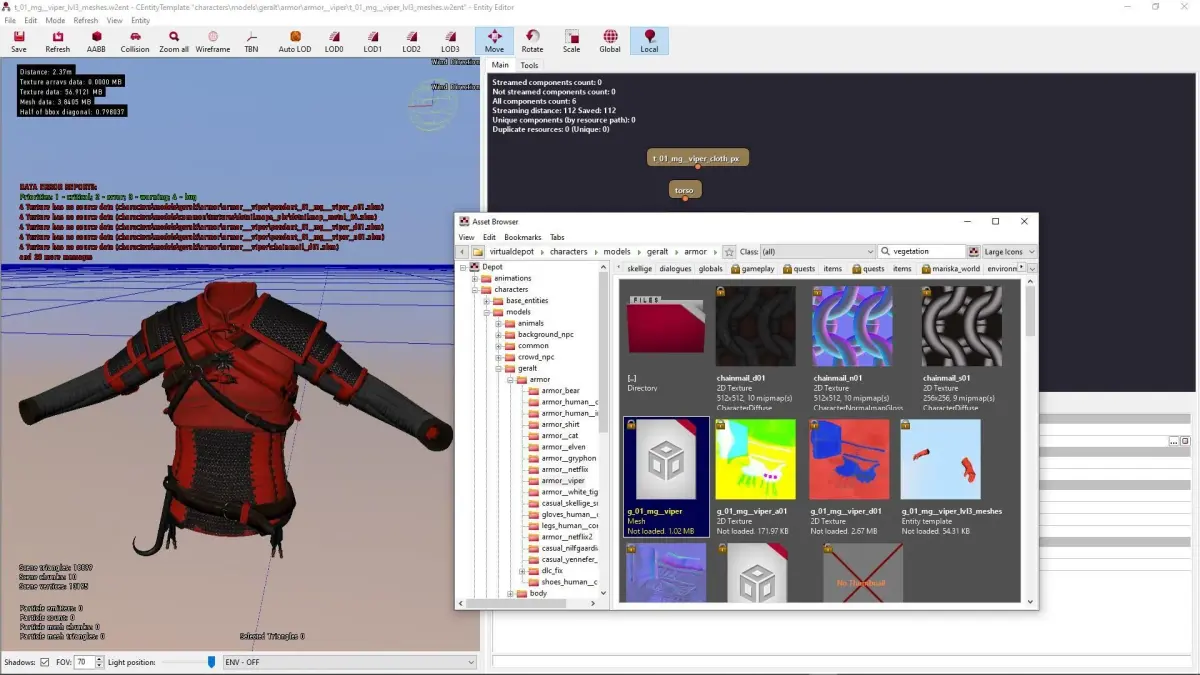
Customize Geralt's appearance in The Witcher 3 REDkit. Learn how to adjust his hairstyle, beard, and other visual elements for a personalized Witcher.
While The Witcher 3: Wild Hunt centers on the established protagonist, Geralt of Rivia, players possess a notable degree of control over his visual presentation throughout their adventures. From the clean-cut look of a freshly shaved Witcher to the rugged visage of a seasoned warrior, Geralt's appearance is a significant element of player immersion. This guide details the in-game methods available for customizing Geralt's look, focusing on his hair and beard, and clarifying the mechanics of beard growth.
I. Geralt's Hair and Beard: A Defining Feature
Geralt's hairstyle and beard are more than mere cosmetic choices; they can evolve and be actively altered by You at specific locations. These changes, while primarily aesthetic, can subtly influence NPC dialogue, adding a small but appreciated layer of role-playing depth.
A. Where to Get a Haircut and Shave
To change Geralt's hairstyle and beard, players must visit a barber. These skilled artisans can be found in various settlements across the Northern Realms. The most prominent and easily accessible barbers are:
- Velen: In the town of Crow's Perch, a barber is available.
- Novigrad: The bustling city of Novigrad features several barbers, particularly in its merchant districts.
- Skellige: On the islands of Skellige, barbers can be found in larger settlements such as Kaer Trolde.
Interacting with a barber will present a dedicated menu for hair and beard customization.
B. Hair and Beard Styles Available
The game offers a selection of distinct hairstyles and beard styles, each contributing to Geralt's overall persona. These options are generally available from the outset with any barber, not unlocked through quests or leveling.
Hair Styles:
- Ponytail: Geralt's default, often tied back.
- Loose Hair: A more unkempt, flowing appearance.
- Short Hair: A practical, shorter cut.
- Braided Hair: Geralt's hair styled into one or more braids.
Beard Styles:
- Clean Shaven: No facial hair.
- Stubble: A light growth of facial hair.
- Short Beard: A neatly trimmed beard.
- Medium Beard: A fuller, longer beard.
- Long Beard: The most extensive beard style, often appearing quite wild.
- Goatee: A beard style focusing on the chin area.
C. Beard Growth Mechanic
A unique feature of The Witcher 3 is its dynamic beard growth system. If Geralt is clean-shaven or sports a short beard, and You refrains from visiting a barber for an extended in-game period, his beard will naturally grow longer over time. This means that even if a player prefers a shorter beard, Geralt might eventually sport a longer one if grooming is neglected. To maintain a specific shorter style, periodically visit a barber.
The progression of beard growth is as follows:
- Clean Shaven: The starting point.
- Stubble: Appears after a short period of time without shaving.
- Short Beard: Develops from stubble after further time passes.
- Medium Beard: Grows from the short beard over a longer duration.
- Long Beard: The final stage, achieved after a significant amount of time without visiting a barber.
It is important to note that this is a passive mechanic. Players cannot directly control the speed of growth or force it to advance faster than the in-game clock dictates. The only player-driven action that influences beard length is visiting a barber to trim or shave it.
D. Impact of Hair and Beard Choices
While primarily cosmetic, Geralt's chosen hairstyle and beard can subtly influence NPC dialogue. Certain characters might comment on his rugged appearance if he sports a long beard, or acknowledge his more refined look if he is clean-shaven. This adds a small but appreciated layer of role-playing to the customization options, making Geralt feel more reactive to the player's choices.
II. Armor Appearance: Maintaining Your Style
The Witcher 3: Wild Hunt does not feature an armor transmogrification system. The visual appearance of Geralt's armor is directly tied to the specific item he has equipped. This means that if you want Geralt to wear a particular visual style, you must equip the armor piece that possesses that appearance, regardless of its statistical value. This section clarifies how armor appearance works and how You can manage their look.
A. Armor Appearance is Tied to Equipped Item
Unlike games with transmogrification, in The Witcher 3, the armor Geralt wears is what you see. If you equip the Griffin School Chest Armor, Geralt will visually appear in the Griffin School Chest Armor. If you then equip the Ursine School Chest Armor, his appearance will change to match the Ursine set. There is no separate system to overlay the appearance of one armor piece onto another while retaining the stats of the original.
B. Managing Geralt's Look Through Equipment
To achieve a desired aesthetic for Geralt's armor, players must actively seek out and equip armor pieces that match their preferred style. This encourages players to explore the world, complete quests, and craft or find various armor sets.
- Witcher School Gear: These sets are often highly sought after for both their stats and their distinct visual designs. Collecting and crafting full Witcher School sets (Griffin, Cat, Ursine, Wolf, Manticore, Viper) allows players to maintain a consistent and iconic look.
- Looted and Crafted Armor: Throughout the game, Geralt will find and be able to craft a wide variety of individual armor pieces and sets. You can mix and match these pieces to create unique combinations.
- Quest Rewards: Many quests offer unique armor pieces as rewards. Paying attention to the appearance of these rewards can help players find pieces that fit their desired aesthetic.
C. The Importance of Visual Consistency
Players who prioritize a specific look for Geralt will need to be mindful of the stats offered by their preferred visual gear. Often, the most stylish armor might not offer the best protection or combat bonuses. This presents a trade-off:
- Prioritizing Stats: Equip the armor with the best stats for the current combat challenges, accepting the visual changes.
- Prioritizing Appearance: Equip armor that looks the way you want, potentially sacrificing some defensive or offensive capabilities. This can be viable in easier difficulties or if Geralt is well-developed in other areas (e.g., Signs, Alchemy).
- Seeking a Balance: You can strive to find armor pieces that offer a good compromise between aesthetics and statistics, or collect multiple sets to swap between depending on the situation.
D. Common Pitfalls and Considerations
- Misunderstanding Transmogrification: New players may come from other games with transmog systems and expect it in The Witcher 3. It is crucial to understand that armor appearance is directly linked to the equipped item.
- Neglecting Loot: Players who focus solely on quest progression without engaging with the looting and crafting systems may find their armor options limited, making it harder to achieve a desired look.
- The Blood and Wine Expansion: While the Blood and Wine expansion introduces new armor sets and visual styles, it does not add a transmogrification system to the game.
By understanding that armor appearance is directly tied to equipped items, You can make informed decisions about their gear, balancing Geralt's combat effectiveness with their personal stylistic preferences.
100% Human-Written. AI Fact-Checked. Community Verified. Learn how AntMag verifies content