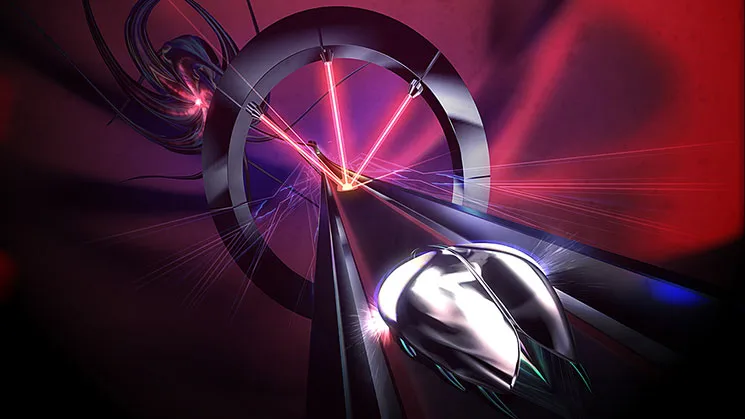
Sharpen your Thumper skills in Practice Mode. Master intricate mechanics and conquer challenging sections to achieve elusive S-ranks.
Thumper's rhythm-action gauntlet can be unforgiving, but the game offers a robust Practice Mode to help you master its intricate mechanics and conquer even the most challenging sections. This detailed guide will walk you through effectively using Practice Mode to hone your skills and achieve those elusive S-Ranks.
Accessing Practice Mode
To enter Practice Mode, simply navigate to the main menu. From there, select the "Levels" option. Choose the specific level you wish to practice. Once the level loads, instead of starting the full run, you'll see an option to "Practice Section" or "Restart Section." Select "Practice Section" to enter the dedicated training environment.
Understanding Practice Mode Controls & Features
Practice Mode provides several key functionalities to aid your learning:
- Restart from Checkpoint: This allows you to instantly return to the beginning of the current practice section. Essential for repeating difficult sequences without replaying entire segments.
- Slow Motion: A crucial tool for analyzing complex patterns. Activating slow motion (often mapped to a specific button like L1/LB on controllers, or a designated key on PC) will reduce the game speed, giving you more time to react and understand the timing of turns, slams, and obstacles. Experiment with different slow-motion speeds to find what works best for you.
- Frame-by-Frame Advance: For the most granular analysis, some versions of Practice Mode offer a frame-by-frame advance function. This is invaluable for pinpointing exact timings for perfect turns or identifying the precise moment to activate a slam.
- Visual Cues: Pay close attention to the visual cues provided by the track. In slow motion, these become much clearer. Notice the subtle shifts in the track's texture, the glowing indicators for turns, and the approaching spikes.
Strategic Practice Techniques
1. Isolating Difficult Sections
The most effective use of Practice Mode is to isolate and repeatedly drill specific segments that are causing you trouble. Don't try to practice an entire level at once. Instead:
- Identify Problem Areas: As you play through a level in regular mode, make a mental note of any sections where you consistently lose health or miss beats.
- Load the Relevant Section: In Practice Mode, navigate directly to the checkpoint preceding your identified problem area.
- Repetition is Key: Play through the section repeatedly. Focus on consistency rather than speed initially. Aim for perfect inputs for each turn, slam, and obstacle.
2. Mastering Perfect Turns and Slams
Perfect inputs are crucial for high scores and survival. Practice Mode is your laboratory for achieving them:
- Slow Motion for Timing: Use slow motion to understand the exact timing for initiating a turn (pressing the direction just before the curve) and executing a slam (hitting the button precisely as you impact the surface).
- Visual and Audio Cues: Observe the visual cues (e.g., the bright glow on a turn panel) and listen for the audio cues that signify a perfect input. In slow motion, these become much more apparent.
- Gradual Speed Increase: Once you can consistently hit perfect inputs in slow motion, gradually increase the game speed until you can perform them flawlessly at full speed.
3. Conquering Boss Battles
Boss battles in Thumper often feature unique attack patterns and demanding sequences. Practice Mode is essential for breaking them down:
- Phase-by-Phase Practice: Each boss typically has multiple phases. Use Practice Mode to isolate and master each phase individually.
- Memorize Patterns: Boss attacks are often rhythmic and predictable. Use slow motion to identify and memorize these patterns. Understand when to turn, when to slam, and when to prepare for incoming projectiles.
- Projectile Evasion: Practice dodging incoming projectiles. Some bosses launch multiple projectiles in specific patterns. Use slow motion to track their trajectories and find safe paths.
4. Improving Reaction Time for Spikes and Obstacles
Spikes and other environmental obstacles require quick reflexes:
- Anticipation Training: In Practice Mode, focus on anticipating spikes and obstacles before they are directly in front of you. Look ahead on the track.
- Quick Reflex Drills: Repeatedly play sections with dense spike patterns. Start in slow motion to understand the sequence, then gradually increase speed. The goal is to react instinctively.
By diligently utilizing Thumper's Practice Mode, you'll transform challenging sections into manageable ones, elevate your overall performance, and ultimately achieve mastery over the rhythm of the void.
100% Human-Written. AI Fact-Checked. Community Verified. Learn how AntMag verifies content