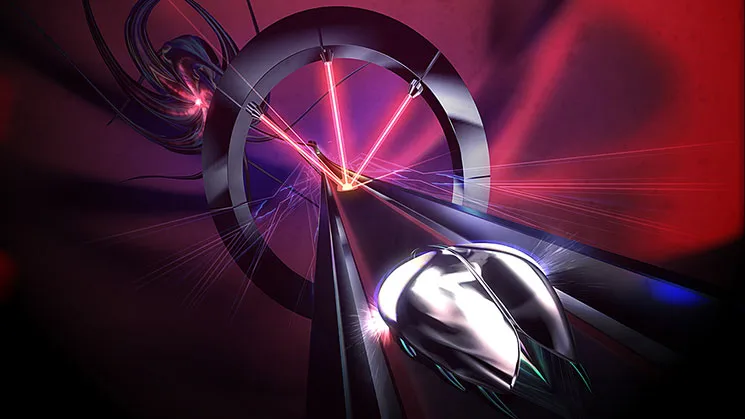
Master Thumper's rhythm-action by learning visual cues for obstacles. Understand track shifts and ambient lighting to conquer challenging sections.
Mastering Thumper isn't just about rhythm; it's about anticipating the horrors ahead. The game provides a rich tapestry of visual cues that, once understood, transform seemingly impossible sections into fluid, rhythmic triumphs. Pay close attention to the track itself, the ambient lighting, and even the subtle shifts in the background to predict and react to upcoming obstacles.
Track-Based Cues
The track is your primary source of information. Its geometry and texture changes are direct indicators of what's coming.
- Wall Turns: Before a sharp turn that requires a "Wall Grind" (holding X/A and steering), the track will often subtly bank or show a slight curve in the distance. More importantly, the walls themselves will begin to rise higher and become more prominent, often with a distinct glowing edge on the side you need to grind. If you see a wall rapidly approaching that extends significantly above the track, prepare for a grind.
- Spike Walls: These deadly barriers require a "Side Slam" (pressing X/A just before impact). Visually, Spike Walls are unmistakable. They appear as menacing, jagged structures that protrude from the side of the track. Crucially, they often have a distinct, pulsating red glow or a rapid, flickering light effect around their base, signaling their immediate danger. Learn to differentiate this from the static glow of a regular wall.
- Barriers/Gates: These obstacles demand a "Pound" (pressing X/A as you hit the barrier). Barriers are typically solid, rectangular structures that span the track. They often have a distinct, slightly raised texture or a pulsating light in their center, indicating they are meant to be broken. Unlike Spike Walls, they don't have jagged edges or a violent red glow, but rather a more contained, rhythmic pulse.
- Energy Orbs (Beats): While not an obstacle, collecting these is crucial for survival. They appear as glowing, spherical objects on the track. The visual cue here is their consistent, rhythmic appearance. If you miss too many, your shell will crack, indicating impending doom. Always prioritize collecting these, as their appearance is a direct cue to maintain your rhythm.
Environmental Cues
Beyond the immediate track, the surrounding environment offers valuable, albeit more subtle, hints.
- Ambient Lighting Shifts: As you approach a particularly challenging sequence, the overall lighting of the level might subtly change. This could be a shift to a darker, more ominous tone, or a sudden burst of brighter, more chaotic light. These shifts often precede sections with a higher density of obstacles or a faster tempo. For instance, a sudden dimming followed by a rapid succession of flashing lights often indicates a series of quick turns and slams.
- Background Element Movement: In later levels, the background itself becomes more dynamic. Watch for large, abstract structures in the distance that begin to move or pulsate. While not directly indicating an obstacle, this often signals a transition into a more intense phase of the level, where new obstacle combinations or faster speeds will be introduced. Consider it a "warning shot" for increased difficulty.
- Sound Design Integration: While this section focuses on visual cues, it's vital to remember that Thumper's sound design is inextricably linked to its visuals. Often, a distinct audio cue (a rising synth, a sharp percussive hit) will perfectly synchronize with the visual appearance of an obstacle, reinforcing its presence and giving you a split-second more to react. For example, a low, rumbling bass often precedes a series of Pounds, while a high-pitched, metallic clang might signal an upcoming Spike Wall.
By internalizing these visual cues, you'll move beyond simply reacting to obstacles and begin to anticipate them, transforming your gameplay from frantic button mashing to a graceful, rhythmic dance with the void.
100% Human-Written. AI Fact-Checked. Community Verified. Learn how AntMag verifies content