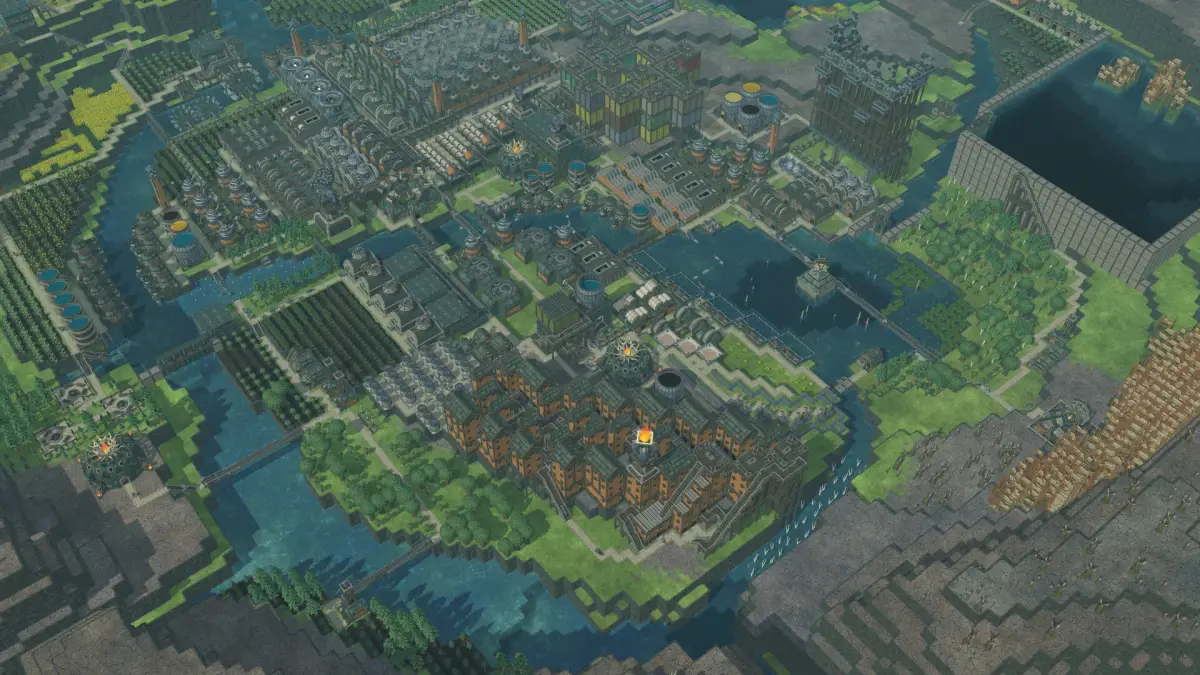
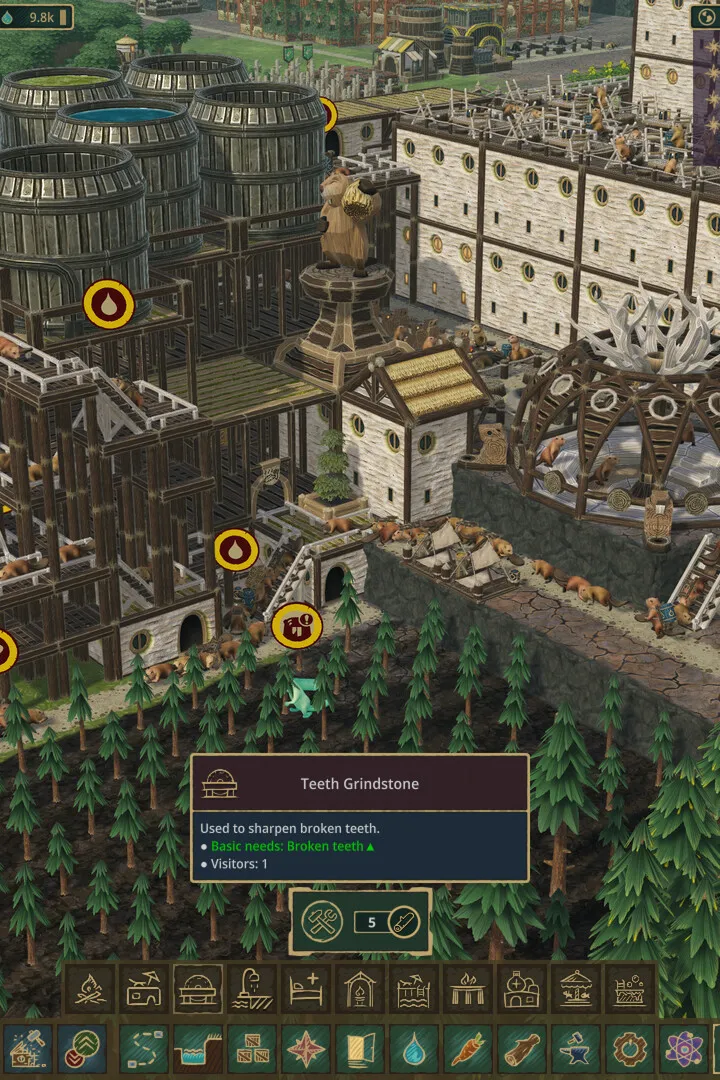
Master processed goods and building materials in Timberborn. Transform raw resources into essential components for your beaver colony's survival.
In Timberborn, processed goods are the backbone of any thriving beaver colony, transforming raw resources into the essential components needed for advanced construction, industrial expansion, and the well-being of your population. Mastering their production is not just a strategic advantage; it's a necessity for mid-to-late game progression and achieving true self-sufficiency.
These goods are created by specialized workshops and factories, taking basic materials like logs, metal, or crops and refining them into more complex and valuable items. Efficiently managing these production chains is crucial for scaling your settlement, unlocking higher-tier technologies, and ensuring your beavers are happy and productive.
Key Processed Goods and Their Production
Understanding which goods are produced where is the first step to optimizing your supply lines. Here's a breakdown of some fundamental processed goods and the buildings responsible for their creation:
- Planks: One of the earliest and most vital processed goods.
- Raw Material: Logs
- Production Building: Lumber Mill
- Uses: Essential for nearly all early to mid-game construction, including housing, basic workshops, and decorative elements.
- Gears: Critical for mechanical components and advanced machinery.
- Raw Material: Logs
- Production Building: Gear Workshop
- Uses: Required for more complex buildings like Water Wheels, Mechanical Pumps, and advanced factories. They are also needed for some higher-tier tools.
- Paper: A cornerstone for scientific advancement and knowledge.
- Raw Material: Logs
- Production Building: Paper Mill
- Uses: Primarily used in the Printing Press to produce Books, which are vital for increasing the well-being of your beavers and unlocking advanced research.
- Refined Metal: The foundation for durable tools and powerful structures.
- Raw Material: Scrap Metal (found in ruins)
- Production Building: Metal Refinery
- Uses: Indispensable for constructing advanced infrastructure such as Metal Platforms, powerful Water Pumps, and the most robust buildings. Also used in some higher-tier tools and components.
- Explosives: For terraforming and rapid resource extraction.
- Raw Materials: Pine Resin, Paper
- Production Building: Explosives Factory
- Uses: Used to create Blasting Charges, which are essential for removing terrain, clearing paths, and accessing new areas.
Processed Food and Beaver Well-being
Beyond construction materials, processed goods also play a significant role in elevating the quality of life for your beaver colony, particularly through higher-quality food. While raw food sources like berries and carrots sustain your beavers, processed foods offer substantial well-being bonuses, leading to happier, more productive, and longer-lived beavers.
Here’s how processed goods contribute to superior diets:
- Bread: A staple of a well-fed colony.
- Raw Materials: Wheat (grown in farms), Water
- Production Buildings: Grill (to make Flour from Wheat), then Bakery (to make Bread from Flour and Water).
- Benefit: Provides a significant well-being boost compared to raw crops.
- Grilled Potatoes: Another excellent processed food option.
- Raw Material: Potatoes (grown in farms)
- Production Building: Grill
- Benefit: Offers a good well-being bonus, diversifying your beavers' diet.
- Maple Pastries: A luxurious treat for your beavers.
- Raw Materials: Wheat, Maple Syrup (from Maple Trees)
- Production Buildings: Grill (for Flour), then Bakery
- Benefit: Provides one of the highest well-being bonuses from food, making your beavers exceptionally content.
Benefits of Higher-Quality Food:
Feeding your beavers processed, higher-quality foods like Bread and Maple Pastries yields several critical advantages:
- Increased Well-being: Directly contributes to the "Well-being" stat, which is a key indicator of colony health and happiness.
- Higher Productivity: Happy beavers work faster and more efficiently, boosting overall resource gathering and production rates.
- Longer Lifespan: Well-fed beavers tend to live longer, reducing the need for constant population management and allowing for more experienced workers.
- Reduced Grumpiness: Prevents negative well-being spirals that can lead to beavers becoming "grumpy" and less effective.
Establishing Efficient Production Lines
To maximize your output of processed goods and building materials, consider these strategies:
- Proximity Planning: Place production buildings close to their raw material sources and storage facilities. For example, a Lumber Mill near a Forester and Log Piles, or a Bakery near Wheat Farms and Water Pumps.
- Storage Management: Ensure ample storage for both raw materials and finished goods. Overflows or shortages can halt production. Use warehouses for processed goods and log piles for logs.
- Power Integration: Most advanced workshops and factories require power. Integrate your power sources (Water Wheels, Engines, Power Shafts) efficiently to ensure consistent operation.
- Beaver Workforce: Assign enough beavers to each production building. A shortage of workers will bottleneck your production.
- Prioritization: Use the production priority system to ensure critical goods are produced first, especially during expansion phases or after disasters.
- Tiered Production: Plan for multi-stage production. For instance, logs go to the Lumber Mill for Planks, then Planks go to other workshops for more complex items. Visualize your supply chain.
By carefully planning and optimizing your processed goods and building material production, you'll lay a robust foundation for a flourishing and resilient beaver civilization, capable of withstanding droughts and expanding its reach across the land.
100% Human-Written. AI Fact-Checked. Community Verified. Learn how AntMag verifies content