Learn Timberborn's emergent mechanics, like complex irrigation chains and beaver behavior quirks, that reward strategic observation and creative building.
Hidden Mechanics and Subtle Discoveries
While Timberborn doesn't feature traditional "easter eggs" in the narrative or pop-culture reference sense, the game is rich with subtle, emergent mechanics and delightful behavioral quirks that reward keen observation and creative experimentation. These aren't hidden behind secret doors or specific quests, but rather reveal themselves through the intricate simulation of beaver life and environmental interactions. Understanding these nuances can significantly enhance your colony's efficiency, well-being, and overall aesthetic appeal.
Observing Beaver Behavior: Unlocking Social & Well-being Boosts
Your beavers are more than just resource gatherers; they are social creatures with needs beyond basic survival. Paying close attention to their routines and interactions can reveal opportunities to optimize their well-being and productivity. These behaviors often provide passive buffs or prevent negative states.
- Leisure & Socialization Hubs:
- Campfire: A foundational well-being building. Beavers will naturally congregate around a lit Campfire during their leisure time. This isn't just for show; it provides a significant boost to their "Social Life" and "Spirituality" well-being categories. Ensure Campfires are strategically placed near residential areas or high-traffic paths to maximize their usage.
- Shrine: Similar to the Campfire but offering a more potent "Spirituality" boost. Observe beavers pausing at Shrines, sometimes in small groups. Placing Shrines in aesthetically pleasing locations, perhaps overlooking a scenic vista or near a water feature, can subtly encourage more frequent visits.
- Rooftop Terrace: A later-game leisure building that offers a "Social Life" boost. Beavers will ascend to these terraces to relax and interact. Consider placing these atop apartment blocks or other tall structures to create multi-level social zones.
Strategy Tip: While beavers will seek these out, their pathfinding can sometimes be inefficient. Creating clear, unobstructed paths to leisure buildings from their homes and workplaces will maximize their uptime and well-being gains. A well-placed Campfire can often be the difference between a content beaver and one suffering from low morale.
- Workplace Dynamics:
- Breaks and Resting: Beavers automatically take breaks when tired or hungry. Observe their paths during these breaks. If they spend too much time traveling to and from their homes or eateries, consider decentralizing food/water sources or building closer residences. Efficient break times mean more productive work cycles.
- Tool Usage: While not a hidden mechanic, the impact of tools is often underestimated. Beavers equipped with tools (e.g., gears for builders, planks for farmers) perform their tasks significantly faster. Monitor your tool production and distribution to ensure all relevant workers are equipped. A beaver without a tool is often working at 50% efficiency or less.
Environmental Interactions & Creative Solutions
Timberborn's physics and environmental systems are surprisingly deep, allowing for emergent gameplay and creative problem-solving that isn't explicitly tutorialized. Experimentation is key to mastering these subtle interactions.
- Dynamic Water Flow:
- Water Physics: Water in Timberborn behaves realistically, flowing downhill, pooling in depressions, and evaporating over time. This isn't just a backdrop; it's a core mechanic. Experiment with different dam heights, levee placements, and dynamite usage to redirect rivers, create reservoirs, or flood areas for farming.
- Terraforming for Efficiency: Use dynamite to carve out new riverbeds or deepen existing ones to improve water flow to distant areas. Create artificial waterfalls to generate power with water wheels in unexpected locations. Observe how water spreads and recedes during droughts; this informs optimal farm placement and irrigation strategies.
- Flood Control & Drought Management: Learn to build sophisticated systems of floodgates and levees. During wet seasons, open gates to prevent flooding and store excess water in reservoirs. During droughts, carefully release stored water to sustain farms and water pumps. The timing and sequence of gate operations are crucial.
Common Pitfall: Underestimating the power of water. Uncontrolled flooding can destroy buildings and drown crops. Conversely, failing to manage water during droughts can lead to widespread crop failure and thirst. Always plan your water infrastructure with both extremes in mind.
- Verticality and Multi-Level Colonies:
- Stacking Buildings: Many buildings can be stacked on top of each other, not just houses. This is crucial for maximizing space on smaller maps or creating dense, efficient districts. Experiment with stacking workshops, storage, and even some leisure buildings.
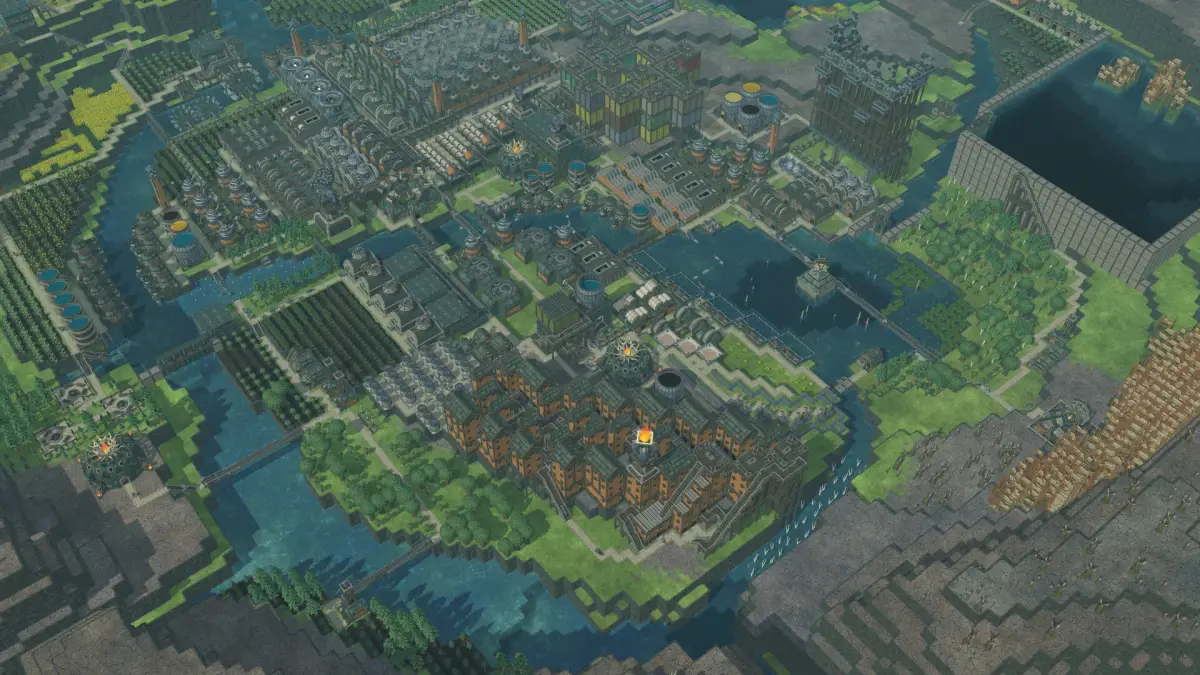
- Bridge & Platform Integration: Utilize bridges and platforms to create multi-level pathways and connect elevated districts. Beavers can navigate complex vertical structures, allowing for truly unique and space-saving colony designs. This also allows you to build over less productive land or water.
- Power Transmission: Power shafts can extend vertically and horizontally. Design your power grid to be compact and efficient, using vertical shafts to connect power sources (e.g., water wheels at river level) to workshops on higher platforms.
Creative Solution Example: Building a multi-story farm. Construct platforms over a fertile area, then place farms on each level, connected by stairs. This dramatically increases agricultural output in a small footprint, especially when combined with efficient irrigation.
Subtle Resource Management & Optimization
Beyond the obvious resource chains, there are nuanced ways to manage and optimize your colony's production and consumption.
- Forester & Tree Growth Cycles:
- Optimal Planting Patterns: Different trees have different growth times. Foremen will automatically replant, but you can optimize their output. For example, planting a mix of fast-growing Pines and slower-growing Maples can provide a steady supply of logs while allowing for larger, more valuable harvests.
- Density and Accessibility: While trees can grow close together, ensuring clear paths for Foremen to plant and Lumberjacks to cut will prevent bottlenecks. Consider creating dedicated forestry districts with easy access to Lumberjack Flags.
- Food & Water Distribution:
- Decentralized Storage: Instead of relying on one central warehouse, strategically place smaller warehouses and food/water storage tanks closer to residential areas and workplaces. This reduces travel time for beavers seeking sustenance, improving their overall productivity and well-being.
- Water Dump & Irrigation Towers: These buildings are not just for aesthetics. A Water Dump can be used to quickly fill small depressions or irrigate a small patch of land without complex canal systems. Irrigation Towers provide a constant, localized source of water for crops, especially useful during droughts or in areas difficult to reach with canals.
The true "hidden mechanics" of Timberborn lie in its emergent gameplay – the way its various systems interact to create complex, often unpredictable outcomes. By observing your beavers, experimenting with construction, and understanding the environmental dynamics, you'll uncover countless ways to build a thriving, efficient, and aesthetically pleasing beaver utopia.
100% Human-Written. AI Fact-Checked. Community Verified. Learn how AntMag verifies content