Understand game modes in Warhammer 40,000: Dawn of War III. Grasp distinct challenges and objectives for each mode and apply different tactical approaches.
Welcome, aspiring Warmaster, to the strategic heart of Warhammer 40,000: Dawn of War III. Understanding the various game modes is crucial for mastering the art of war in the 41st Millennium. Each mode offers distinct challenges and objectives, demanding different tactical approaches and unit compositions. This guide will break down the core modes, providing actionable strategies to ensure your dominance.
Campaign Mode
The Campaign Mode serves as the narrative backbone of Dawn of War III, guiding players through a compelling story across multiple factions. It's an excellent way to learn the game's mechanics, unit strengths, and hero abilities in a controlled environment.
- Structure: The campaign is divided into missions, each with specific objectives. Early missions often act as tutorials, introducing core concepts like resource management, unit production, and combat.
- Learning the Ropes: Pay close attention to the in-game prompts and mission briefings. They often highlight crucial unit counters or strategic points. For example, in missions like "Planet Fall" or "Infiltration," you'll learn the importance of early map control and securing strategic points to boost your requisition income.
- Hero Focus: Campaign missions frequently emphasize the use of your Elite units (Heroes). Master their abilities and deployment. For instance, Gabriel Angelos's "Hammer of Wrath" can devastate clustered enemy infantry, while Gorgutz 'Eadsmasha's "Waaagh!" can turn the tide of a melee engagement.
- Escalation Phases: Many campaign missions feature escalation phases, where new units or abilities become available. Adapt your strategy accordingly. Don't be afraid to re-evaluate your army composition as the mission progresses.
- Strategic Points: Even if a mission doesn't explicitly require capturing a Strategic Point, always aim to at least remove it from enemy control. This denies them resources and often opens up new avenues for attack or defense.
Skirmish Mode (Vs. AI)
Skirmish Mode allows players to hone their skills against AI opponents on various maps and difficulty settings. This is your training ground for multiplayer, offering a risk-free environment to experiment with different builds and strategies.
- Customization: Before starting, select your desired faction (Space Marines, Eldar, Orks), map, and AI difficulty. Experiment with different Elite unit loadouts for each faction.
- Early Game Rush: On easier difficulties, practice aggressive early game strategies. For example, as Orks, a fast "Boyz" rush supported by a "Nob" can overwhelm an unprepared AI.
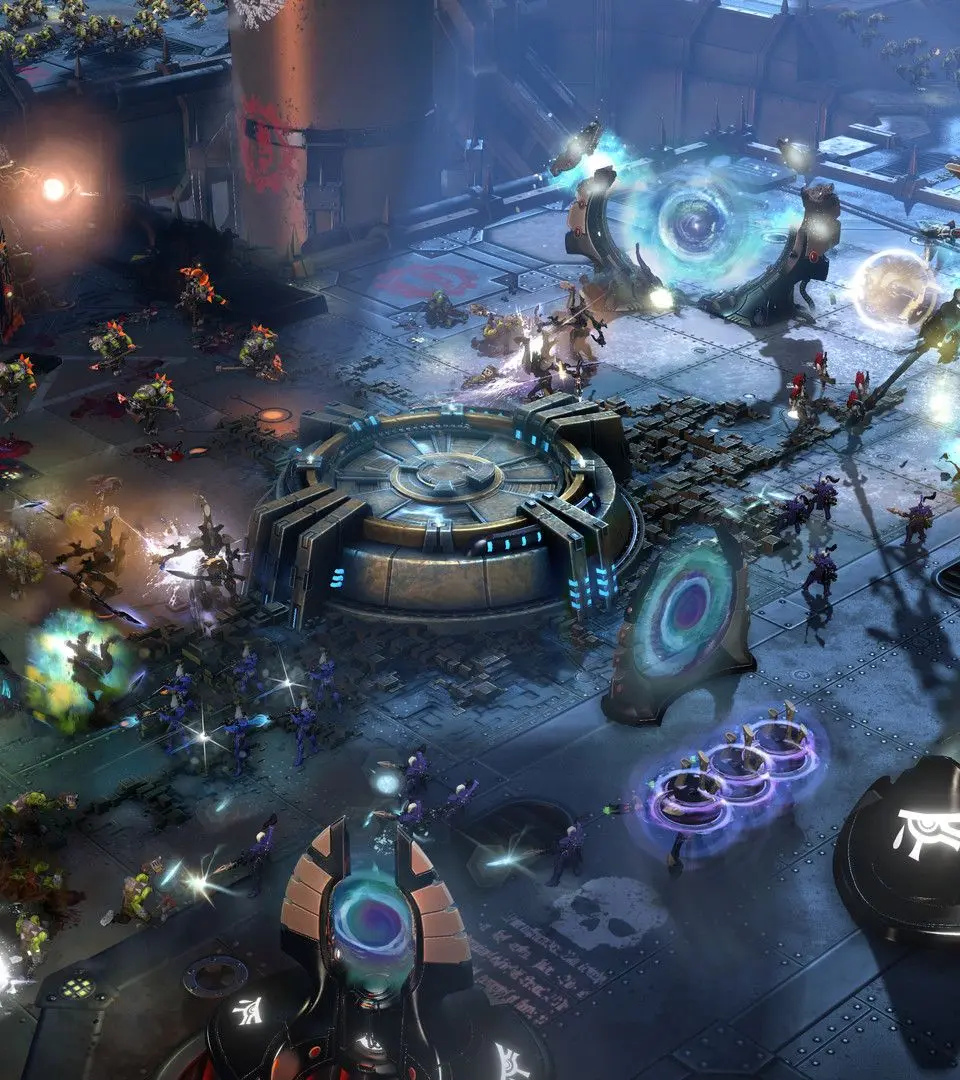
- Resource Management Drills: Use Skirmish to perfect your resource gathering. Focus on quickly capturing and upgrading Strategic Points and Power Nodes. A common early game strategy is to build a Generator near your main base for a steady power income.
- Map Control: Practice securing and holding key map locations. Identify choke points, cover positions, and areas rich in resources. On maps like "The Chapel" or "Under Siege," controlling the central area often dictates the flow of battle.
- Unit Composition Testing: Experiment with different unit combinations. See how well a squad of "Tactical Marines" with a "Heavy Bolter" upgrade performs against "Guardian Squads," or how "Wraithlords" fare against "Dreadnoughts."
- Elite Deployment: Practice the timing and positioning of your Elite unit drops. Dropping a "Librarian" into the thick of enemy infantry with "Smite" can be devastating, but poor positioning can lead to a quick loss of your valuable Elite.
Multiplayer Mode (Vs. Players)
The ultimate test of your strategic prowess, Multiplayer Mode pits you against other human players. This is where your understanding of game mechanics, faction matchups, and quick decision-making truly shine.
- Faction Matchups: Understand the strengths and weaknesses of each faction against others. For instance, Eldar excel at hit-and-run tactics and high mobility, while Space Marines are known for their durable infantry and powerful Elite units. Orks thrive on overwhelming numbers and close-quarters combat.
- Early Game Aggression vs. Economy: Decide on your opening strategy. Do you go for an early push with basic infantry and a cheap Elite, or do you focus on securing resources and teching up to more powerful units?
- Example Aggressive Opening (Orks): Build a "Waaagh! Banner" early, produce "Slugga Boyz," and deploy Gorgutz 'Eadsmasha to pressure an enemy Strategic Point.
- Example Economic Opening (Space Marines): Focus on building a "Generator" and upgrading your "Strategic Points" while producing a few "Scout Squads" for map vision and harassment.
- Elite Management: Elite units are game-changers. Knowing when to deploy them, how to use their abilities effectively, and when to retreat them to avoid losing their valuable Elite Points is paramount. Never commit an Elite unit without a clear objective or support.
- Doctrine Selection: Before each match, carefully choose your Doctrines. These provide passive bonuses or active abilities that can significantly impact your strategy. For example, the Space Marine "Orbital Bombardment" Doctrine can clear out entrenched enemy positions, while the Eldar "Webway Gate" Doctrine allows for rapid troop deployment.
- Adaptation is Key: Observe your opponent's build order and unit choices. If they are heavily investing in anti-infantry, shift your production to vehicles or elite units that can counter them. If they are turtling, consider a siege strategy with long-range units or deepstrike capabilities.
- Communication (Team Games): In 2v2 or 3v3 matches, effective communication with your teammates is vital. Coordinate pushes, share resources if necessary, and call out enemy movements or Elite deployments.
100% Human-Written. AI Fact-Checked. Community Verified. Learn how AntMag verifies content