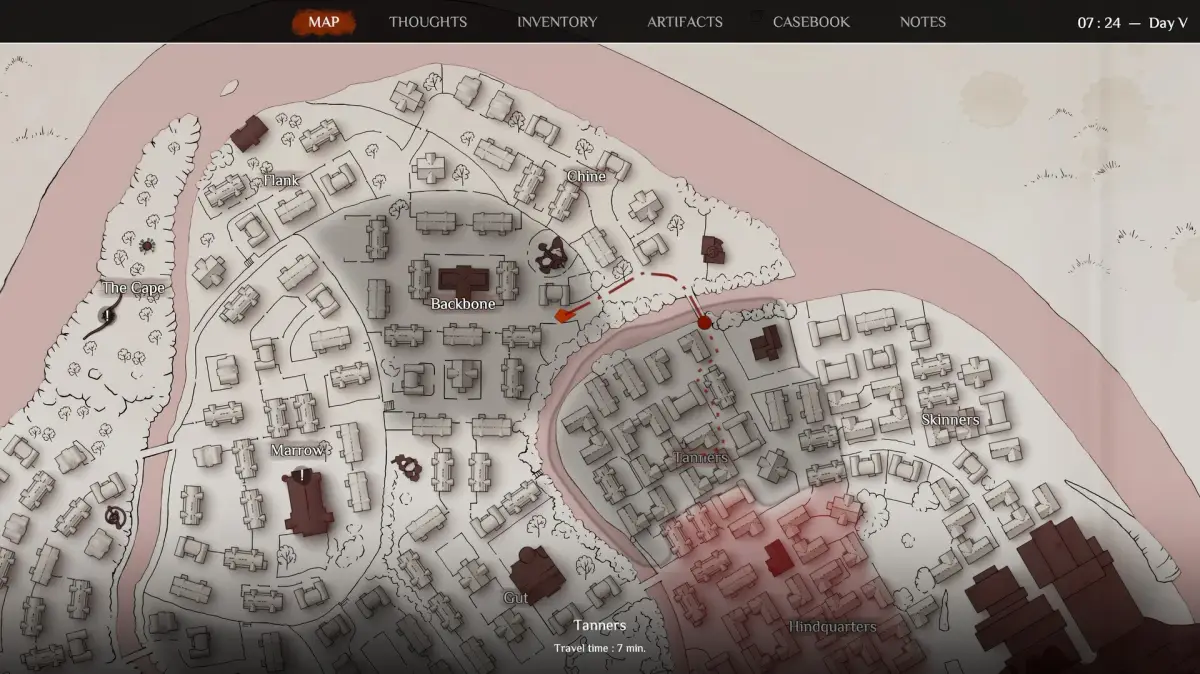
Understand Mirrors in Pathologic 3: Quarantine. These reflective surfaces are crucial tools for understanding and acquiring the enigmatic Amalgam.
In the intricate and often unsettling world of Pathologic 3: Quarantine, mirrors transcend their mundane purpose, becoming potent symbols and functional tools tied to the game's most esoteric elements, particularly the acquisition of the enigmatic substance known as Amalgam. These reflective surfaces are not merely decorative; they are integral to understanding the hidden mechanics, lore, and progression pathways within the plague-ridden town of Uroboros. This guide delves into the multifaceted role of mirrors in obtaining Amalgam, offering actionable strategies and detailed insights for players.
The Esoteric Significance of Mirrors in Pathologic
Mirrors in the Pathologic universe are imbued with a deep symbolic and practical meaning, often linked to the supernatural, the subconscious, and the liminal spaces between realities. Their connection to Amalgam, a substance that defies conventional understanding, further amplifies their importance. mirrors can serve multiple functions:
- Portals and Thresholds: Certain mirrors, especially those affected by the strange energies of Uroboros or imbued with Amalgam, may act as gateways to hidden areas, pocket dimensions, or even brief glimpses into other timelines. These are rarely straightforward passages and often require specific conditions to activate.
- Focusing and Amplifying Agents: In rituals or alchemical processes involving Amalgam, mirrors can be used to concentrate or direct ethereal energies. Their reflective properties can amplify the potency of certain reagents or facilitate the stabilization of volatile substances like Amalgam.
- Indicators of the Unseen: The presence of an unusually placed, ornate, or otherwise anomalous mirror can serve as a potent environmental clue. It often signals that a location is significant, that a hidden interaction is possible, or that the veil between the mundane and the supernatural is thin, frequently pointing towards Amalgam's presence or influence.
- Tools for Reflection (Literal and Figurative): Beyond their physical function, mirrors in Pathologic encourage introspection. They can reveal hidden truths about the player's choices, the town's history, or the nature of the plague itself. Observing reflections might expose weaknesses in enemies, reveal hidden symbols, or prompt critical narrative decisions.
How Mirrors Facilitate Amalgam Acquisition: A Deeper Dive
The acquisition of Amalgam is rarely a direct process. Mirrors play a crucial, albeit often indirect, role in unlocking the methods and locations where this rare substance can be found or synthesized. Players must learn to interpret their presence and function:
- Quest Objectives and Puzzles: Many quests involving Amalgam will directly or indirectly task players with interacting with mirrors. This could involve finding a specific antique mirror within a derelict building, placing a mirror in a designated spot to complete a ritual, or using a mirror to decipher a cryptic message. For instance, a quest might require you to find the "Mirror of the Weaver" in the abandoned textile mill to reveal a hidden inscription on a wall, which in turn provides the recipe for stabilizing Amalgam.
- Environmental Clues and Hidden Passages: The strategic placement of mirrors within the game world is a deliberate design choice. A mirror positioned to reflect a seemingly blank wall might, in fact, reveal a hidden doorway when viewed from a specific angle or under certain lighting conditions. Similarly, a cluster of mirrors in a seemingly random pattern could indicate a ritualistic site where Amalgam can be harvested or created.
- Rituals and Amalgam Synthesis: Amalgam is not a naturally occurring resource in the traditional sense. Its creation or stabilization often involves complex rituals. Mirrors are frequently incorporated into these rituals, acting as conduits for energy or as components that refract specific wavelengths of light or spiritual essence. A common scenario might involve arranging several small, polished mirrors around a central receptacle containing specific herbs and a catalyst, then focusing moonlight or lamplight through them to initiate the Amalgam formation process.
- Unlocking Secret Areas and Lore: Certain mirrors might not lead to physical locations but to abstract spaces or moments in time. Interacting with such a mirror could grant You a vision, a memory fragment, or a piece of lore crucial for understanding Amalgam's origins or its connection to the town's fate. These visions might also reveal the location of a hidden cache of Amalgam or the ingredients needed to produce it.
- Amalgam Manifestation and Observation: In rare and potent areas, Amalgam itself might subtly manifest, its presence only detectable or observable through a reflective surface. This could be a shimmering distortion in the reflection, a fleeting glimpse of its ethereal form, or a distortion of the environment around it. Observing these phenomena through a mirror might allow You to interact with the Amalgam indirectly, perhaps by performing a counter-ritual or by identifying its precise location for later retrieval.
Specific Strategies and Walkthrough Examples (Anticipated)
While exact quests are unconfirmed, the following examples illustrate the types of challenges and strategies You can expect when dealing with mirrors and Amalgam:
Example Scenario 1: The Alchemist's Reflection
- Objective: Obtain Amalgam from the hidden laboratory of the eccentric alchemist, Dr. Aris Thorne.
- Location: Dr. Thorne's dilapidated manor in the Eastern District.
- Steps:
- Locate the Manor: Navigate to Dr. Thorne's manor, a large, decaying structure marked by overgrown gardens and boarded-up windows. Be wary of potential scavengers or mutated fauna attracted to the area.
- Find the Study: Explore the manor's interior. The alchemist's study, likely located on the second floor, will be identifiable by scattered alchemical equipment, strange diagrams, and a pervasive scent of chemicals.
- Identify the Anomalous Mirror: Within the study, a large, ornate, and unusually clean mirror will stand out against the decay. This is the "Mirror of Transmutation."
- Observe the Reflection: Approach the Mirror of Transmutation. Instead of reflecting the room directly, its surface will display a distorted image of a complex alchemical apparatus.
- Interact with the Apparatus in Reflection: You must then interact with the *reflection* of the apparatus. This might involve clicking on specific components in the reflected image in a particular sequence, as hinted at by notes found elsewhere in the study. For example, a note might read, "The alembic must embrace the retort thrice, then the condenser must weep."
- Activate the Hidden Compartment: Successfully manipulating the reflected apparatus will cause a section of the actual wall behind the mirror to slide open, revealing a hidden alcove.
- Collect the Amalgam: Inside the alcove, a small vial containing stabilized Amalgam will be found, along with Dr. Thorne's journal detailing his experiments.
- Recommended Loadout: A reliable melee weapon for potential close encounters, a few bandages, and perhaps a basic disinfectant for minor injuries.
- Pitfall: Attempting to interact with the actual mirror or the wall directly will yield no results. The interaction must be with the reflected image.
Example Scenario 2: The Whispering Well Mirror
- Objective: Stabilize a volatile sample of raw Amalgam found near the old well in the outskirts.
- Location: The abandoned well area, west of the town proper.
- Steps:
- Locate the Well: Travel to the designated well area. The environment will likely be desolate and possibly contaminated.
- Find the Mirror Shards: Scattered around the well's perimeter, players will find several large, irregular shards of a broken mirror. These are the "Whispering Shards."
- Gather Reagents: The raw Amalgam sample will require specific reagents for stabilization. These might include Moonpetal Flowers (found blooming at night in damp areas) and a vial of purified water.
- Assemble the Ritual Circle: You must arrange the Mirror Shards in a specific pattern around the well's opening, as indicated by faint etchings on the stones or a diagram found nearby. A common pattern might be a pentagram or a circle with specific shard orientations.
- Place the Amalgam and Reagents: Carefully place the raw Amalgam sample and the gathered reagents into the center of the arranged mirror shards.
- Focus the Light: The key step involves using a light source (either a lantern or, if available, moonlight) to cast a beam onto the central reagents, which will then be reflected and refracted by the mirror shards. You might need to adjust their position or the light source to achieve the correct angle.
- Observe Stabilization: If the ritual is performed correctly, the light passing through the mirrors will cause the raw Amalgam to stabilize, transforming into a usable, potent form. The process might be accompanied by eerie whispers or visual distortions.
- Recommended Loadout: A reliable light source (lantern with fuel), reagents for the ritual, and potentially a gas mask if the well area is heavily contaminated.
- Missable: The specific arrangement of the mirror shards is critical. Incorrect placement will cause the ritual to fail, potentially wasting reagents or even causing a minor explosion.
Item/Reward Table (Anticipated)
While specific items are unconfirmed, You can anticipate rewards related to mirrors and Amalgam to include:
| Item Name | Description | Quantity/Stats | Rarity |
|---|---|---|---|
| Stabilized Amalgam | A potent, refined substance used in advanced alchemy and rituals. Essential for certain high-tier crafting recipes and quest resolutions. | 1-3 units | Rare |
| Amalgam Residue | An unstable byproduct of Amalgam synthesis or use. Can be refined further or used in less potent alchemical concoctions. | 2-5 units | Uncommon |
| Mirror Shard (Ritual Grade) | A specially prepared shard from a ritualistic mirror. Used in specific alchemical recipes or as a component in crafting protective charms. | 1 unit | Uncommon |
| Dr. Thorne's Journal | Contains cryptic notes on Amalgam synthesis and the properties of specialized mirrors. May unlock new crafting recipes or lore entries. | 1 unit | Quest Item |
| Visionary Elixir | A temporary consumable that, when combined with a reflective surface, can grant brief visions or insights into the past or future. | 1 dose | Rare |
Common Pitfalls and Advanced Strategies
- Misinterpreting Reflections: Not all reflections are literal. Some may be symbolic, hinting at emotional states, hidden dangers, or abstract concepts rather than physical objects or locations.
- Ignoring Environmental Details: The placement of mirrors is rarely accidental. Pay close attention to their orientation, the objects they reflect, and any unusual lighting conditions. A mirror angled towards a specific constellation might be key to a nocturnal ritual.
- Over-reliance on Direct Interaction: Many mirror-based puzzles require indirect interaction. Manipulating the environment or using other items to alter what is reflected is often the solution.
- Amalgam Instability: Raw Amalgam is highly volatile. Always ensure you have the necessary reagents and knowledge to stabilize it before attempting to harvest or synthesize it. Improper handling can lead to dangerous reactions.
- The "Mirror Trap": Be cautious of mirrors that seem too inviting or too easy to interact with. Some may be traps, leading to hazardous areas or triggering negative events. Always assess the context.
- Advanced Strategy: Light Manipulation: Mastering the use of light sources is crucial for many mirror-based rituals. Experiment with different light intensities, angles, and even colored filters (if available through crafting) to achieve the desired refractive effects.
- Advanced Strategy: Sound and Reflection: In some instances, the sound emanating from or interacting with a mirror might be as important as its visual properties. Listen for subtle auditory cues that might accompany reflections.
By understanding the symbolic weight and practical applications of mirrors within the world of Pathologic 3: Quarantine, You can unlock deeper layers of the game's narrative and master the challenging art of Amalgam acquisition.
100% Human-Written. AI Fact-Checked. Community Verified. Learn how AntMag verifies content