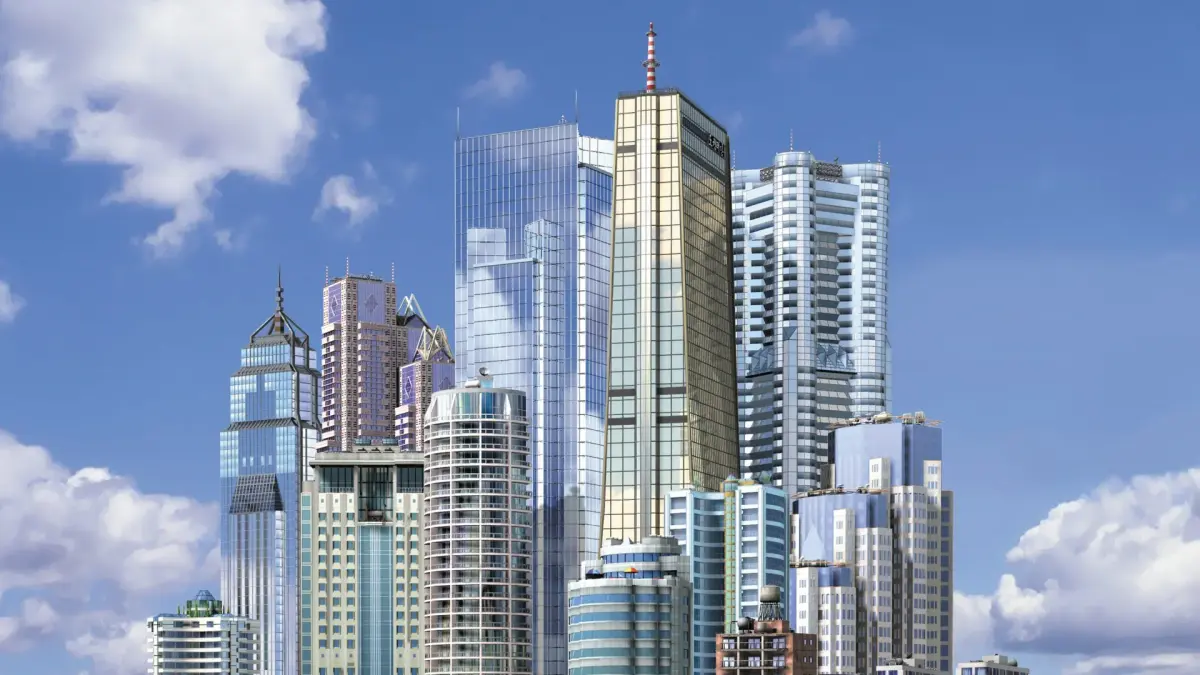
Learn about power lines, power plants (coal, oil, gas, nuclear, wind, solar, microwave, fusion), water pipes, water structures (pumping station, water tower, treatment plant, desalinization), and garbage disposal (recycling, incinerator, waste to energy) in SimCity 3000.
Water, garbage disposal, power stations, all your mechanical and utility needs are right here.
Power Lines --- The power line system of SimCity 2000 has changed. Now you only need power lines to connect long distances instead of having to connect them every where you go. The buildings are capable of giving power to any other building within two tiles which makes life that much easier. :P
Cost: $5 per tile
Power Plants --- There are many different kinds and you'll have to choose which one is best for you and your current city. These descriptions are taken from the game.
- Coal Power Plant (6,000 MW-h)
- Coal Plants are a common and economical source of electricity, but generate large amounts of pollution. Site them as far as possible from residential zones.
Cost: $5,000 - Oil Power Plant (7,000 MW-h)
- Oil Power Plants are slightly cleaner than Coal Power Plants and provide a little more power. They also cost a lot more.
Cost: $8,500 - Gas Power Plant (3,000 MW-h)
- Natural gas is much cleaner than coal, but also much more expensive. You will need two of these Gas Plants to produce as much power as one Coal Plant.
Cost: $4,500 - Nuclear Power Plant (16,000 MW-h)
- Nuclear power is clean and inexpensive, if you can afford the initial investment. Unfortunately, there is always the risk of a deadly meltdown. Keep an eye on power usage.
Cost: $20,000 - Wind Mill (200 MW-h)
- Wind power is very clean, but you will need hundreds of them to power even a small-sized city. They can only reach their potential power output capacity when placed on the tops of hills.
Cost: $250 - Solar Power Collector (5,000 MW-h)
- Solar power is very clean, but on the expensive side. You will need many of these plants to power a medium-size city.
(author's note: Don't use these. Solar plants are a great example of a money waster)
Cost: $15,000 - Microwave Power Plant (14,000 MW-h)
- Sattelites beam down concentrated solar radiation. Microwave Power doesn't provide as much power as a Nuclear Plant, and is much more expensive, but there is no danger of a meltdown.
Cost: $30,000 - Fusion Power Plant (50,000 MW-h)
- Tapping the same energy the sun uses, Fusion Plants create large amounts of energy with none of the radiation danger of Nuclear Plants. However, they are the most expensive plant available.
Cost: $50,000
Water Pipes --- I like the water pipes of SimCity 3000 better than those of 2000. Now, connecting pipes to every building is not required but the actual pipe has a large radius of water which covers the area automatically.
Cost: $5 per tile
Water Structures --- There are a few different types of water structures and you'll have to choose which one is best for you and your current city. .
- Pumping Station (1,500 m3/month)
- Pumping Stations provide water to your thirsty Sims. These stations must be place next to a source of fresh water to function.
Cost: $300 - Water Tower (600 m3/month)
- Water Towers are cheaper and smaller-capacity versions of Pumping Stations. They pump the same amount of water no matter where they're placed.
Cost: $150 - Water Treatment Plant
- Water Treatment Plants purify polluted water. Make sure to connect these plants to your pipe system.
Cost: $15,000 - Desalinization Plant (5,000 m3/month)
- Desalinization Plants allow you to unusable sea water into clean, drinkable fresh water. They do no good unless placed right next to a body of salt water.
Cost: $1,500
Garbage Disposal --- Despite the obvious landfill, you have three different choices of alternative ways of garbage disposal. .
- Recycling Center
- Recycling Centers reduce the amount of garbage that must be buried or incinerated. Despite their positive image and function, they still handle garbage, so few Sims would like to live next door.
Cost: $5,000 - Incinerator (4,500 tons/month)
- Incinerators take care of large amounts of garbage, but much of the trash they burn returns to the environment as air pollution. Land values drop sharply in the vicinity of an incinerator. They require road or rail access.
Cost: $7,500 - Waste to Energy Incinerator (5250 tons/month)
- This modern trash-burning facility differs from older versions. It disposes of much more trash and produces a bit less air pollution. The energy released is converted to electric power that can help to power the city.
Cost: $25,000
Demolish --- Pretty straightforward. It demolishes whatever you set it upon lest it be a building, a tree, etc.
Cost: No definite amount
100% Human-Written. AI Fact-Checked. Community Verified. Learn how AntMag verifies content