
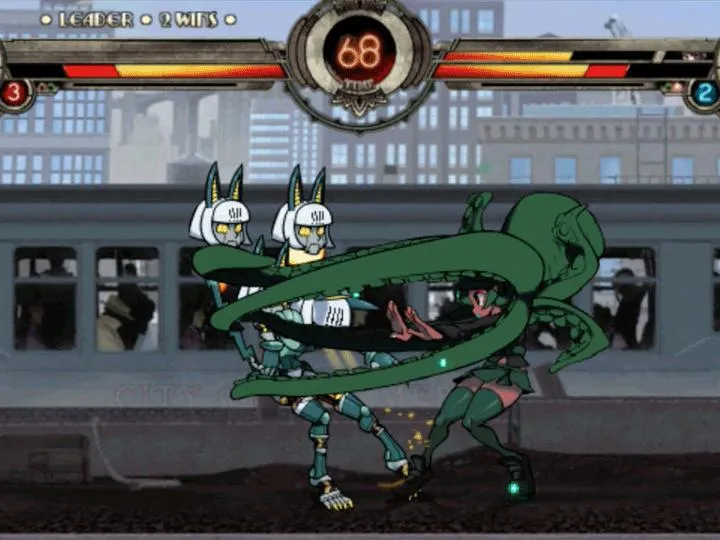
Learn Skullgirls 2nd Encore system mechanics like Burst and Alpha Counter. Understand these universal tools for offense, defense, and turning the tide.
Mastering Skullgirls 2nd Encore goes beyond character-specific combos; a deep understanding of its robust system mechanics is crucial for both offense and defense. These universal tools can turn the tide of a match, create openings, or save you from devastating pressure.
Burst (↑ + Any Two Attack Buttons while Blocking/Hitstun)
The Burst is your primary escape option from an opponent's combo or block pressure. When successfully executed, it creates a large, damaging explosion around your character, knocking the opponent away and interrupting their offense. However, Bursts are not without risk.
- Execution: While in hitstun (being hit) or blockstun (blocking an attack), press Up (↑) and any two attack buttons simultaneously.
- Meter Cost: Consumes 1 bar of Dramatic Tension (Super Meter).
- Invincibility: You are fully invincible during the Burst animation.
- Burst Baiting: Experienced players will often "Burst Bait" by intentionally leaving gaps in their combos or using attacks with long recovery. If you Burst into an opponent's block, they can punish you severely.
- Golden Burst: If you Burst while not in hitstun or blockstun (i.e., during a neutral exchange), it's considered a "Golden Burst." This Burst is unblockable, deals more damage, and launches the opponent higher, but it's incredibly risky to attempt due to its slow startup and vulnerability. It's primarily used as a hard read or a desperate last resort.
- Burst Damage: While Bursts deal damage, their primary purpose is escape, not offense. The damage is usually negligible in the grand scheme of a match.
- Strategic Use:
- Combo Breaker: The most common use. Break out of long, damaging combos to reset the neutral or prevent a character from being eliminated.
- Pressure Relief: If you're being cornered and relentlessly pressured on block, a Burst can create space and allow you to breathe.
- Punish Whiffs: A Golden Burst can punish a particularly egregious whiff from your opponent if you anticipate it.
Alpha Counter (→ + Any Two Attack Buttons while Blocking)
The Alpha Counter is a defensive maneuver that allows you to retaliate immediately after blocking an attack, often with an invincible attack. It's a powerful tool for turning the tables on an aggressive opponent.
- Execution: While blocking an attack, press Forward (→) and any two attack buttons simultaneously.
- Meter Cost: Consumes 1 bar of Dramatic Tension (Super Meter).
- Character Specific: Each character has a unique Alpha Counter attack. These can range from quick, invincible strikes to projectiles or even command grabs. Familiarize yourself with your team's Alpha Counters.
- Invincibility: Most Alpha Counters have significant invincibility frames, allowing them to beat out subsequent attacks from the opponent.
- Risk/Reward: While powerful, Alpha Counters are still punishable if blocked. If your opponent anticipates it, they can block your Alpha Counter and then punish you for the meter spent.
- Strategic Use:
- Escape Pressure: Break out of relentless blockstrings and create an opening for your own offense.
- Punish Gaps: If an opponent leaves a small gap in their blockstring, an Alpha Counter can often pass through it and hit them.
- Character Swap: An Alpha Counter can be used as a quick way to tag in a new character while simultaneously attacking, potentially catching the opponent off guard.
Pushblock (Any Two Attack Buttons while Blocking)
Pushblock is a fundamental defensive technique that creates space between you and your opponent while you are blocking their attacks. It's essential for escaping corner pressure and resetting the neutral.
- Execution: While blocking an attack, press any two attack buttons simultaneously.
- Meter Cost: None.
- Effect: Your character will briefly flash white, and the opponent will be pushed back a significant distance.
- Strategic Use:
- Create Space: The most common use. Pushblock to escape the corner or to create distance from a character with strong close-range offense.
- Interrupt Blockstrings: While it doesn't interrupt the opponent's attack, the pushback can force them to adjust their timing or even whiff subsequent attacks, creating an opening for you.
- Punish Whiffs: If an opponent commits to an attack that would normally hit after a blockstring, a well-timed Pushblock can cause them to whiff, allowing for a punish.
- Prevent Chip Damage: While not its primary function, pushing an opponent away can reduce the amount of chip damage you take from their blockstrings.
Pushblock Guard Cancel (→ + Any Two Attack Buttons immediately after a successful Pushblock)
This advanced technique combines the defensive utility of Pushblock with the offensive potential of an Alpha Counter, allowing for an immediate counter-attack after creating space.
- Execution: Perform a Pushblock, and immediately after the pushback animation begins, input the Alpha Counter command (→ + Any Two Attack Buttons).
- Meter Cost: 1 bar of Dramatic Tension (Super Meter).
- Effect: You will perform your character's Alpha Counter attack immediately after the Pushblock, often catching the opponent off guard as they recover from the pushback.
- Strategic Use:
- Surprise Counter: The opponent might expect you to simply create space, making the immediate Alpha Counter a potent surprise attack.
- Punish Overextension: If an opponent overextends after a Pushblock, the Guard Cancel can be a guaranteed punish.
- Maintain Pressure: Instead of resetting to neutral, a successful Pushblock Guard Cancel can allow you to initiate your own offensive sequence.
Tag-In (↓ + Medium Punch + Medium Kick)
Tag-In allows you to swap your active character with one of your assist characters. This is a core mechanic for managing your team's health, meter, and offensive pressure.
- Execution: Press Down (↓) and Medium Punch + Medium Kick simultaneously.
- Meter Cost: None.
- Invincibility: The incoming character is fully invincible during their tag-in animation.
- Assist Cooldown: Your assist characters have a cooldown period after being used as an assist or after tagging out. You cannot tag in a character who is currently on cooldown.
- Snapback: If your opponent tags in, you can perform a Snapback (→ + Light Punch + Light Kick) to force their character out and bring in a different one, often one with low health.
- Strategic Use:
- Health Management: Tag out a low-health character to allow them to recover red health while your other character fights.
- Meter Building: Some characters build meter more efficiently than others. Tag in a character to build meter, then tag back out.
- Combo Extension: Tag-ins can be used mid-combo to extend damage or to bring in a character with better combo potential.
- Mix-ups: The invincibility and different attack angles of an incoming character can create tricky mix-ups.
DHC (Delayed Hyper Combo) (During a Super, input another character's Super)
DHC allows you to cancel one character's Super into another character's Super, bringing the new character onto the screen to continue the attack. This is crucial for maximizing damage and extending combos.
- Execution: While your active character is performing a Super, input the command for another character's Super. The new character will immediately enter with their Super.
- Meter Cost: Each Super still costs its respective amount of Dramatic Tension.
- Damage Scaling: DHCs are subject to damage scaling, meaning subsequent Supers in a DHC chain will deal less damage than if they were performed individually.
- Strategic Use:
- Combo Extension: The primary use. DHCs allow for incredibly long and damaging combos, often leading to character eliminations.
- Character Synergy: Choose DHCs that flow well together, either by extending the combo or by setting up a favorable situation for the incoming character.
- Chip Damage: If an opponent is low on health and blocking, a DHC can be used to inflict significant chip damage, potentially leading to a guard break or elimination.
- Invincibility Frames: The invincibility of the incoming Super can be used to escape dangerous situations or to punish an opponent's attempt to counter your first Super.
100% Human-Written. AI Fact-Checked. Community Verified. Learn how AntMag verifies content