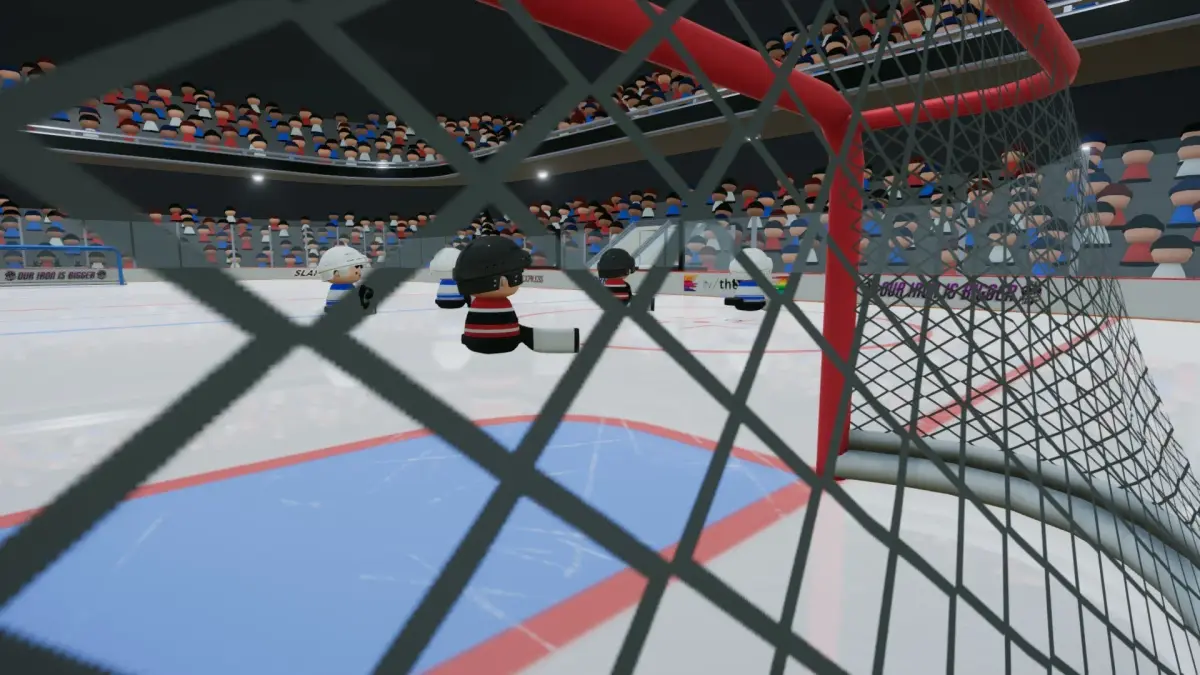
Master power plays in SLAPSHOT Rebound with the Power Play Simulation. Practice set plays, capitalize on advantages, and score more goals.
The Power Play Simulation is a dedicated training mode in SLAPSHOT Rebound designed to help players master the intricacies of offensive advantages. This mode allows you to practice executing set plays, capitalizing on numerical superiority, and refining your team's power play strategies without the pressure of a real game. It's an essential tool for any team looking to improve their special teams performance and convert crucial scoring chances.
Accessed through the training facility or a dedicated menu option, the Power Play Simulation typically pits your team against a simulated penalty kill unit. You can often customize the scenario, choosing the number of players on the ice (e.g., 5-on-3, 5-on-4), the duration of the power play, and even the opposing team's defensive tendencies. This allows for targeted practice of specific power play formations and strategies.
Key features and benefits of the Power Play Simulation:
- Scenario Customization: Tailor the simulation to your needs. Practice against different penalty kill formations, from aggressive forechecks to passive zone defenses.
- Set Play Execution: Practice specific power play formations and plays, such as the 'umbrella' or 'half-wall' setups. Learn the optimal player positioning and passing sequences for each.
- Player Roles: Understand the roles of different players on the power play – the point man, the net-front presence, the flank shooters. Practice coordinating their movements.
- Shot Selection: Focus on taking high-percentage shots and creating rebounds. The simulation helps you identify the best shooting lanes and passing options.
- Time Management: Learn to maximize the limited time you have on a power play, ensuring you get quality scoring chances before the penalty expires.
- Feedback and Analysis: Some simulations might offer post-play analysis, highlighting missed opportunities or areas for improvement in your power play execution.
To make the most of the Power Play Simulation, start by understanding your team's strengths and the available player archetypes. A team with skilled playmakers and accurate shooters will benefit from different strategies than a team focused on physicality and net-front presence. Experiment with different formations and passing plays. For example, a common strategy is to move the puck quickly around the perimeter to draw defenders out of position, creating a shooting lane or an opening for a pass to the slot.
The simulation is also an excellent place to practice specific player abilities that are particularly effective on the power play, such as a player's enhanced shot power or their ability to create space. Remember that the goal is not just to score, but to do so efficiently and with good puck movement. A well-executed power play can demoralize opponents and swing the momentum of a game.
Tips for Effective Power Play Simulation:
- Access the Power Play Simulation mode from the training menu.
- Select a scenario that matches your current needs (e.g., 5-on-4, 5-on-3).
- Practice your team's standard power play formations and plays.
- Focus on quick puck movement and creating passing options.
- Identify and exploit weaknesses in the simulated penalty kill.
- Utilize player abilities that enhance offensive power play effectiveness.
- Analyze your performance and adjust your strategies accordingly.
Consistent practice in the Power Play Simulation will translate directly into more goals and a more potent offense when it matters most in SLAPSHOT Rebound.
| Scenario | Objective | Focus Areas |
|---|---|---|
| 5-on-4 Power Play | Score against a 4-man penalty kill | Perimeter passing, point shots, net-front presence |
| 5-on-3 Power Play | Score against a 3-man penalty kill | Quick puck movement, exploiting large gaps, 1-timers |
| Custom Penalty Kill | Practice against specific defensive setups | Adapting to different PK strategies |
100% Human-Written. AI Fact-Checked. Community Verified. Learn how AntMag verifies content