
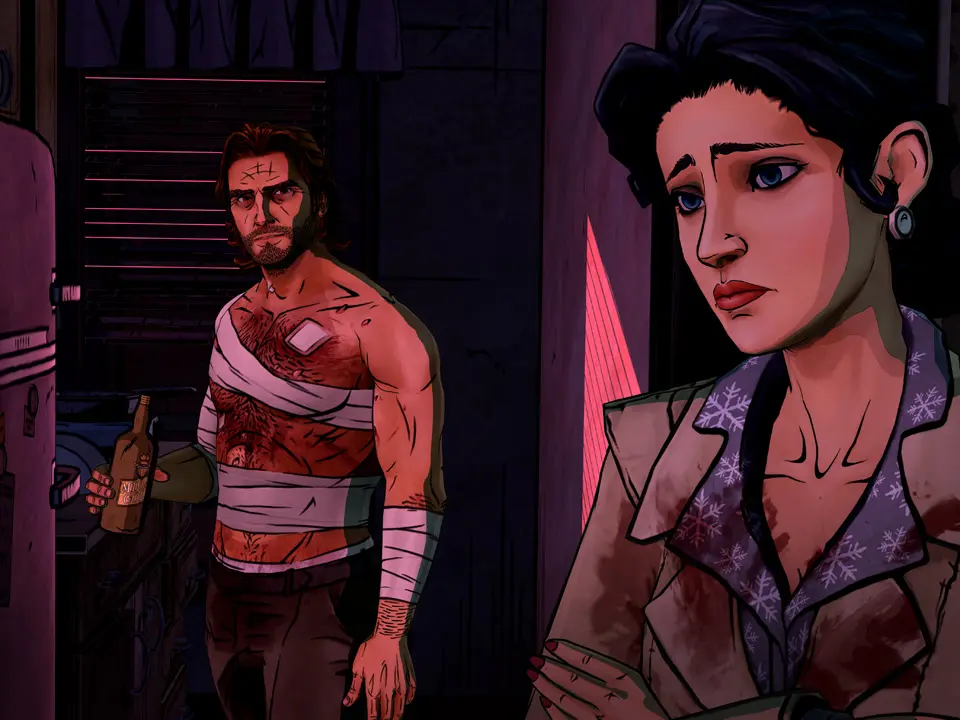
Track Bigby Wolf's Character Morality and Reputation in The Wolf Among Us. Your dialogue and actions shape how the Fable community perceives you.
Character Morality & Reputation
In the shadowy world of Fabletown, Bigby Wolf's actions resonate deeply, shaping not only the narrative but also how the Fable community perceives him. Unlike traditional RPGs with explicit "good" or "evil" meters, The Wolf Among Us employs a nuanced system of Character Morality and Reputation, driven entirely by your choices. Every dialogue option, every action taken (or not taken), and every Fable you choose to help or harm contributes to Bigby's standing.
Understanding the Ripple Effect
Your decisions don't just affect immediate outcomes; they build a cumulative reputation that influences future interactions, dialogue options, and even the availability of certain allies or information. Think of it as a hidden stat that dictates the Fables' trust, fear, or disdain for Bigby. There are no "right" or "wrong" answers in a moral sense, but there are consequences that align with different playstyles.
Key Decision Points & Their Impact
Episode 1: Faith
- Dealing with the Woodsman:
- Aggressive Approach (e.g., punching him repeatedly, breaking his arm): This establishes Bigby as a brutal enforcer. While it might instill fear and compliance in some, it will also alienate others who prefer a more diplomatic approach. Expect characters like Snow White to express disapproval.
- Restrained Approach (e.g., subduing him without excessive force, letting him go quickly): This portrays Bigby as more controlled, perhaps even merciful. This can earn respect from Fables who value justice over brute strength, potentially making them more cooperative later.
- Handling Toad's Situation:
- Paying his rent: A compassionate act that builds goodwill with Toad and potentially other Fables who hear about it. This can lead to Toad being more helpful or less resentful in future episodes.
- Refusing to pay: While fiscally responsible for Bigby, it can be seen as uncaring, further solidifying Bigby's "Big Bad Wolf" image in the eyes of some.
Episode 2: Smoke & Mirrors
- Interrogating suspects (e.g., Tweedle Dee/Dum, Bluebeard):
- Using intimidation/violence: Can yield quick results but further cements Bigby's reputation as a heavy-handed sheriff. Characters like Beauty or Beast might become more wary of him.
- Using diplomacy/reason: Takes more effort but can lead to a more cooperative relationship with the interrogated Fable, potentially revealing more nuanced information or opening up new dialogue paths.
- The Crooked Man's Office:
- Destroying property: While satisfying, it reinforces the "destructive wolf" stereotype. This can make Fables less willing to trust Bigby with delicate situations.
- Minimizing damage: Shows restraint and professionalism, which can improve Bigby's standing with the more law-abiding Fables.
Episode 3: A Crooked Mile
- The Trip Trap Bar confrontation:
- Intervening forcefully: Can protect vulnerable Fables but might also escalate the situation, leading to more collateral damage and further cementing Bigby's reputation as a brawler.
- Attempting to de-escalate: A riskier approach that might not always work, but if successful, can show Bigby's capacity for peaceful resolution, earning respect from those who value peace.
Episode 4: In Sheep's Clothing
- Dealing with Georgie Porgie:
- Direct confrontation/violence: Can be effective in the short term but might alienate those who believe in due process, like Snow White.
- Attempting to reason/negotiate: A difficult path, but if successful, can demonstrate Bigby's growth and ability to handle complex situations without resorting to his primal instincts.
Episode 5: Cry Wolf
- The Trial: This is the culmination of your choices. Every Fable present will react to Bigby based on their cumulative perception of him throughout the game.
- Presenting evidence calmly and logically: Reinforces Bigby's role as a detective and upholds the rule of law.
- Losing control/resorting to violence: While potentially effective in a dramatic sense, it can alienate the jury and solidify Bigby's "monster" image.
Long-Term Consequences
The impact of your reputation isn't always immediately apparent. A Fable you treated poorly in Episode 1 might refuse to help you in Episode 4, or a Fable you showed kindness to might offer crucial information when you least expect it. Pay close attention to dialogue cues and character reactions; they are the primary indicators of Bigby's current standing in Fabletown. Ultimately, your Bigby will be a reflection of your choices – a feared enforcer, a reluctant hero, or something in between.
100% Human-Written. AI Fact-Checked. Community Verified. Learn how AntMag verifies content