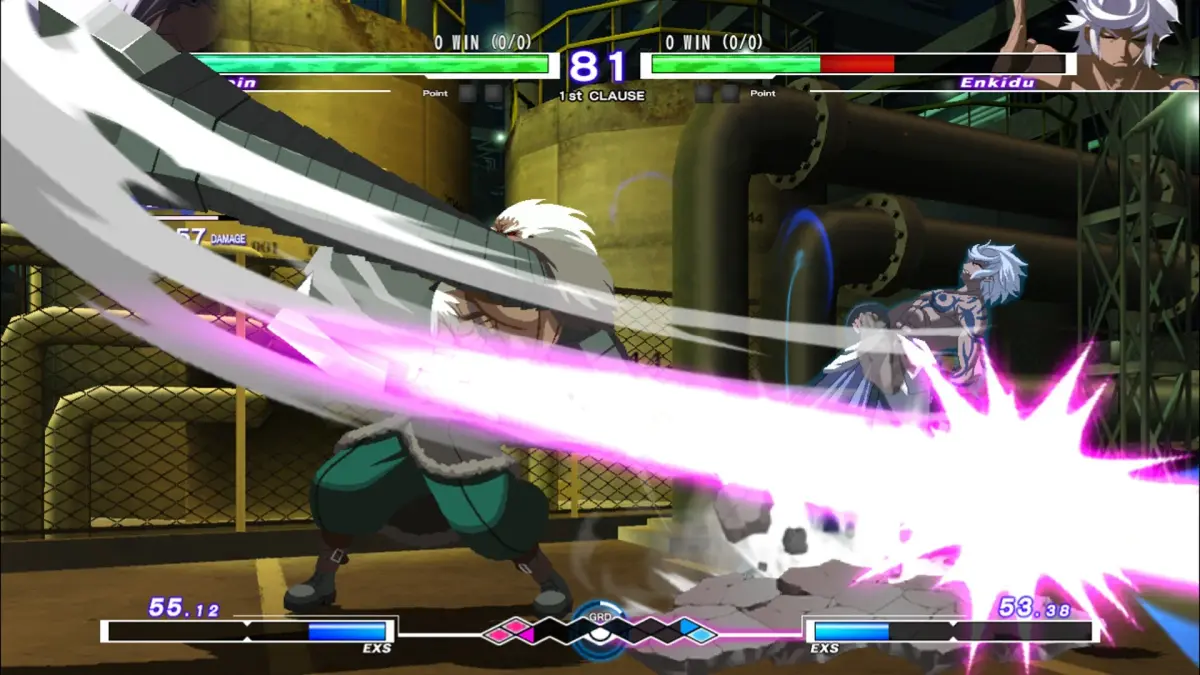
Understand Blockstun and Hitstun in Under Night In-Birth Exe:Late[cl-r]. Master these states to create offense, defense, and mix-up opportunities.
Understanding Blockstun and Hitstun is fundamental to mastering the flow of combat in Under Night In-Birth Exe:Late[cl-r]. These states dictate how long your opponent is incapacitated after being hit or blocking an attack, creating crucial windows for offense, defense, and mix-ups.
Blockstun: The Art of Pressure
Blockstun occurs when your opponent successfully blocks an attack. During this period, they are unable to move, attack, or perform most defensive options, leaving them vulnerable to follow-up pressure. The duration of Blockstun varies significantly based on the attack used and whether it's a normal block or a Shield block.
- Normal Blockstun: This is the most common form of Blockstun. When an opponent blocks an attack by holding back or down-back, they enter a state where they cannot act for a short duration. Faster, weaker attacks generally result in less Blockstun, while slower, heavier attacks or special moves induce more.
- Shield Blockstun: Executing a Shield (214+D) against an attack results in a unique Blockstun state. While a successful Shield significantly reduces the damage and pushback, it also often leads to a shorter Blockstun duration for the attacker compared to a normal block. However, a perfect Shield (just frame) can grant frame advantage, effectively turning the tables.
Actionable Strategies for Blockstun:
- Frame Traps: Utilize attacks that leave you with positive or minimal negative frames on block. For example, Hyde's 5B on block can often be followed up with 2C or a special move like Black Orb (236A/B) to catch opponents trying to escape Blockstun. Practice these sequences in the Training Mode to internalize the timing.
- Stagger Pressure: Mix up your attack timings. Instead of always going for the tightest frame trap, occasionally delay your next attack slightly. This can bait opponents into pressing buttons during Blockstun, leading to a counter-hit.
- High/Low Mix-ups: While an opponent is in Blockstun, they are forced to guess your next move. Follow up an overhead attack (e.g., Waldstein's j.C) with a low attack (e.g., 2A) or vice-versa to open up their guard.
- Throw Attempts: If your opponent is consistently blocking, a well-timed throw (A+D) can break their guard. Characters like Carmine excel at this due to their aggressive close-range options.
- Cross-ups: Use attacks that move your character to the other side of the opponent during Blockstun, forcing them to switch their guard direction. Yuzuriha's aerial attacks or Orie's dive kicks are excellent for this.
Hitstun: The Combo Engine
Hitstun occurs when your opponent is successfully hit by an attack. During Hitstun, the opponent is completely unable to act and is vulnerable to further attacks, allowing you to string together combos. The duration of Hitstun is crucial for combo extensions and varies based on the attack's properties and the opponent's current state.
- Normal Hitstun: Standard Hitstun from a successful attack. The longer the Hitstun, the more time you have to link subsequent attacks into a combo.
- Launch/Knockdown Hitstun: Certain attacks, particularly heavy normals or special moves, will launch the opponent into the air or knock them down, extending Hitstun and opening up opportunities for air combos or ground follow-ups. For instance, Gordeau's 623C (Mortal Slide) launches opponents high, allowing for extensive air juggles.
- Counter-Hit Hitstun: Landing a counter-hit (hitting an opponent during their attack's startup frames) significantly increases Hitstun duration. This is a prime opportunity for highly damaging combos and often enables routes that wouldn't be possible otherwise.
Actionable Strategies for Hitstun:
- Combo Theory: Learn your character's basic and advanced combo routes. Start with simple chains like 5A > 5B > 5C, then integrate special moves (e.g., 236A/B/C) and EX moves (e.g., 236D). The in-game Mission Mode is an excellent resource for learning character-specific combos.
- Confirming Hits: Practice confirming whether your initial attack landed. If it hits, continue the combo; if it's blocked, transition into Blockstun pressure. This "hit confirm" ability is vital for efficient play.
- Resource Management (EXS & GRD): Optimize your combos to utilize your EXS Gauge for EX moves and your GRD Gauge for Chain Shift (A+B+C) or Vorpal State activations. An EX move often provides additional Hitstun or a better launch, allowing for more damage.
- Wall Splat/Corner Carry: Design your combos to carry the opponent to the corner. Wall splats provide extended Hitstun and often lead to higher damage output and advantageous wake-up situations. Carmine's Blood Spike (214A/B/C) is excellent for corner carry.
- Okizeme (Wake-up Pressure): After a knockdown from a combo, the opponent is in a vulnerable state. Plan your next move (e.g., a safe jump, a meaty attack, or a throw) to maintain pressure as they recover.
Mastering the nuances of Blockstun and Hitstun is key to elevating your gameplay in UNIST. By understanding how these states work, you can create relentless offense, punish mistakes, and control the pace of the match.
100% Human-Written. AI Fact-Checked. Community Verified. Learn how AntMag verifies content