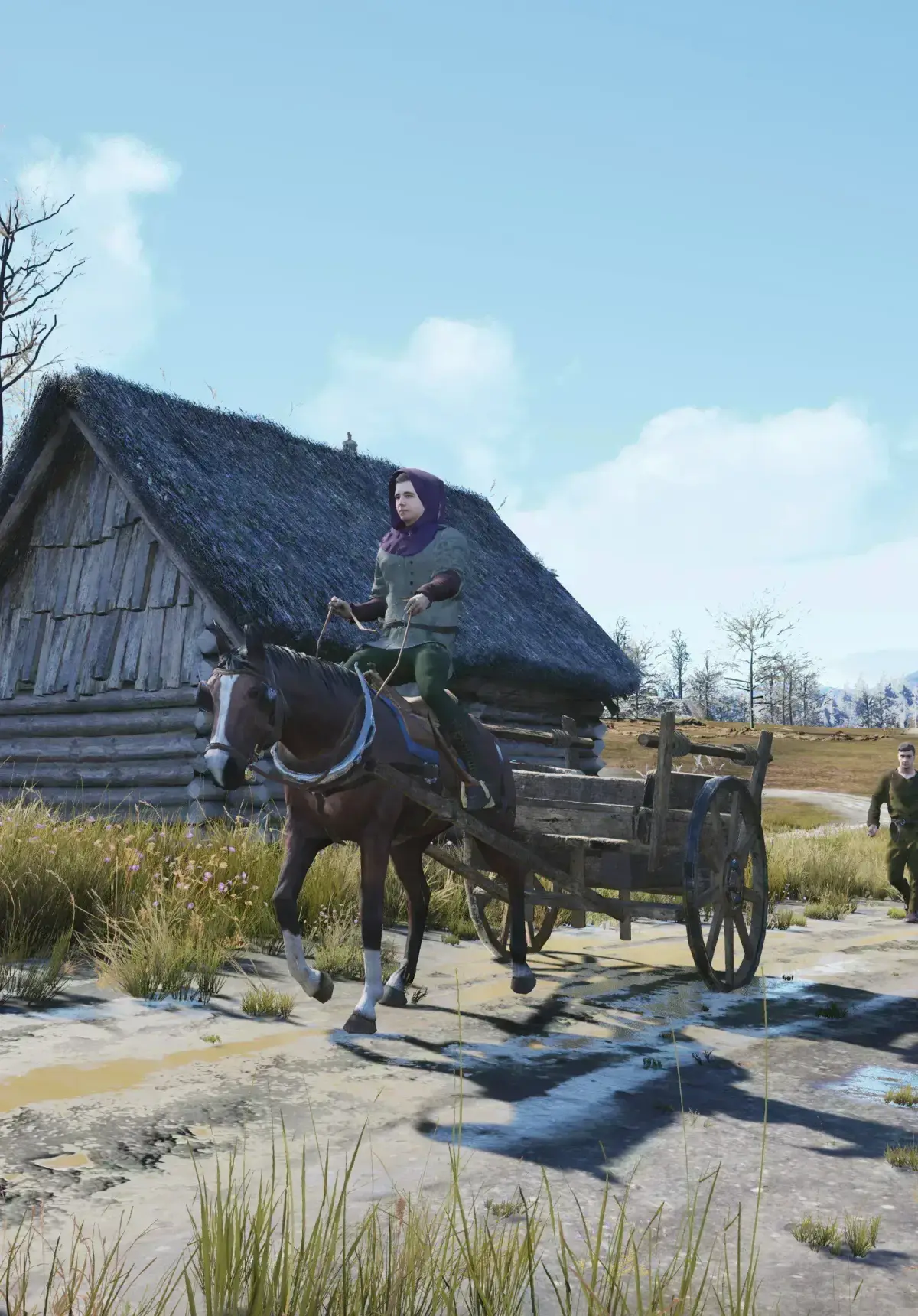
Welcome to Manor Lords, a medieval city-building and conquest RPG where you’ll establish efficient production chains, manage resources, and defend your settlement from rival lords. You’ll navigate the challenges of resource management, villager assignments, and strategic combat to forge your own dynasty in this immersive historical simulation.
This guide will help you master the systems of city-building, resource management, and tactical warfare. We cover everything from establishing your first homestead to expanding into a full-on medieval city, including managing resources, trade, and population growth while navigating changing seasons, weather, and threats of war, disease, and famine. Learn how to gain influence and claim territories, optimize your burgage plots and workshops, and even get rich with warbows.
10 Manor Lords Tips & Tricks to Rule The Realm: Basics
Master Manor Lords with these 10 essential tips for beginners! Learn to optimize marketplaces, manage logistics, farm efficiently, and leverage key developments for a thriving settlement.
10 Manor Lords Tips & Tricks to Rule The Realm: Basics
Master Manor Lords with these 10 essential tips for beginners! Learn to optimize marketplaces, manage logistics, farm efficiently, and leverage key developments for a thriving settlement.

Military
Learn how the Manor building boosts your Gold production and Army ATK in Manor Lords. Discover upgrade costs, benefits, and strategic placement tips for your growing settlement.
Military
Learn how the Manor building boosts your Gold production and Army ATK in Manor Lords. Discover upgrade costs, benefits, and strategic placement tips for your growing settlement.
Armaments System Explained: Armor and Weapons
Learn how to produce armor and weapons in Manor Lords. Discover the requirements for crafting, artisan roles, and how the armaments system equips your troops for combat.
In Manor Lords, weapons and armor are primarily crafted within your settlements. To begin production, you'll need to invest in developments like Armorsmithing and ensure your burgage plots are upgraded to Level 2. Burgage plots must be large enough to accommodate extensions, indicated by a shed icon with a hammer. Upgrading burgage plots to Level 2 involves meeting specific needs, often related to market stalls and supply, which can be checked in the household's pop-up window. Once a plot is Level 2 and sufficiently sized, you can assign an artisan family to a specific trade extension.
Level 2 burgage plots unlock artisan trades. Extensions such as Bow works, Blacksmiths, Tailors, and Armormaker will assign the resident family to that specific role, removing them from the general job pool. Creating a Tailor extension allows the crafting of Gambesons, the early-tier armor for your units. Most armor and weapon crafting does not require specific developments, with the exception of armormaking, which is tiered:
- Helmets - Basic armormaking
- Mail armor - Advanced armormaking
- Plate armor - Master armormaking
Other artisan roles handle the crafting of different armaments:
- Tailors craft Gambeson armor and other clothing.
- Bowyers exclusively craft war bows.
- Blacksmiths produce swords, spears, and tools.
Once crafting begins, your population will gradually equip themselves for combat. The Armaments system is accessible via a menu at the top right of the UI, and also within each individual burgage plot. The main UI menu displays your total inventory of weapons and armor across the settlement, while individual burgage plot menus show items available for the household's use. When your army rallies, any males with access to armaments will equip themselves based on their assigned gear. It's advisable to have a basic supply of armor and weaponry within the first few years due to potential bandit raids and essential for preparing for conquest against AI lords.
Getting Weapons & Armor
Learn how to craft all weapons and armor in Manor Lords. Discover material requirements, workshop extensions, and strategies for arming your units effectively.
Weapons and armor in Manor Lords are primarily crafted through specific burgage plot extensions and industry buildings. You can also purchase them from the trading post. Crafting requires various resources like iron slabs and planks, which are produced in specialized buildings such as the Bloomery and Sawmill.
Getting Weapons
The following weapons can be crafted:
| Item | Materials | Extension |
| Sidearms | Two Iron Slabs | Blacksmith’s Workshop |
| Spears | 1 Iron Slab, 1 Plank | Blacksmith’s Workshop |
| Polearms | 1 Iron Slab, 1 Plank | Blacksmith’s Workshop |
| Bows | 1 Plank | Bowyer’s Workshop |
| Small Shield | 1 Plank | Joiner’s Workshop |
| Large Shield | 2 Planks | Joiner’s Workshop |
| Crossbows | Work in progress | Work in progress |
| Javelins | Work in progress | Work in progress |
To produce planks, assign a worker to a Sawmill and ensure a hitching post is available for log transport. Planks are then used by Joiner’s Workshops for shields and bows. Iron Slabs, made in the Bloomery from iron ore, are necessary for melee weapons like swords, spears, and polearms, as well as for armor.
Once a unit is created under the army tree, soldiers will automatically acquire the necessary weapons and armor, storing them in their burgage plot's armament detail.
Getting Armor
Your army requires protection. Armor can be obtained as follows:
| Item | Materials | Extension |
| Gambesons | 2 Linen | Tailor’s Workshop |
| Helmets | 1 Iron Slab | Armorer’s Workshop |
| Mail Armour | 2 Iron Slabs | Armorer’s Workshop |
| Plate Armor | 8 Iron Slabs | Armorer’s Workshop |
Basic army units will use helmets and gambesons, which are easy to craft without requiring specific technologies. Gambesons are made in a Tailor’s Workshop using linen, produced by a Weaver’s Workshop from flax. Metal armor, including mail armor and plate armor, requires iron slabs from the Bloomery. Advanced armors like mail and plate armor are locked behind development technologies, requiring either trading for them or investing development points to unlock their crafting.
Similar guides you might like


100% Human-Written. AI Fact-Checked. Community Verified. Learn how AntMag verifies content