
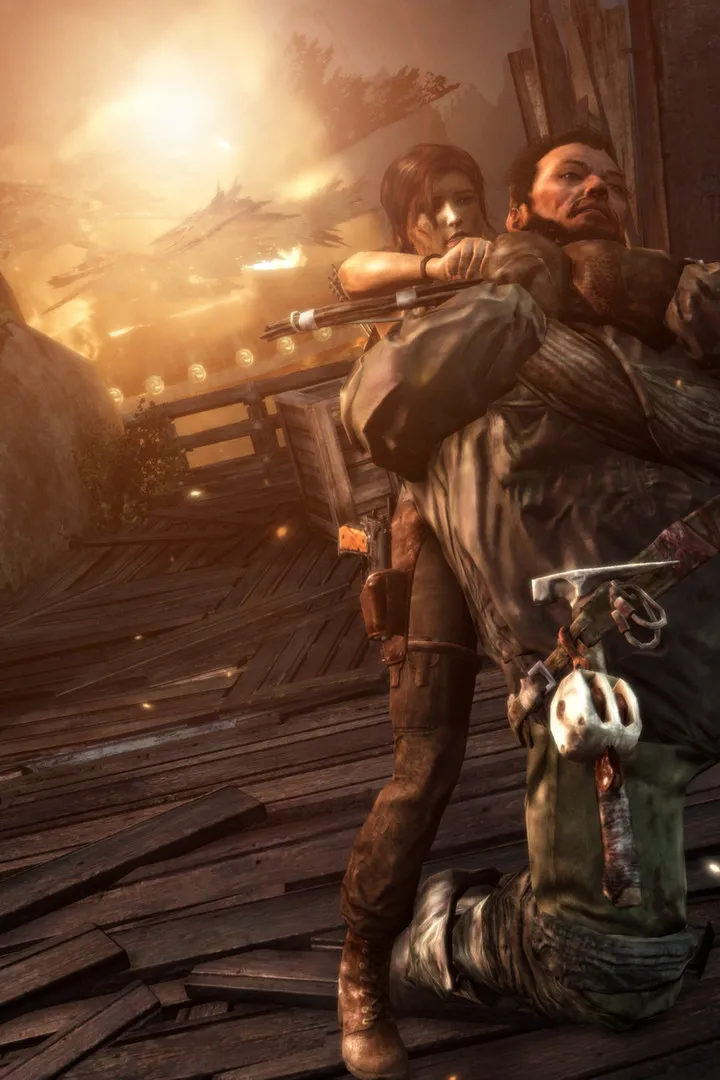
Learn the core mechanics of Tomb Raider (2013). Master Lara Croft's agility and survival skills for navigating Yamatai's treacherous island and intense combat.
Tomb Raider (2013) offers a rich and immersive experience, blending intense combat, challenging puzzles, and deep exploration. Understanding its core features is crucial for any aspiring survivor. This section details the key mechanics that define Lara Croft's harrowing journey.
Exploration and Movement
Lara's agility is paramount to navigating the treacherous island of Yamatai. Mastering her movement capabilities is essential for both survival and discovery.
- Platforming: Utilize Lara's climbing, jumping, and scrambling abilities to traverse vertical environments. Look for ledges, climbable surfaces (often marked by white paint or distinct textures), and broken structures.
- Rope Ascender: Acquired later in the game, this crucial tool allows Lara to ascend thick ropes quickly and efficiently. It's often used to reach previously inaccessible areas or to escape collapsing structures.
- Ziplining: After obtaining the Rope Arrow, Lara can create ziplines across gaps or use existing ones. Aim at a sturdy anchor point (usually a wooden beam or rock outcrop) to deploy a zipline for quick traversal.
- Survival Instinct: Press the designated button (L1/LB on consoles) to highlight interactive objects, collectibles, and enemy positions. This is invaluable for spotting hidden paths, resources, and solving environmental puzzles.
Combat and Weaponry
Lara will face numerous hostile Solarii and mutated creatures. Effective combat relies on understanding your arsenal and utilizing the environment to your advantage.
- Weapon Types:
- Bow: Your primary stealth and long-range weapon. Upgrade it for increased damage, faster draw speed, and specialized arrows like the Fire Arrow (for igniting flammable objects) and Rope Arrow (for creating ziplines and pulling objects).
- Pistol: A reliable sidearm for close-quarters combat when stealth isn't an option. Upgrades improve clip size and accuracy.
- Rifle: Offers a balance of range and stopping power. Ideal for mid-range engagements. Look for attachments like scopes and extended magazines.
- Shotgun: Devastating at close range, perfect for crowd control or taking down heavily armored foes.
- Cover System: Utilize environmental cover (crates, rocks, walls) to avoid enemy fire and plan your attacks. Lara automatically snaps to cover when near it.
- Melee Combat: When enemies get too close, a quick melee attack can stun them, allowing for a follow-up shot or a finishing move.
- Environmental Hazards: Look for explosive barrels, unstable structures, or ledges that can be used to your advantage against groups of enemies.
Crafting and Upgrades
Survival on Yamatai depends on scavenging and improving your gear. The game features a robust crafting system accessible at any Base Camp.
- Salvage: Collect Salvage from defeated enemies, supply crates, and hidden caches. This is the primary currency for weapon upgrades.
- Weapon Upgrades: At a Base Camp, navigate to the "Weapons" menu. Each weapon has multiple upgrade tiers that enhance damage, accuracy, firing rate, and clip capacity. Prioritize upgrades based on your preferred playstyle. For example, early bow upgrades are crucial for stealth, while pistol upgrades improve your backup weapon.
- Gear Upgrades: Certain essential gear items, like the Pry Axe, can also be upgraded to open new paths or solve puzzles.
Skills and Experience
As Lara gains experience, she unlocks new abilities that enhance her combat prowess, survival instincts, and exploration capabilities.
- Experience Points (XP): Earn XP by defeating enemies, finding collectibles, completing challenges, and progressing the story.
- Skill Trees: At a Base Camp, access the "Skills" menu. There are three distinct skill trees:
- Survivor: Focuses on resource gathering, healing, and environmental awareness. Key skills include "Arrow Retrieval" (to recover more arrows) and "Scavenging" (to find more salvage).
- Hunter: Enhances combat effectiveness with bows and other weapons. Look for skills like "Headshot Reticle" (for improved aiming) and "Rapid Shot" (for faster firing).
- Brawler: Improves melee combat and resilience. Skills like "Dodge Counter" (to counter enemy attacks) and "Pain Tolerance" (for reduced damage) are invaluable.
- Prioritization: Early in the game, investing in "Survivor" skills like "Arrow Retrieval" and "Scavenging" can significantly ease resource management. As combat becomes more frequent, consider "Hunter" and "Brawler" skills to match your preferred combat style.
Collectibles and Challenges
Yamatai is brimming with secrets and optional objectives that reward XP and provide deeper insight into the island's lore.
- Relics: Ancient artifacts scattered throughout the island. Each relic provides a small amount of XP and contributes to completing a set. Examine them closely for additional lore.
- Documents: Journal entries and letters from previous inhabitants or survivors. These offer valuable backstory and context for the island's mysteries.
- Geocaches: Hidden caches marked by small, usually camouflaged containers. Often require careful observation or puzzle-solving to locate.
- Challenges: Area-specific objectives, such as "Illumination" (destroying all lanterns in an area) or "Egg Poacher" (destroying all bird nests). Completing challenges rewards significant XP.
- Tombs: Optional, self-contained puzzle areas that offer unique rewards upon completion, often including a large XP bonus and a valuable piece of Salvage or a Map revealing other collectibles.
100% Human-Written. AI Fact-Checked. Community Verified. Learn how AntMag verifies content