
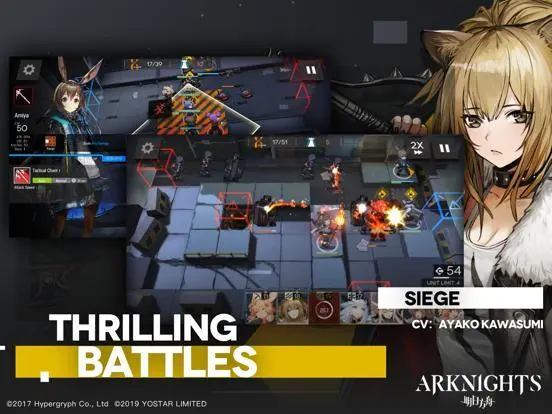
Learn Arknights enemy types and mechanics to counter common archetypes. Equip your Rhodes Island Operators with strategies for any challenge.
Understanding the various enemy types and their unique mechanics is paramount to success in Arknights. This guide will break down common enemy archetypes and offer actionable strategies to counter them, ensuring your Rhodes Island operators are always prepared for any challenge.
Basic Enemy Archetypes
Most enemies fall into a few core categories, each requiring a slightly different approach. Identifying these early in a stage can inform your operator deployment and skill usage, optimizing your squad's efficiency.
1. Standard Grunts (Melee & Ranged)
- Description: These are the most common enemies, often appearing in large numbers. Melee grunts typically have moderate HP and ATK, serving as frontline fodder. Ranged grunts deal damage from a distance but often possess lower DEF and HP, making them squishier targets.
- Common Examples: Infected Thugs, Reunion Crossbowmen, Originium Slugs, Ursus Civilian.
- Strategy:
- Melee Grunts: Utilize high-DEF Defenders such as Cuora, Hoshiguma, or Saria to block choke points and absorb damage. Supplement their defense with AoE Guards like Specter or Blaze, or single-target Snipers like Exusiai or Ash for rapid elimination. For early game, Spot and Cardigan are excellent F2P options.
- Ranged Grunts: Prioritize eliminating these threats quickly to minimize sustained damage to your front lines. Deploy fast-redeploy Specialists like Projekt Red or Phantom to assassinate them, or use long-range Snipers (e.g., Exusiai, Platinum, Kroos) and Casters (e.g., Amiya, Eyjaflajja, Lava) to take them out before they can fire too many shots.
- Resource Management: For early stages, 3-star operators like Vigna (Vanguard) and Kroos (Sniper) are excellent for clearing these waves efficiently with low deployment cost, allowing you to save DP for stronger units.
2. Armored Units
- Description: These enemies boast significantly higher Physical Defense (DEF), making them highly resistant to physical damage. They often move slowly but can be a major threat if not dealt with properly, acting as durable blockers or pushers.
- Common Examples: Armored Guards, Shielded Sentinels, Heavy Defenders, Originium Golems (some variants).
- Strategy:
- Arts Damage is Key: Physical damage operators will struggle significantly against these units. Deploy Casters (e.g., Amiya, Ifrit, Eyjaflajja, Ceobe) or Arts-damage Guards (e.g., Surtr, Blaze with S2, SilverAsh with his Truesilver Slash, Mousse) to bypass their high physical defense.
- Defense Reduction: Operators with DEF-shredding abilities can significantly weaken armored units, allowing physical damage dealers to contribute more effectively. Examples include Pramanix (S2), Shamare (S2), and certain Sniper skills. Pramanix is a particularly valuable asset, obtainable via an Operator Voucher.
- True Damage: A select few operators, such as Amiya (Caster) with her S3, Nian (Defender) with S3, or Skadi the Corrupting Heart (Supporter) with S3, deal True Damage. This damage type ignores both DEF and Arts Resistance (RES), making it incredibly effective against highly armored targets regardless of their RES.
3. High-Resonance Units (High Arts Resistance)
- Description: These enemies possess high Arts Resistance (RES), making them difficult to damage with Arts attacks. They often appear as elite units or bosses, challenging players to adapt their damage composition.
- Common Examples: Originium Golems (many variants), certain Sarkaz Casters, specific Boss units like FrostNova or Patriot.
- Strategy:
- Physical Damage Focus: Prioritize high-ATK physical damage dealers. Snipers like Exusiai (especially with S3), Schwarz (S3), Ash (S2/S3), or Fartooth (S3) are excellent choices. Guards like SilverAsh (especially with Truesilver Slash after E2), Thorns (S3), Mountain (S2), or Skadi (S2/S3) can also be highly effective.
- RES Reduction: Similar to DEF reduction, some operators can reduce enemy RES, making them more vulnerable to Arts damage. Pramanix (S2) is again a valuable asset here, significantly lowering both DEF and RES. Other examples include Shamare (S2) and certain Supporter skills.
- True Damage: As mentioned, True Damage from operators like Amiya's S3 will bypass high RES entirely, making her a crucial operator for many boss encounters. Other True Damage sources, though rarer, are also highly effective.
- Crowd Control: While not directly dealing damage, applying Stun, Bind, or Slow effects can buy valuable time for your physical damage dealers to chip away at high-RES targets.
Advanced Mechanics & Counter-Strategies
Beyond basic stats, many enemies possess unique abilities that can drastically alter a stage's difficulty. Understanding these mechanics is crucial for advanced play and mastering complex operations.
1. Stealth & Camouflage
- Description: Enemies with stealth cannot be targeted by most operators unless they are within a specific range or revealed by a special ability. They often appear as assassins, high-priority targets, or units designed to bypass your defenses.
- Common Examples: Invisible Reunion Assassins, certain Sarkaz Stealth units, specific event enemies like the "Invisible Man."
- Strategy:
- True Sight Operators: Deploy operators with True Sight talents or skills to reveal stealthed enemies. Key examples include SilverAsh (E2 talent, reveals all stealthed enemies in his range), Mizuki (S3, reveals stealthed enemies), and certain Specialist operators like Kafka (S2, reveals enemies in range).
- AoE Damage: While not directly revealing, wide-area-of-effect (AoE) attacks can sometimes hit stealthed enemies if they are within the skill's radius, even if not directly targeted. This is less reliable but can be a fallback.
- Choke Points & Blocking: Force stealthed enemies into choke points where they become blocked by a Defender or another operator. Once blocked, they become targetable by all operators. This is a fundamental strategy for dealing with stealth without True Sight.
- Fast-Redeploy Assassination: Operators like Projekt Red or Phantom can be deployed directly onto a stealthed enemy's path to block and eliminate them quickly before they reach your key operators.
2. Healing & Regeneration
- Description: Some enemies possess the ability to heal themselves or other enemies, significantly prolonging battles and making them harder to defeat. These can range from self-healing units to dedicated healers supporting entire waves.
- Common Examples: Reunion Shamans, certain Sarkaz Priests, specific event enemies like "Healing Drones" or "Regenerating Beasts."
- Strategy:
- Burst Damage: Focus down healing enemies with high burst damage from operators like Surtr (S3), Ch'en the Holungday (S3), or Mountain (S2) to eliminate them before they can heal significantly or affect other units.
- Prioritization: Always prioritize eliminating healers first, especially if they are healing high-HP or armored targets. Allowing them to persist can make an otherwise manageable wave become overwhelming.
- Silence: Operators with Silence abilities (e.g., Lappland's E2 talent, Manticore's S2 module) can prevent enemies from using their healing skills or other special abilities, effectively neutralizing their threat.
- Bind/Stun: Crowd control can temporarily stop healing, allowing your damage dealers to catch up.
3. Special Debuffs & Status Effects
Enemies can inflict various debilitating status effects on your operators or the environment, requiring specific counter-strategies.
- Freeze/Stun:
- Description: Renders operators immobile and unable to attack for a duration. Stunned operators cannot block, while frozen operators also take increased Arts damage.
- Strategy: Deploy Medics with status resistance (e.g., Nightingale's E2 talent provides RES to allies, Whisperain provides status resistance) or use operators with high HP and DEF to tank the effects. Prioritize eliminating the source of the stun/freeze. Certain operators like Pallas or Blemishine can also provide status resistance or immunity.
- Corrosion/Arts Damage Tiles:
- Description: Certain tiles on the map can deal continuous Arts damage or apply corrosion debuffs (e.g., reducing DEF, max HP, or healing effectiveness) to operators standing on them.
- Strategy: Avoid deploying operators on these tiles if possible. If unavoidable, use Medics (especially AoE Medics like Nightingale or Perfumer) to sustain your operators, or deploy high-RES operators. Operators with self-sustain or high HP pools can also endure these effects better.
- Deployment Point (DP) Drain/Block:
- Description: Some enemies or map mechanics can reduce your DP generation rate or directly drain your current DP, severely hindering operator deployment and reinforcement.
- Strategy: Use Vanguards with strong DP generation skills (e.g., Myrtle, Elysium, Bagpipe). Consider deploying a second Vanguard if DP drain is severe. Prioritize eliminating the source of the DP drain, which is often a specific enemy unit or an environmental device.
- True Damage Attacks:
- Description: Some elite enemies and bosses can deal True Damage, which ignores both DEF and RES. These attacks are incredibly dangerous as they cannot be mitigated by conventional defenses.
- Strategy: The primary counter is high HP pools and strong healing. Operators like Saria (S3 for healing), Nightingale (S3 for Arts shield), or other powerful Medics are essential. Fast-redeploy operators can be used to bait and absorb these attacks.
Boss Units
Bosses are unique enemies with significantly higher stats, often featuring multiple phases, unique mechanics, and powerful abilities. They are the ultimate test of your squad's synergy and your tactical prowess.
- General Strategy:
- Scout the Boss: Before attempting a stage with a boss, always check the enemy information in the stage details. This provides crucial insights into their abilities, stats, and potential weaknesses. Watch strategy videos if available.
- Burst Damage Windows: Many bosses have specific windows where they are vulnerable (e.g., after a special attack, during a phase transition, or when certain conditions are met). Save powerful skills like SilverAsh's Truesilver Slash, Surtr's Twilight, Thorns' Destreza, or Ch'en the Holungday's Cascade for these moments to maximize damage.
- Healing & Support: Ensure you have sufficient healing from Medics like Silence (obtainable via an Operator Voucher), Nightingale, or Kal'tsit. Defensive buffs from Supporters (e.g., Saria's S3, Nian's S3) or Defenders are also critical for survivability.
- Crowd Control: Stuns, binds, or slow effects can be invaluable for controlling boss movement, interrupting their attacks, or keeping them in range of your key damage dealers. Operators like Angelina, Weedy, Magallan, or Manticore excel at this.
- Phase Management: Be aware of boss phase transitions. Many bosses gain new abilities, increased stats, or change their attack patterns in subsequent phases. Plan your skill rotations and operator deployments accordingly.
- Environmental Interaction: Some bosses interact heavily with the map environment. Understanding these interactions (e.g., destroying obstacles, activating specific tiles) is key to controlling the battlefield.
- Baiting & Redeployment: For bosses with powerful single-target attacks, fast-redeploy operators can be used to bait attacks, absorbing damage that would otherwise hit your core units.
By internalizing these enemy types and mechanics, you'll be well-equipped to tackle even the most challenging operations in Arknights. Remember to adapt your strategy based on the specific threats presented in each stage and always review enemy information before deploying your operators!
100% Human-Written. AI Fact-Checked. Community Verified. Learn how AntMag verifies content