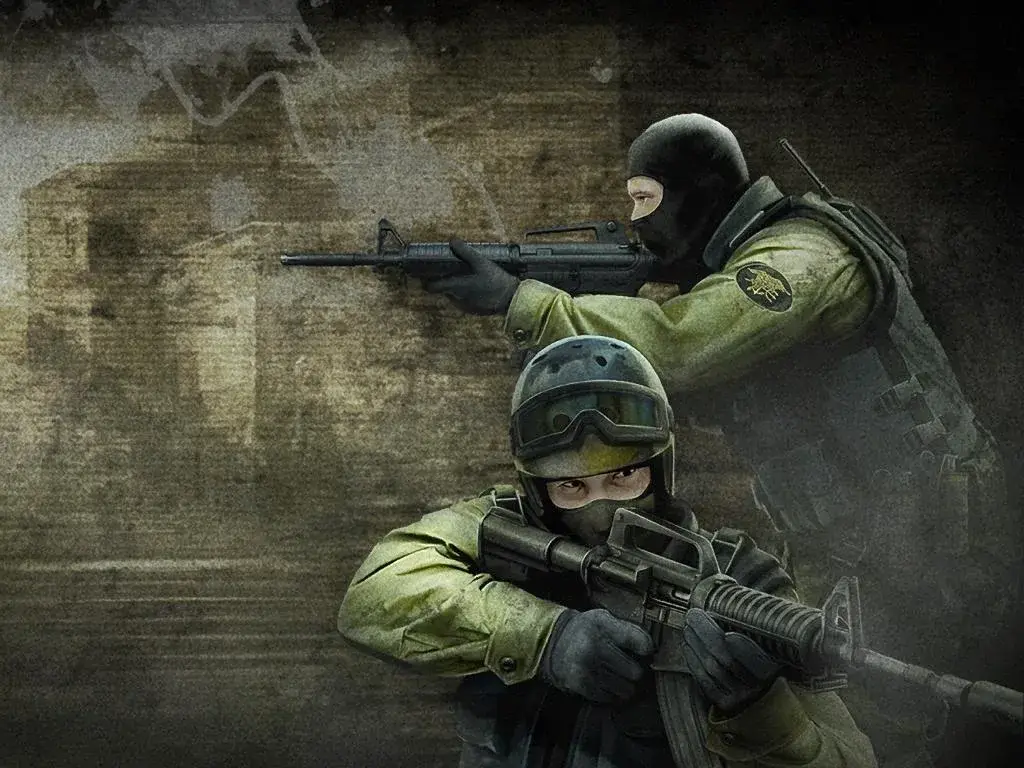
Counter-Strike: Source is a tactical first-person shooter where you'll master the art of warfare. Whether you're defending bomb sites on Dust II or executing a rush on Nuke, success hinges on expert weapon strategies and advanced movement. This is a difficult game, demanding precision and teamwork, perfect for players who crave a challenging, atmospheric FPS experience.
This guide dives deep into mastering Counter-Strike: Source. We'll cover essential tips for every role, from the entry fragger to the AWPer, and break down weapon strategies to give you the edge. Conquer every map and achieve those Steam Achievements with our expert advice.
production of this work is illegal and punishable by federal law.
Learn about Counter-Strike: Source game modes, competitive play, the economy, and more. Understand how competitive play works and how to eco.
- 1Understand the core differences between Counter-Strike: Source and other games.
- 2Familiarize yourself with the available weapons, grenades, and gear, including pistols, heavy weapons, SMGs, rifles, and grenades.
- 3Learn about the various game modes available in Counter-Strike: Source.
- 4Dive into the intricacies of competitive play, covering how it works, the economy (including how, when, and why to eco), player roles, effective communication, the importance of sound (radar (your minimap with nearby blips and threats marked)), general in-game tips, pre- and post-game strategies, and the matchmaking system.
- 5Explore map overviews for popular maps such as Cache, Cobblestone, Dust II, Inferno, Mirage, Overpass, and Train.
- 6Learn how to set up practice servers, including using Snives' Can't Go Wrong Practice Script.
- 7Review the conclusion and thank yous.
- Pay close attention to the economy to manage your resources effectively during competitive matches.
- Effective communication with your team is crucial for success.
- Sound cues, including enemy footsteps and gunfire, are vital for situational awareness (use your minimap (a small map displayed on your HUD (Heads-Up Display) showing your immediate surroundings and teammates' positions) to track enemy movements).
- Mastering different player roles can enhance team synergy.
- Practice regularly on dedicated servers to improve your aim and game sense.
LINE TEST
Learn about the 'LINE TEST' in Counter-Strike: Source. This guide explains how to check readability and provides an introduction to CS:GO basics, weapons, and maps.
This section of the guide is a simple test to ensure the document is readable in your web browser without requiring sideways scrolling. If you can read the following line of characters without scrolling, then the document is displayed correctly:
abcdefghijklmnopqrstuvwxyzabcdefghijklmnopqrstuvwxyzabcdefghijklmnopqrstuvwxyza
Introduction
This guide is written by WildSnivy (SnYves) and aims to help new Counter-Strike: Global Offensive (CS:GO) players get acquainted with the game. It covers the basics, introduces weapons and game mechanics, and provides an overview of the competitive (Active Duty) maps. The current Active Duty map pool includes:
- Cache (de_cache)
- Cobblestone (de_cbble)
- Dust II (de_dust2)
- Inferno (de_inferno)
- Mirage (de_mirage)
- Overpass (de_overpass)
- Train (de_train)
The author is a physics student and a member of their university's CS:GO e-sports team, with experience in playing and shoutcasting.
Copyright and Contact Information
The guide is original work, with any outside information cited. The author has zero tolerance for unauthorized selling of the guide but permits printing and sharing. For questions or comments, readers can email the author, replacing '(at)' with '@' and '(dot)' with '.', and including "CS:GO" in the subject line. The author requests respectful communication, avoiding flames, insults, excessive profanity, poor grammar, non-English languages, requests to join social networks, or questions already covered in the guide. Unreadable emails will be discarded.
Version History
- 1.0: First submission. (8/17/2015)
- 1.1: Grammar and spacing fixes. (9/16/2015)
- 1.11: Updates for Operation Bloodhound and Zeus. (10/7/2015)
- 1.2: Winter Updates, added YouTube links for bomb planting positions. (12/17/2015)
1) What is (and isn't) Counter-Strike?
Discover what Counter-Strike: Source is all about! Learn how teamwork, tactics, and resource management set it apart from other FPS games like Call of Duty.
Alright, let's get you up to speed on what Counter-Strike: Source is all about. Think of it as a super intense, tactical team shooter. You and your buddies will either be the Counter-Terrorists (CTs) or the Terrorists (Ts), duking it out on a map. Your goal? Either to wipe out the other team or to pull off your objective before they can stop you. You've got a whole arsenal of weapons and grenades at your disposal, and you'll need to use smart team tactics to come out on top.
Now, CS: Source is a bit different from a lot of other first-person shooters out there. It's not really about being a lone wolf hero. Sure, having a sharp aim never hurts, but the real magic happens when your team works together. You could have a rough KDA (kills/deaths/assists), but if you're pushing objectives and supporting your teammates, nobody's going to sweat your stats. Being a team player is key, and that's what really sets CS apart. It's tense, it's thrilling, and honestly, it's one of the best tactical shooters you can play.
So, what is it not? For starters, it's NOT Call of Duty. Seriously, drawing that comparison is like stepping on a Lego – it just hurts. In CoD, teamwork is often pretty loose, if it exists at all. It's all about individual plays, and you'll see players running around solo, taking out multiple enemies without breaking a sweat. And if they die? No big deal, they just respawn in a few seconds. That's not how CS rolls.
In Counter-Strike: Source, things are way more serious. Your health doesn't magically refill, and you don't respawn until the next round. If you go down, you're out until the next buy time. Losing a teammate puts your team at a serious disadvantage, and you've got to fight hard to turn things around. This is what makes CS so gripping: while individual skill is rewarded, team tactics are king.
CoD also has this system where you unlock better gear as you level up. CS doesn't do that. It's all about the in-match economy. You buy your weapons and gear each round with money earned from playing. You can earn cool weapon skins, sure, but they don't give you any in-game advantage. It's all about what you can afford and what you choose to buy each round.
So, if you're looking for a fast-paced, run-and-gun shooter where there are no real consequences for your actions, CS: Source might not be your jam. You might enjoy games like Battlefield or Call of Duty more, which are great for players who like constant action. CS can have quieter moments as teams set up their positions, and if that sounds like a drag, I totally get it if you want to bounce. No hard feelings!
But if you're someone who loves to think tactically, where every little decision matters, then stick around. You're in for a treat.
2) The 3 G's: Guns, Grenades, and Gear
Master the arsenal in Counter-Strike: Source! Learn about guns, grenades, and gear, including their stats, costs, and how they affect gameplay. Make informed purchase decisions to dominate the match.
Arguably one of the most important components of any FPS is the selection of firearms available for you to discharge into the enemy team, and CS is not an exception. There is a plethora of guns and gear for you to pick up and shoot off, and all of them are available to you in game if you have the cash to make it happen.
In this section, we'll talk about all of the goodies available for purchase in a CS match, and then follow it up with a quick discussion on weapon slots and what to use. Let's look at the guns themselves first.
Firstly, the layout and what everything means:
- Side: Some guns are only available for purchase by one particular side (e.g., the M4 for CTs and the AK-47 for Ts). The only way to acquire a firearm you cannot buy is to loot one off an opponent's body.
- Cost: The money needed to purchase the gun or equipment from the buy menu. Remember that when you respawn after you die, you always get the starting pistol (P2000, USP-S or Glock-18) free of charge.
- Ammo: Rounds per clip / total ammo carried. Generally cannot be refilled until a new round starts.
- Kill Award: The amount of cash awarded to you for killing an opponent with the weapon. The "standard" award is $300, but some weapons, such as shotguns and the AWP, have different awards.
- Damage: The amount of damage done by an unarmored shot to the chest or arms from one meter away. Multiply the damage by about 4 for headshots, 1.1 for shots to the abdomen or stomach, and .75 for leg shots.
- Fire Modes: Describes how the weapon fires its ammo and how quickly it can do so. Semi-automatic weapons require one click per shot, and automatic weapons can be sprayed. Three-round bursts fire three shots before requiring another click.
- Accurate Range: The farthest distance from which a no-recoil shot (i.e. the first bullet in a spray) will land within your on-screen crosshairs.
- Movement: Determines how fast you can move with the weapon out. The fastest speed you can move at is 250 units (when you have your knife out).
- Armor Pen: Shorthand for armor penetration, this determines how much of the gun's damage is actually dealt as damage against armored foes.
- Penetration Power: Describes how well the gun can wallbang, i.e., shoot and hit enemies behind cover. Guns with higher penetration power can shoot enemies from behind thicker cover (say, sheet metal over a wooden plank) for generally more damage.
- Reload Speed: How long the gun takes to reload. This measures the reload animation time, and in most cases, the clip is replenished before the animation finishes. It is often faster to quickly switch from and to the weapon right after the clip is reloaded to save time. Most shotguns are reloaded one shell at a time, and thus the reload animation can be canceled by firing.
- Shortcut: The keystrokes necessary to purchase the weapon. In all of them, "B" refers to the key that opens the buy menu.
- Shares Slot With: Some weapons occupy the same loadout slot as others do. This describes what weapons do that.
- Special: Right-clicking with some weapons triggers a special action, which will be briefly described here.
Similar guides you might like

100% Human-Written. AI Fact-Checked. Community Verified. Learn how AntMag verifies content