Welcome to Legends of Amberland III: The Crimson Tower, a classic turn-based RPG from Silver Lemur Games. As a party of adventurers, you’ll delve into dungeons, explore forgotten lands, and unravel ancient mysteries. It’s a game for those who love deep exploration and strategic combat.
This guide is here to help you conquer the challenges within The Crimson Tower. We’ll cover everything from finding all the hidden collectibles to mastering the tricky boss fights. Whether you're aiming for a perfect playthrough or just trying to survive the deepest dungeons, we've got the tips you need to succeed.
Getting Started & Core Mechanics
Master Legends of Amberland III: The Crimson Tower's core mechanics. Learn tactical combat, party synergy, and item management like Estus Shard.
Getting Started & Core Mechanics
Master Legends of Amberland III: The Crimson Tower's core mechanics. Learn tactical combat, party synergy, and item management like Estus Shard.
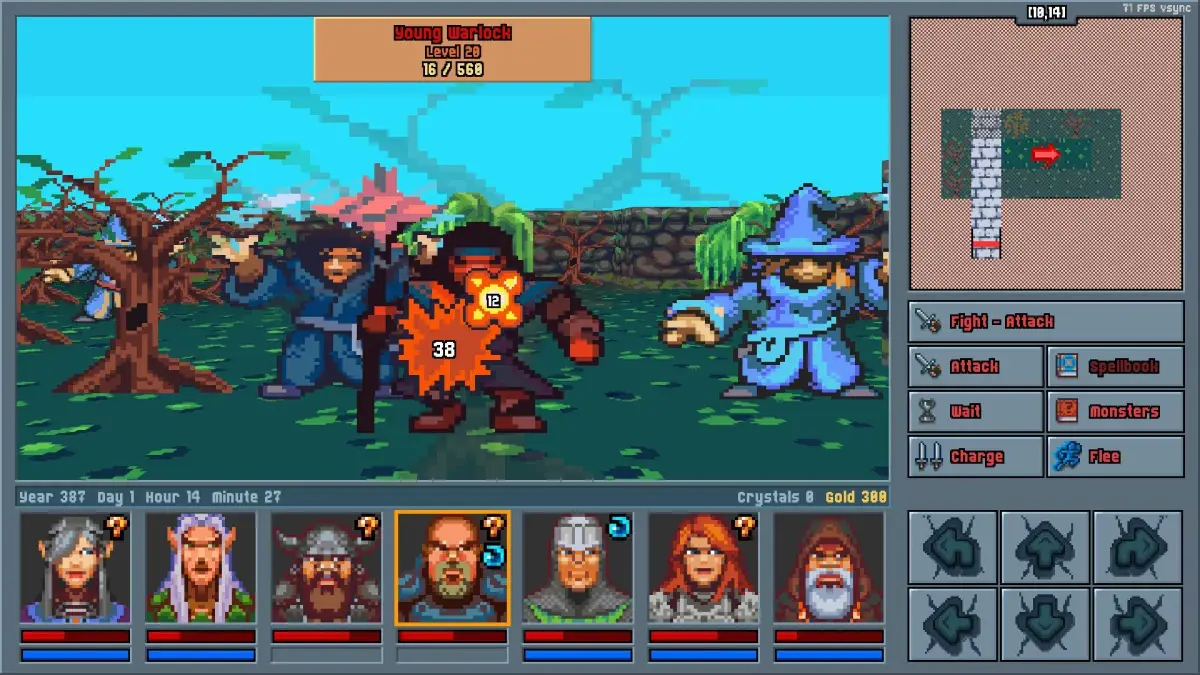
Installation & Setup
Get Legends of Amberland III: The Crimson Tower up and running smoothly! This guide walks you through installation and setup, ensuring you're ready for adventure in Amberland.
Installation & Setup
Get Legends of Amberland III: The Crimson Tower up and running smoothly! This guide walks you through installation and setup, ensuring you're ready for adventure in Amberland.
System Requirements
Check Legends of Amberland III: The Crimson Tower PC system requirements. Learn minimum and recommended specs, including CPU, GPU, and RAM for smooth gameplay.
To ensure a smooth and enjoyable experience with Legends of Amberland III: The Crimson Tower on your PC, it's essential to verify that your system meets the minimum and recommended hardware specifications. These requirements dictate the hardware components necessary for the game to run, including the processor (CPU), graphics card (GPU), random access memory (RAM), and available storage space. Meeting the minimum requirements will allow the game to launch and function, though you may need to play with lower graphical settings for optimal performance. The recommended requirements, on the other hand, are designed to provide a more robust and visually impressive experience, often allowing for higher resolutions and more detailed graphics without compromising frame rates. Always check the official store page for the most up-to-date and precise system requirements, as these can sometimes be adjusted with game updates. Understanding these specifications is crucial for avoiding performance issues and ensuring that your hardware is compatible with the game's engine and features.
When reviewing the system requirements, pay close attention to the specific models of CPUs and GPUs listed. For example, a requirement might specify a "Intel Core i5-4690 or AMD FX-8350" for the processor, and a "NVIDIA GeForce GTX 970 or AMD Radeon R9 290" for the graphics card. Similarly, RAM requirements, such as "8 GB RAM," and storage space, like "20 GB available space," are critical. Insufficient RAM can lead to stuttering and long loading times, while a lack of storage space will prevent the game from being installed at all. If your system falls below the minimum requirements, you may need to consider upgrading certain components to play the game effectively. It is also worth noting that operating system compatibility is a factor; the game will specify which versions of Windows (or other operating systems, if applicable) it supports. Ensuring your operating system is up-to-date can also contribute to better game performance and stability.
Minimum System Requirements
To get Legends of Amberland III: The Crimson Tower running on your PC, your system should meet the following minimum specifications. You will need at least an Intel Core i5-4690 or an AMD FX-8350 processor to handle the game's computational demands. For graphics, a minimum of an NVIDIA GeForce GTX 970 or an AMD Radeon R9 290 graphics card is required. In terms of memory, your system must have at least 8 GB of RAM. You will also need a minimum of 20 GB of free storage space on your hard drive or SSD for installation. The game is designed to run on Windows 10 (64-bit) operating systems. Meeting these minimum requirements will allow you to launch the game and play through its core content, though you may need to adjust graphical settings to lower levels, such as reducing texture quality or disabling certain visual effects, to achieve playable frame rates. For instance, if your GPU is at the lower end of the spectrum, you might need to set the "Shadow Quality" to "Low" and disable "Ambient Occlusion" to prevent performance dips during intense combat encounters with multiple enemies like the three Hollow Soldiers.
Recommended System Requirements
For an optimal experience with Legends of Amberland III: The Crimson Tower, your PC meets the following specifications. A more powerful processor, such as an Intel Core i7-7700K or an AMD Ryzen 5 1600, will provide smoother gameplay and faster loading times. For graphics, an NVIDIA GeForce GTX 1070 or an AMD Radeon RX 580 is recommended to enable higher graphical settings and resolutions. You should have at least 16 GB of RAM to ensure seamless multitasking and to handle the game's memory-intensive processes. Additionally, having 20 GB of available storage space is still the requirement, but an SSD (Solid State Drive) is highly recommended for significantly faster loading times compared to a traditional HDD. The game is also best experienced on Windows 10 (64-bit). With these recommended specifications, you can expect to enjoy the game at higher graphical settings, such as "Ultra" for texture quality and "High" for shadow detail, allowing you to fully appreciate the visual fidelity of locations like the Crimson Tower itself and the detailed character models of heroes and foes alike, including the formidable Crimson Knight.
Game Settings Optimization (PC)
Optimize Legends of Amberland III: The Crimson Tower PC settings. Balance visuals and performance by adjusting graphics like Shadow Quality and FOV.
Optimizing the game settings in Legends of Amberland III: The Crimson Tower is crucial for achieving a balance between visual fidelity and smooth performance on your PC. The game offers a range of graphical and gameplay options that can be adjusted to suit your hardware capabilities and personal preferences. By carefully tweaking these settings, you can enhance your gaming experience, ensuring that the game runs at a stable frame rate without sacrificing too much visual detail. This is particularly important in demanding situations, such as large-scale battles with numerous enemies or when exploring visually complex environments like the interior of the Crimson Tower. Understanding how each setting impacts performance will allow you to make informed decisions, leading to a more enjoyable and responsive gameplay experience. For instance, reducing the "Shadow Quality" from "Ultra" to "High" can often yield a significant performance boost with minimal visual degradation.
The primary goal of optimization is to achieve a consistent frame rate, ideally matching your monitor's refresh rate (e.g., 60 FPS for a 60Hz monitor), to prevent stuttering and input lag. This is especially important in a tactical RPG where precise timing and quick reactions can be critical. Before diving into extensive adjustments, it's a good practice to start with the game's default or recommended settings and then incrementally make changes. Test the game after each significant adjustment to observe the impact on performance. Pay attention to areas where you notice the most significant frame rate drops, as these will indicate the settings that are most taxing on your hardware. Common culprits include anti-aliasing, shadow detail, and post-processing effects. By strategically adjusting these, you can often unlock substantial performance gains without making the game look unappealing. Remember that the ideal settings will vary depending on your specific PC hardware, so experimentation is key.
Graphical Settings Adjustments
Legends of Amberland III: The Crimson Tower provides a comprehensive set of graphical options to fine-tune your visual experience. When adjusting these settings, prioritize those that have the most significant impact on performance. Start with "Resolution"; running the game at your monitor's native resolution is generally recommended for clarity, but lowering it can significantly boost frame rates if your GPU is struggling. "Texture Quality" affects the detail of surfaces; setting this to "High" or "Ultra" requires more VRAM, so consider lowering it if you have a GPU with limited memory. "Shadow Quality" is often a major performance hog; reducing this from "Ultra" to "High" or even "Medium" can provide substantial gains. "Anti-Aliasing" smooths jagged edges but can be computationally expensive; experiment with different levels or disable it if necessary. "Ambient Occlusion" adds depth to lighting but also impacts performance. "View Distance" affects how far into the distance objects are rendered; increasing this can strain your CPU and GPU. For players encountering performance issues, reducing these settings one by one and testing the impact is the most effective approach. For example, if you notice frame drops when facing multiple Hollow Soldiers, reducing "Particle Effects" might also be beneficial.
Gameplay and Interface Options
Beyond graphical settings, Legends of Amberland III: The Crimson Tower offers several gameplay and interface options that can be optimized for a better experience. "V-Sync" (Vertical Synchronization) can prevent screen tearing by capping your frame rate to your monitor's refresh rate, but it can also introduce input lag. If you experience input lag, try disabling V-Sync and enabling "Adaptive V-Sync" in your graphics card's control panel if available. "Field of View (FOV)" allows you to adjust how much of the game world is visible on screen; a wider FOV can be more immersive but may impact performance. "Motion Blur" can be a matter of personal preference; some find it adds to the cinematic feel, while others find it distracting and performance-impacting. "UI Scaling" allows you to adjust the size of the user interface elements, which can be helpful for players with different monitor resolutions or visual acuity. For those who find the game's pacing too slow or too fast, options related to "Game Speed" or "Combat Speed" might be available, allowing you to tailor the flow of gameplay to your liking. Carefully reviewing and adjusting these settings can significantly improve your overall enjoyment and control over the game, especially when managing your party's actions during critical moments against foes like the Crimson Knight.
100% Human-Written. AI Fact-Checked. Community Verified. Learn how AntMag verifies content