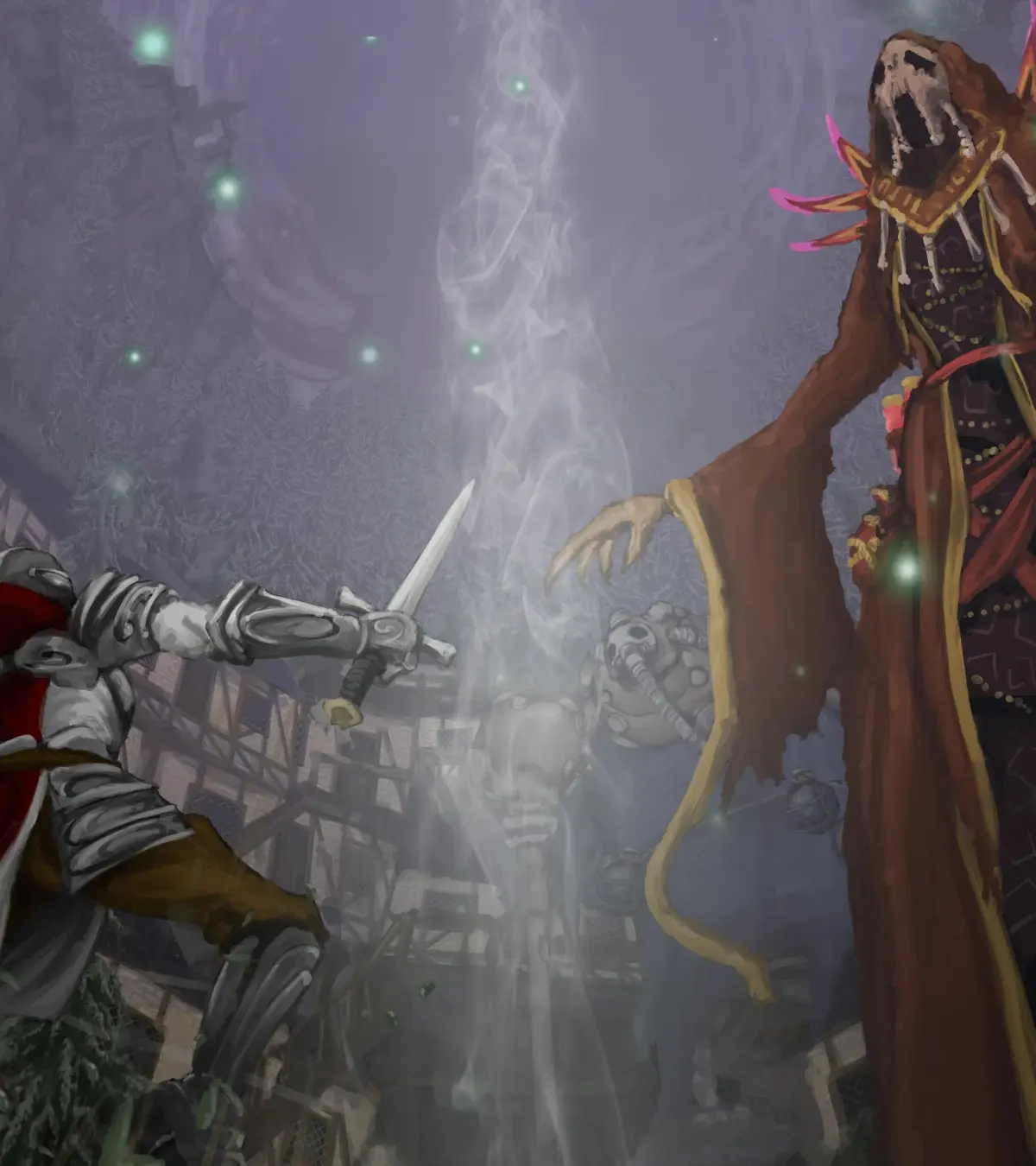
Learn about weapon differences, attack scaling, and elemental damage to dominate your foes in Salt and Sacrifice. Get the edge you need!
Alright, let's talk about how you actually hit things in Salt and Sacrifice. Understanding the combat mechanics is key to not getting absolutely flattened by the mobs and Mages you'll be facing. We'll cover how your weapons work, how your stats affect your damage, and how to use elemental damage to your advantage.
Weapon Differences:
So, not all weapons are created equal. Each weapon type has its own feel and function. Think about things like how far your swings reach, how quickly you can swing again, how much stamina each attack drains, and the little delays between your attacks. Even the animation itself can affect your effective range, which is pretty neat.
One-handed vs. Two-handed:
This is a pretty standard trade-off in most games, and Salt and Sacrifice is no different. One-handed weapons are generally quicker and use less stamina, making them good for rapid attacks. The downside? They don't hit as hard. Two-handed weapons, on the other hand, are slower and guzzle more stamina, but they pack a serious punch.
Now, if you've got the skill to wield a two-handed weapon with just one hand, you can do it. Just know that your damage output will be a bit lower than if you were using both hands. The animations might change a little, but it's usually not a huge deal. If you try to use a two-handed weapon one-handed without the skill, though? You're gonna see a big drop in both damage and attack speed. Stick to what your stats allow for now.
Attack Scaling:
Ever seen those letters like 'E', 'D', 'C', 'B', 'A', 'S' next to your weapon stats? That's 'scaling'. It basically tells you how well a weapon's damage will increase as you put more points into a specific stat, like Strength or Dexterity. 'E' is the lowest, 'S' is the highest.
Imagine a weapon with 'E' scaling in Strength. If you have 20 Strength and gain one more point, your damage might only go up by 1. Now, take a weapon with 'S' scaling in Strength, still at 20 points. That same single point in Strength could boost your damage by 10! So, yeah, higher scaling is usually better.
But it's not always that simple. Sometimes, a weapon with lower scaling might have a higher base damage. This base damage can sometimes make up for the weaker scaling, especially if you don't have a ton of points in that particular stat yet. It's a balance between the weapon's inherent power and how well your stats boost it.
Also, don't discount weapons with multiple scaling types! A weapon that scales with Strength, Magic, and Dexterity all at 'C' might actually be better than a weapon with just 'S' scaling in Strength, especially if you've spread your stat points around. You're getting damage boosts from three different sources instead of just one. Of course, if you've dumped all your points into Strength, that 'S' scaling weapon will likely pull ahead.
Elemental Damage:
Enemies in Salt and Sacrifice have elemental weaknesses, just like you do. Figuring them out can take some experimentation, but boss weaknesses are usually listed in their respective guides. For regular enemies, you might not *need* to exploit weaknesses, but it's good to know how it works.
Weapon Enchantments: Generally, enchanting your weapon with any element is a good idea if you're a physical damage dealer. It seems to add elemental damage on top of your physical damage, rather than replacing it. So, hitting with a fire-enchanted sword adds fire damage to your regular sword swing.
Elemental Stacking: Here's where it gets a bit tricky. Most elements don't stack on a single weapon. You can't put a Stained Page (Arcane) and a Shockstone (Lightning) on a melee weapon and expect to get both Arcane and Lightning damage. However, elemental ammunition is an exception. You can use something like Fire Arrows, and they'll add a damage-over-time effect and a bit of fire damage. If you enchant a bow with Pitchfire (which adds fire damage) and then use Fire Arrows, you *can* get a cumulative bonus. It's a specific case, but good to know!
100% Human-Written. AI Fact-Checked. Community Verified. Learn how AntMag verifies content