
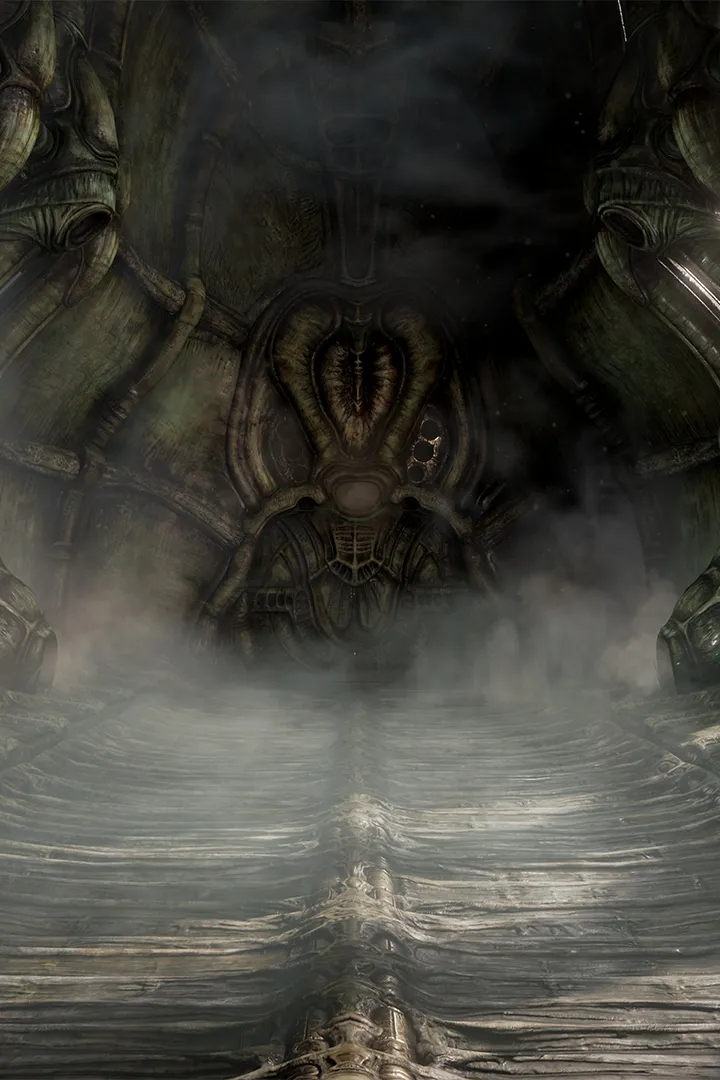
Master Scorn's disturbing world by learning about its vital consumables and the rare resources needed for survival. Navigate the alien landscape effectively.
In the desolate and unforgiving world of Scorn, the scarcity of consumables and resources is a defining characteristic that shapes the player's experience and survival strategy. Unlike many games that offer an abundance of healing items or ammunition, Scorn presents a more austere approach, forcing players to be judicious with every resource they find. The primary consumable that players will encounter is the Healing Module, which, as detailed elsewhere, is essential for restoring health. These modules are not found in large quantities and their placement is often strategic, appearing at critical junctures or after particularly taxing encounters. This scarcity necessitates a careful evaluation of when to use a Healing Module; a hasty or unnecessary use can leave players vulnerable when facing a more significant threat later in their journey. The game's des encourages a methodical approach to combat and puzzle-solving, where minimizing damage taken is often more beneficial than relying on frequent healing.
Beyond the Healing Module, other "resources" in Scorn are less about direct consumption and more about their role in environmental interaction and puzzle-solving. For instance, certain mechanisms might require specific components or energy sources to activate. While these might not be "consumables" in the traditional sense, they function as finite resources that must be located and utilized correctly to progress. The game's narrative is deeply intertwined with the discovery and application of these elements. Players will often need to find a specific tool or activate a particular device to open a new path or overcome an obstacle. The act of scavenging for these items is an integral part of the gameplay loop, and players are encouraged to thoroughly explore every nook and cranny of the environment. The visual des of these resources is consistent with the game's biomechanical theme, often appearing as organic or metallic components that are integral to the world's machinery. The challenge lies not only in finding these resources but also in understanding their purpose and how they fit into the larger environmental puzzles. A common mistake is to overlook seemingly insignificant items, which may later prove to be crucial for progression, especially when navigating complex areas like the vast desert in Act 2 or the intricate machinery of Act 5.
The resource management in Scorn is a subtle but critical aspect of gameplay. Players must constantly weigh the risks and rewards of their actions, considering the potential expenditure of valuable resources. For example, engaging in unnecessary combat when a stealthier approach is possible could deplete precious ammunition or lead to damage that requires the use of a Healing Module. Similarly, experimenting with puzzle solutions without a clear understanding of the mechanics could result in wasted time and potential harm. The game's structure, divided into distinct acts, often introduces new types of environmental interactions that may require specific, albeit often temporary, resources. The walkthroughs for Scorn provide guidance on the location and use of these vital items, but the core principle remains: observe, experiment, and conserve. The limited availability of consumables and resources ensures that every decision carries weight, making the player's journey through this unsettling world a constant exercise in strategic thinking and careful planning. The game's commitment to its unique aesthetic extends to its resource system, making even the most basic items feel like integral parts of its disturbing, yet fascinating, biomechanical tapestry.
100% Human-Written. AI Fact-Checked. Community Verified. Learn how AntMag verifies content