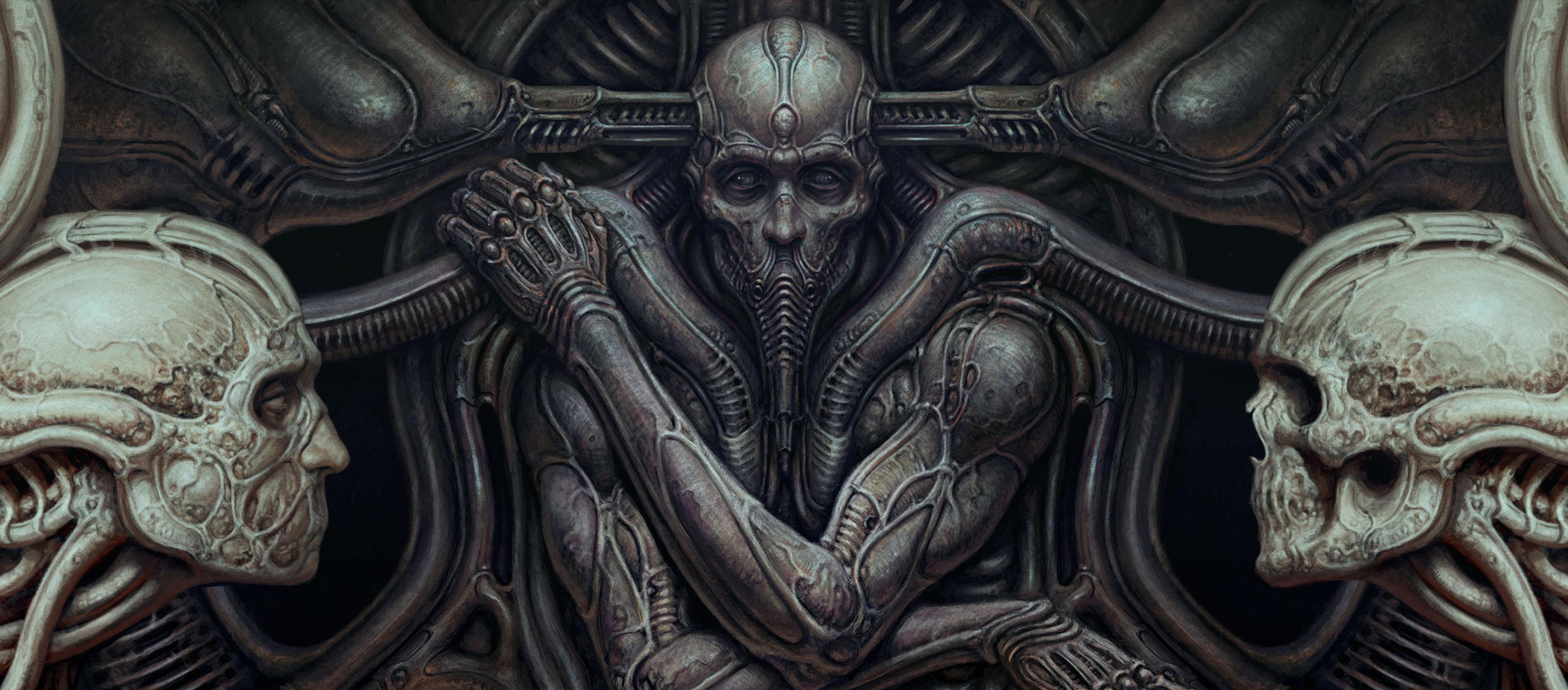
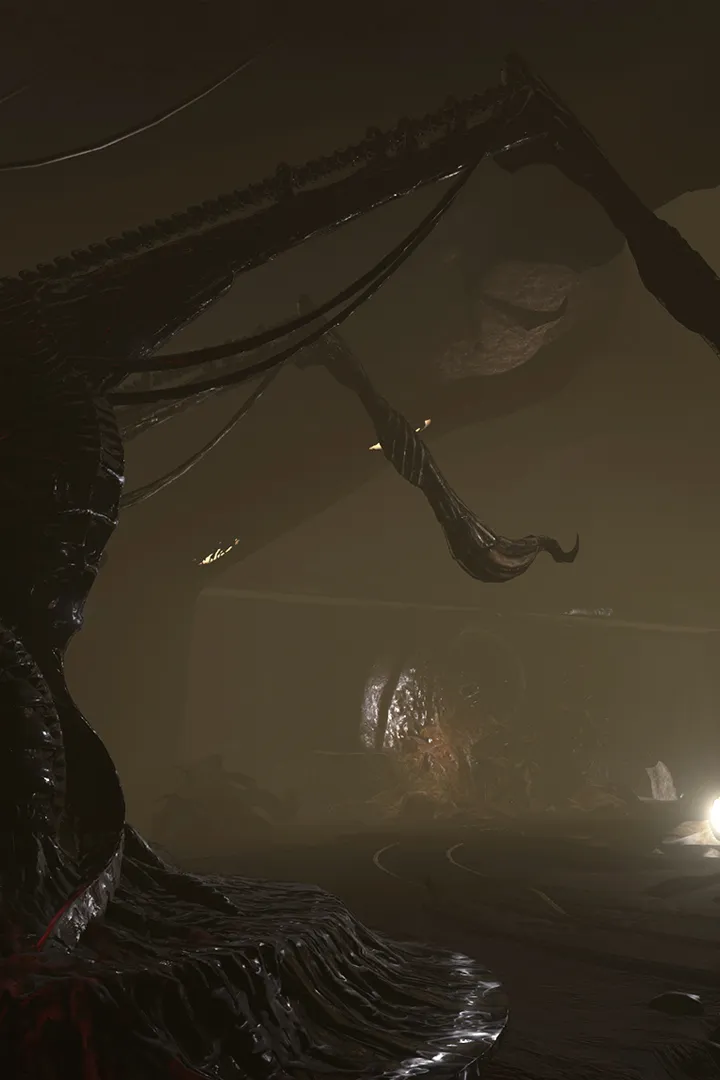
Delve into the Nightmare theory within Scorn. Consider how this perspective interprets the game's disturbing events and surreal landscapes.
Scorn's deeply unsettling atmosphere and surreal, often nightmarish, imagery lend themselves to the interpretation that the entire experience is a descent into a collective or individual subconscious nightmare. The game deliberately eschews clear narrative exposition, instead relying on visceral, often disturbing, visual storytelling. This theory suggests that the protagonist is not necessarily traversing a physical reality, but rather a landscape constructed from primal fears, repressed anxieties, and the darkest corners of the psyche. The biomechanical horrors, the grotesque transformations, and the pervasive sense of dread are all hallmarks of a dream state where logic is fluid and the familiar is twisted into the terrifying. The protagonist's amnesia and disorientation upon starting the game can be seen as the typical confusion of someone suddenly thrust into a dream. The intricate machinery, rather than being functional technology, could represent the complex and often overwhelming processes of the mind itself, a tangled web of thoughts and emotions. The act of interacting with these machines, such as operating the "Rebirth Machine", might symbolize the mind's attempt to process trauma or to grapple with existential fears. The recurring presence of the "Sacrificial Altar" could represent a deep-seated fear of mortality or a subconscious desire for catharsis, even through painful means. The hostile entities, like the "Hollow Soldiers", might be manifestations of internal struggles, anxieties, or even self-destructive impulses that the protagonist must confront and overcome within the dreamscape.
The lack of a traditional HUD and the emphasis on environmental cues further support this theory. In a dream, information is often conveyed through feeling and intuition rather than explicit data. Players are forced to interpret the world around them, much like one might try to understand the shifting logic of a dream. The progression through different acts, each presenting unique environmental challenges and grotesque encounters, can be seen as moving through different stages or themes of the nightmare. The ultimate goal might not be to "win" or "escape" in a conventional sense, but to navigate the depths of this psychological landscape, to confront the source of the nightmare, and perhaps to achieve some form of internal resolution or understanding. The game's unique inventory system, which is more tactile and integrated, could also be seen as a reflection of how objects and tools are perceived and utilized within a dream – they are extensions of the self or tools for navigating the immediate, surreal environment, rather than discrete items to be managed. The entire experience becomes a journey into the abyss of the mind, a terrifying exploration of the self.
100% Human-Written. AI Fact-Checked. Community Verified. Learn how AntMag verifies content